Aydın has some of the most popular tourist destinations and many beautiful natural sites. This richness dates back to 3,000 BC since Aydın has been the center of various civilizations since the earliest periods of history. Many wise people were raised in its various cities, like Didyma, Aphrodisias, Miletus, Prien, and Nisa ve Magnesia. Aydın appeared on stage of history first time as a contemporary city in the BC 2500s during the Hittite period. During the Seljuk period, it came under the rule and culture of Turkish civilization and Aydın has come improving with this culture until today.
Aydın has the best figs tree in the world, which is the main export product of the city. The city was established on one of most mountainous areas in Turkey, a Mediterranean climate is predominant in Aydın. Aydın Mountains are to the north and the Menteşe Mountains to the south of the city. The Büyük Menderes basin is situated between the mountains; it is essentially a field created by water flow from the Büyük Menderes River to Aegean Sea coast, all from approximately 900 meters up. Flat areas are called as Söke, Koçarlı, Aydın, and Balat plain.
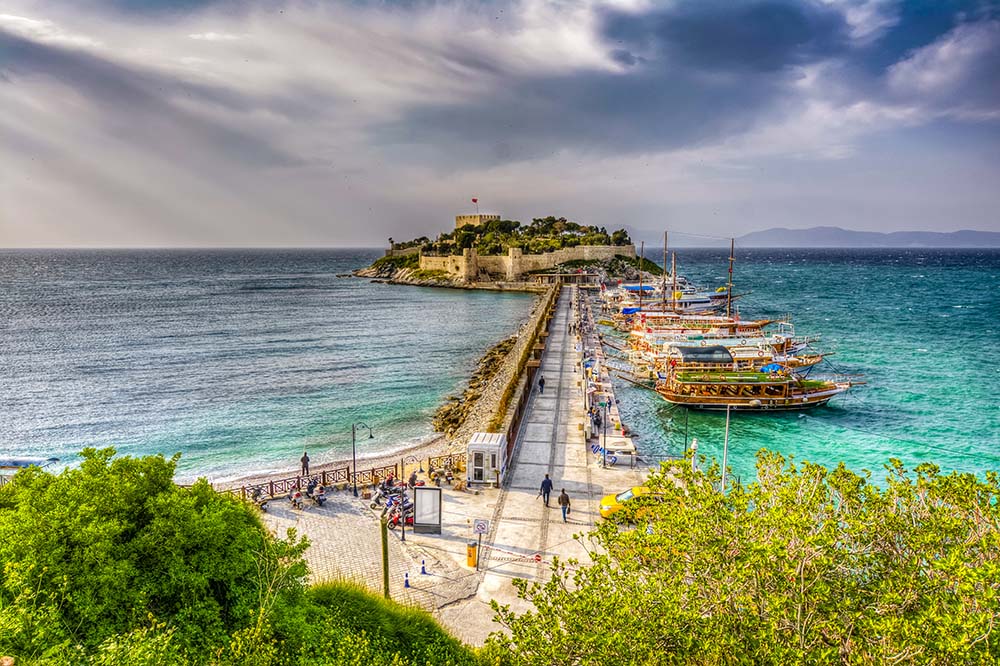
The road goes to Pigeon Island in Kuşadası.
Places to Visit
Aydın has 16 provinces in total. Bozdoğan province is located on the skirts of Madran Mountain close to Akçay, a tributary of the Büyük Menderes River. This province has many natural beauties, including cisterns. You should visit Kemer Bridge, which was built in Akçay, plus the Armutalan Bridge and Körteke Castle. Pihinda Ancient City reflects Roman, Byzantine, and Seljuk cultures. Çine is decorated with colorful lilies along the Çine streamlet. This streamlet was mentioned in legends and given the name Marsyas in mythology. Didim is surrounded on three sides by the sea and it is one of the most touristy provinces of Aydın. It is a beautiful holiday destinations and it has hundreds of bays, gold-colored beaches, natural ports, and peace! It is believed that Miletus and Didyma were the most important settlement centers of the Ionians and they left evidence of their rich lifestyle.
The Aydın Archaeological Museum was built in an area of approximately 15,000 square meters (yes, very big!) and it has a very extensive historical collection. Historical artifacts exhibited here were excavated from areas like Nysa, Magnesia, Alabanda, Alinda, Tralleis, and Tepecik Höyüğü. Among these artifacts are coins, stone works, sculptures, jewelry, and ceramics. You can also visit the Aphrodisias Museum, plus the Miletus and Yörük Ali Efe Museums. Mosques reflect our past; consider visiting the Koç Cihanzade Mustafa Mosque, Bey Mosque, Ahmet Gazi Mosque, Ilhas Bey Mosque, Üveys Pasha Mosque, and Ilyas Bey Complex.
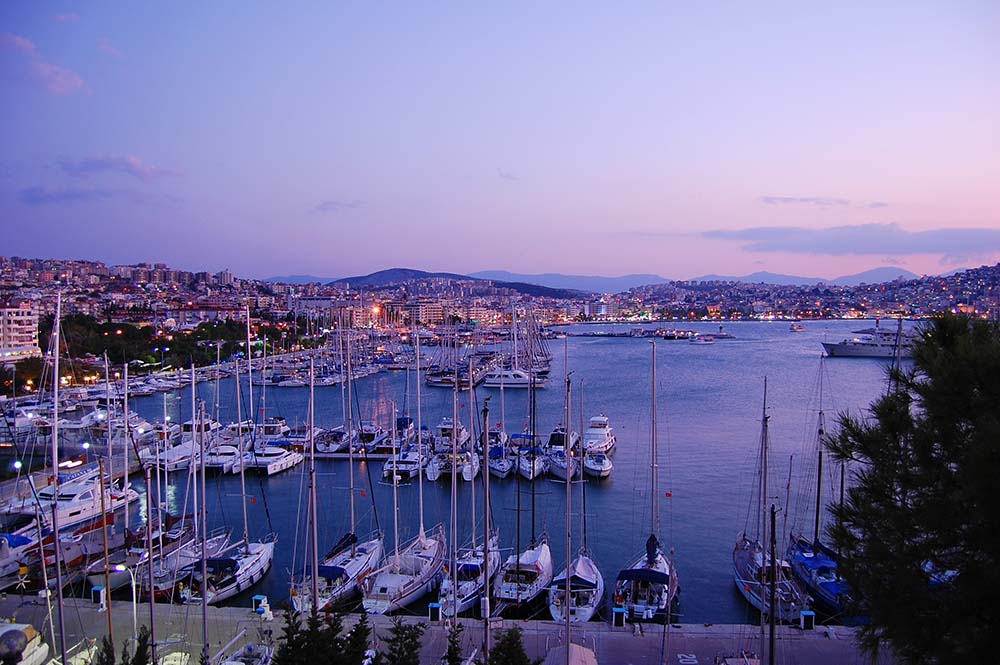
Kuşadası Harbor
Menderes, which flows from a height of about 900 meters to the Aegean Sea, generated a basin with rich underground resources. In this regard, the Gümüşköy and Bozköy regions are rich in terms of hot springs, but when people think vacation, many think first about the beach. So, if you are a kind of sea-and-sun aficionado, you should visit Aydın’s clean beaches, such as Pigeale, Women’s Sea, Güvercinada, Aslanburnu, Güzelçamlı, and Yavansu beaches in Kuşadası and Tavşanburnu, Altınkum, Akbük, and Gevrek beaches in Didim; all are popular holiday areas where you can do many nature activities besides swimming, such as taking a bike ride, fishing, hiking, and birdwatching. The delta formed by Büyük Menderes is also rich in animal diversity. There are approximately 250 bird species. Some species are endangered, such as pelicans and cormorants. Entertaining and informative tours are organized in this area.
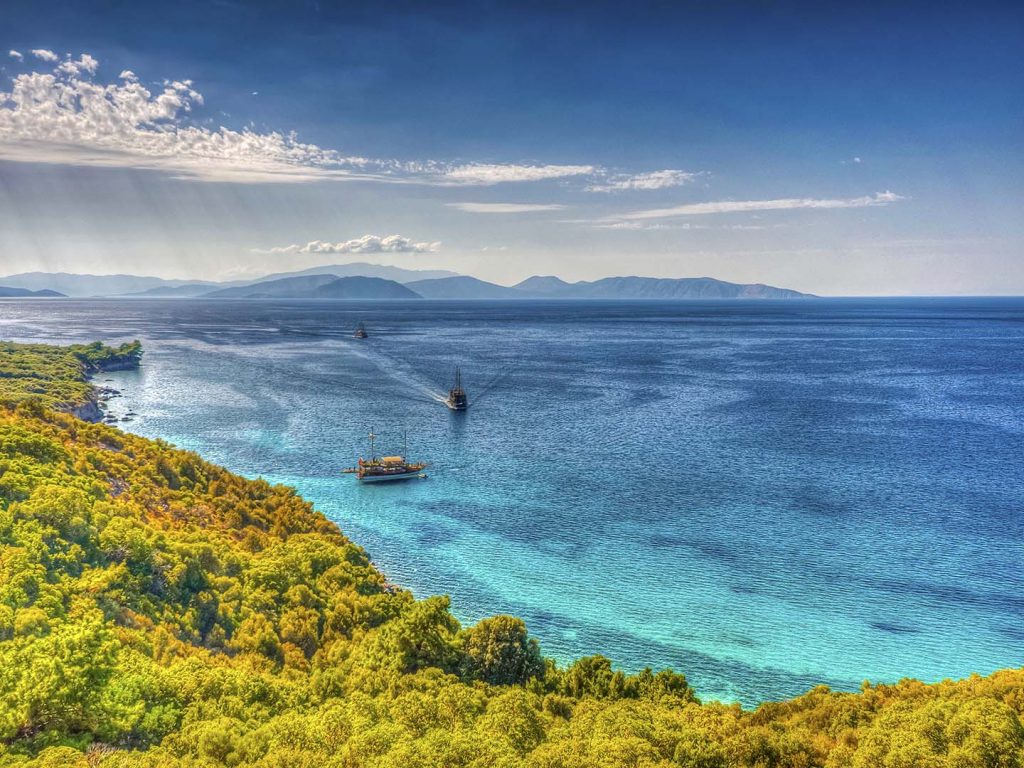
Dilek Peninsula National Park in Kuşadası
When we say Aydın, the “Zeybek” tradition comes to mind. Zeybek is a local dance, of which roots extend back to the 16th and 17th centuries. In the past, when the central administrative management broke down, the rebels took the hills in resistance. Then, “Efe“s (swashbuckler) who led the Zeybek participated in the Independence War (Kurtuluş Savaşı). Kınalı Dokuz Efe, Yörük Ali Efe, Mestan Efe, and Gökçen Efe are famous efes in Aydın.
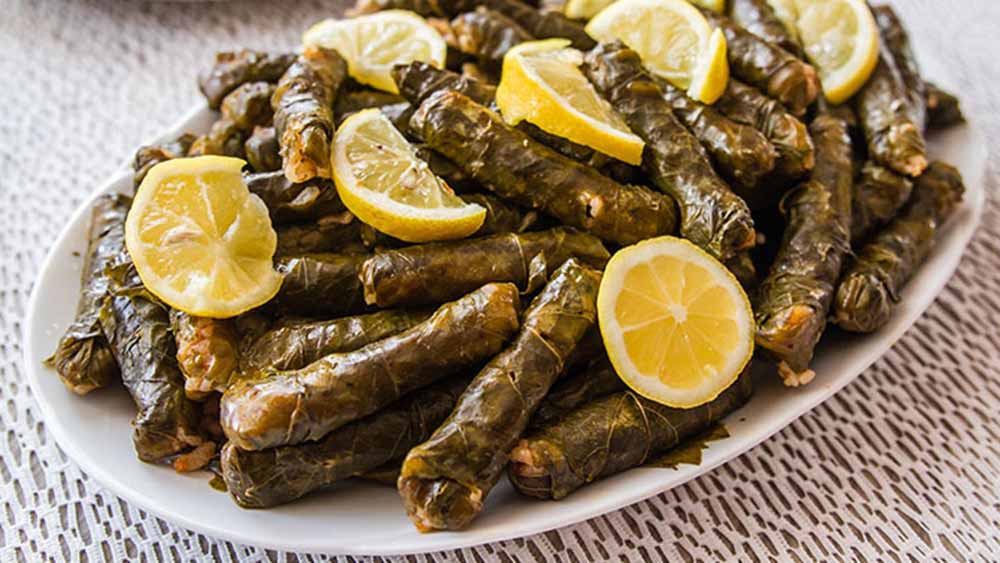
Yaprak sarması
Handcrafts, like weaving, are also developed in Aydın as in other Anatolian cities, in particular carpetbag, rugs, and carpets. Apart from the carpetbag with specific motifs of Aydın, yuruk bags are famous with their sumac technique.
Cuisine
Aydın’s cuisine also boasts a large variety. When we mention the Aegean cuisine, olive oil dishes come to mind. Kulak soup, tarhana soup, hot spicy stew, pepper, and aubergine fry, olive oil fresh cowpea meal, purslane salad, radish salad, imambayıldı, stuffed grape leaves (yaprak sarması), gypsy pilaf, milk pudding with rice (sütlaç), Noah’s pudding (aşure), yeast fritters in thick syrup (lokma) are delicious meals of region. Besides of these, fig and grape cultivation is huge here. Sea bream, red sea bream, grey mullet, and red mullet are among the richest fish varieties of the coast.
How to Get There
The city is well connected via highways, and bus network. Daily flights to Kuşadası, and İzmir are also available.