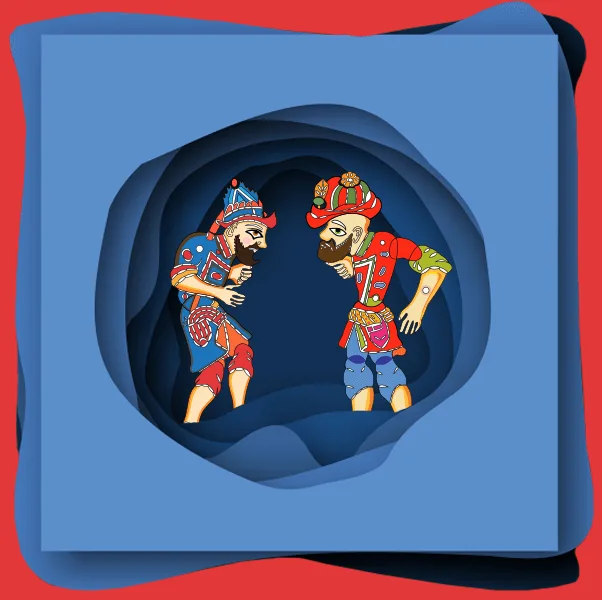
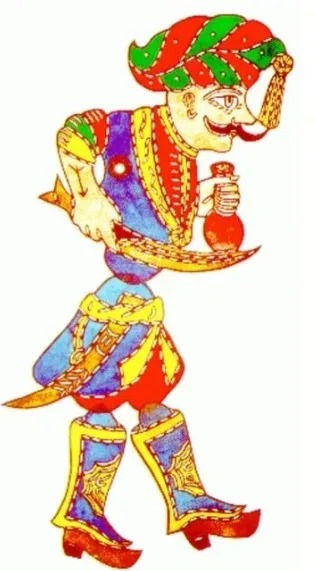
Karagöz and Hacivat is a traditional Turkish shadow theatre based on the principle of moving human, animal, or object figures (called tasvir) made from camel or water buffalo hide by attaching them to rods and projecting them onto a white screen using light from behind.
A hayali performs the Karagöz. The hayali is both narrator and creator of the performance, adapting the play according to the audience, rearranging scenes, and updating themes during the show.
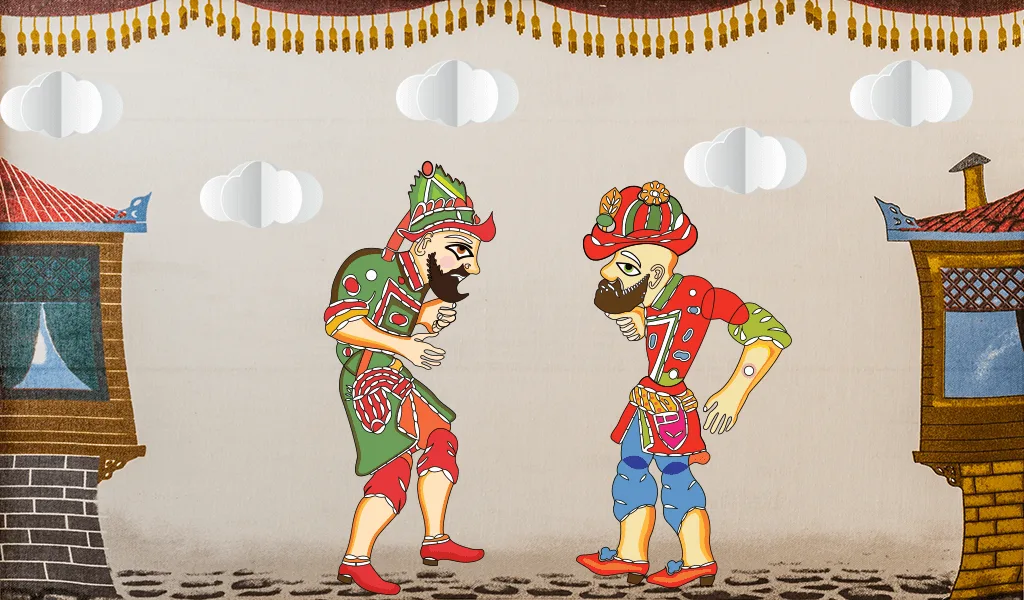
Karagöz plays emphasize comic elements such as double meanings, exaggeration, wordplay, and imitation of regional dialects. These popular characters for centuries have ntertained people and provoked thought. They originated in traditional Turkish folklore.
In performances, Karagöz and Hacivat figures are projected onto a screen using a light source behind thin leather cutouts. The audience watches the shadows reflected on the screen, which serves as the stage. The performances often use satire and humor to address social issues, daily life, and current events. Depending on the performer’s skill and creativity, the presentation may vary significantly.
Karagöz and Hacivat are an important part of Turkish cultural heritage, entertaining audiences while encouraging reflection through storytelling.
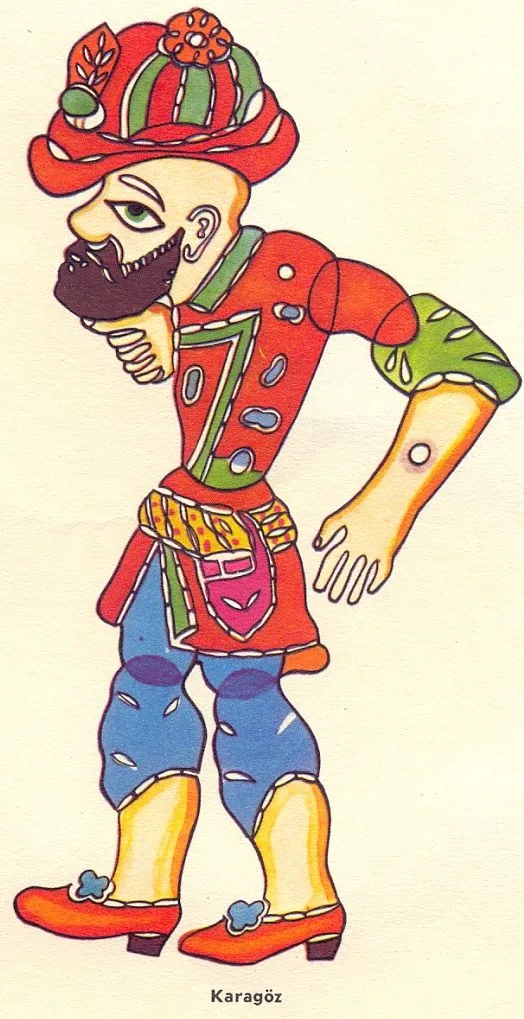
The Character of Karagöz
Karagöz is known for his innocent yet humorous and sometimes improper behavior. He often appears careless, comical, or lazy. He frequently acts foolishly or ignorantly, which generates laughter among the audience.
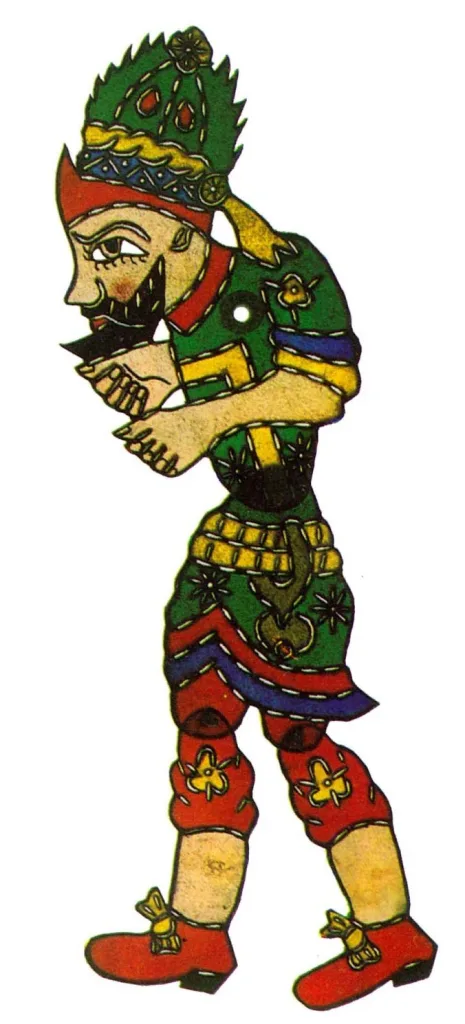
The Character of Hacivat
Hacivat is the more rational, polite, and refined profile. His role is typically to correct Karagöz’s misunderstandings, offer intelligent suggestions, and occasionally tease him. He balances the comic dynamic of the plays.
Importance for Children
Karagöz and Hacivat provide both educational and entertaining value. Through this traditional shadow theatre, children can learn stories, explore cultural heritage, and enjoy humor while gaining awareness of social themes.
The plays sometimes reference historical or social events, helping children understand social dynamics. The dialogues may support language development by exposing children to varied vocabulary and expressions.
The interaction between characters also allows children to observe emotional responses, potentially fostering empathy. Performing shadow plays themselves may enhance creativity and aesthetic perception. Families and communities actively pass down this tradition, reinforcing cultural continuity.
Structure of a Karagöz Performance
- Character Introductions: The characters are introduced at the beginning.
- Story Development: A central story unfolds, involving comic or dramatic situations.
- Comic Exchanges: Karagöz’s misunderstandings and Hacivat’s corrections generate humor.
- Social Criticism: Satire is the tool to address social and moral issues.
- Dialogues: The core of the play consists of exchanges between Karagöz and Hacivat.
- Movement and Gesture: Coordinated movement behind the screen by figures.
- Varied Themes: Myths, legends, love stories, and current events may be addressed.
- Audience Interaction: The performer may adjust the storyline based on audience reactions.
Who Performs Karagöz?
The performer is called a Karagözcü or hayali. Assistants may include the çırak, yardak, and dayrezen. Head movements of the puppets are used to signal speech changes. The historical existence of Karagöz and Hacivat remains uncertain.
Were Karagöz and Hacivat Real People?
Many legends surround their existence, but no definitive historical evidence confirms them as real individuals. According to legend, during Sultan Orhan Gazi’s reign, two workers helped construct the Grand Mosque in Bursa: Kambur Bâli Çelebi (Karagöz), a master blacksmith, and Halil Hacı İvaz (Hacıvat), a master mason (though we know that Beyazid I actually oversaw the Grand Mosque’s construction!). Their witty exchanges captivated the other workers, who would abandon their tasks and crowd around to listen, slowing construction to a crawl. When the Sultan learned of this, he orderd both men executed – though another version claims he banished them from the country instead. The Sultan later regretted his decision and commanded his men to find them. Unable to locate Karagöz and Hacıvat, Sheikh Küşteri instead created a play by performing similar characters behind a curtain, and in doing so, gave birth to this theatrical form. Puppeteers still call the Karagöz stage Sheikh Küşteri Square today, honoring him as the founding master of Karagöz puppetry.
Other Characters
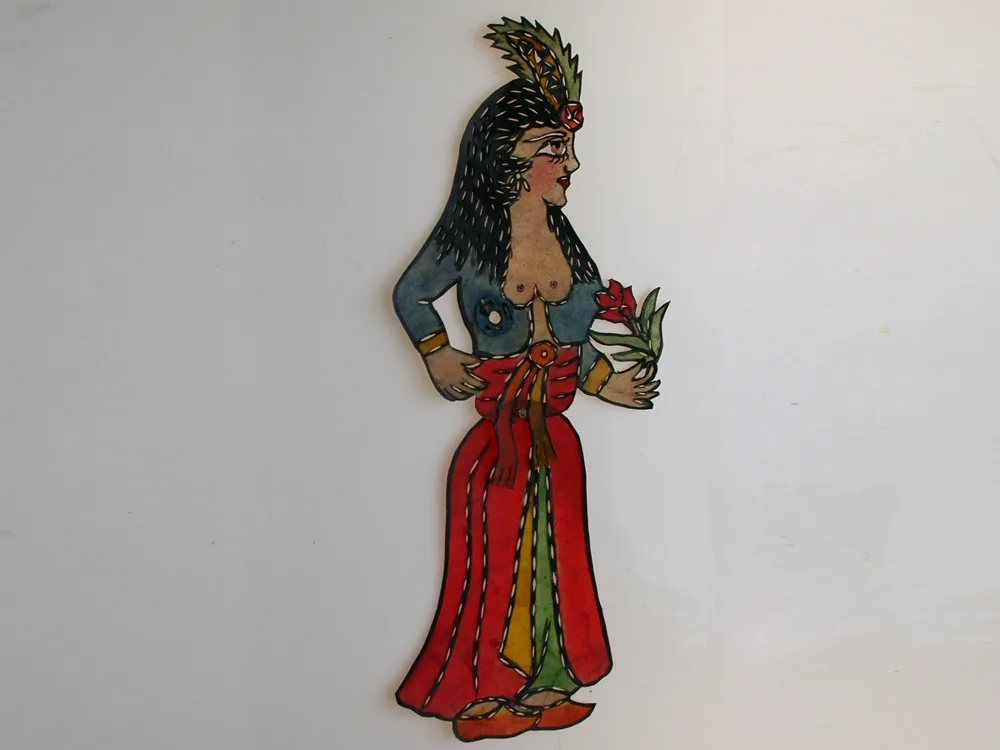
In traditional Karagöz and Hacivat shadow theatre, aside from the main duo, there are several recurring secondary characters, each representing different social types, regions, or professions. These characters vary by region and playwright, but the most common include:
- Pişekar: The narrator or stage manager; directs the action and engages the audience.
- Tuzsuz Deli Bekir: A madcap, unpredictable character; often the source of chaotic humor.
- Altı Kariş Beberuhi: An eccentric dwarf; a comic figure notable for his unusual appearance and antics.
- Denyo: The half-wit; simple-minded but lovable, often misunderstanding situations for comic effect.
- Civan: The spendthrift; a character who squanders money, highlighting folly and social satire.
- Nigâr: A female role, usually flirtatious or playful; traditionally performed by men.
- Tiryaki: Coffee- or tobacco-loving, often lazy or talkative, adding everyday humor.
- Bekçi: The bumbling night watchman; slapstick and situational comedy.
The flexible structure of the play allows performers to introduce new characters depending on the satire, politics, or audience. The essence is a social comedy that juxtaposes educated vs. uneducated, city vs. village, and authority vs. common folk.
Cultural Significance
Alongside other traditional forms such as orta oyunu and meddah, Karagöz shadow theatre has played a major role in entertaining and stimulating social awareness for centuries.
In 2009, UNESCO inscribed Karagöz in its Representative List of the Intangible Cultural Heritage of Humanity.
Today, the tradition continues particularly in Bursa, where cultural institutions preserve and transmit the art to new generations of performers.