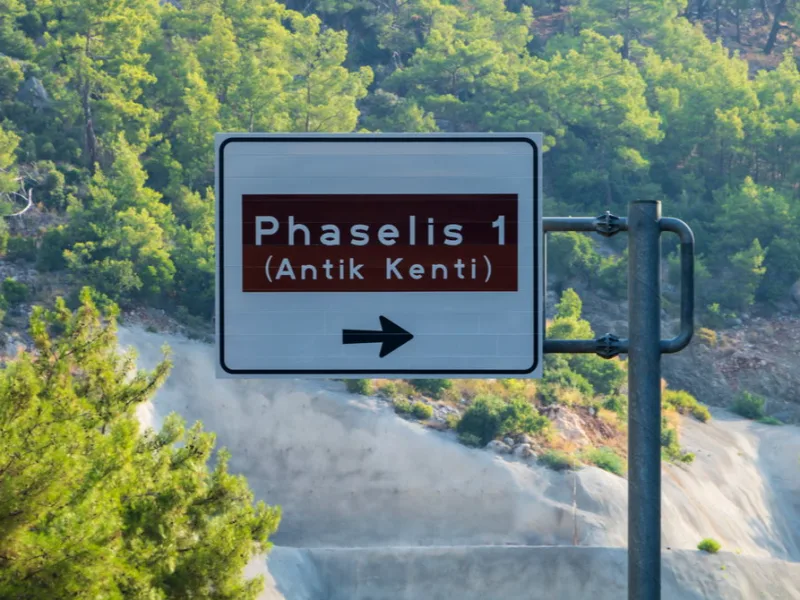
Phaselis Ancient City, believed to have been founded in the 7th century BC on a small peninsula extending into the Mediterranean, was discovered in 1811. It takes every visitor on a journey back in time, right into the heart of nature. Some sources identify Phaselis as a Lycian city, while others consider it part of Pamphylia. Founded by Rhodian traders, it served as a commercial port city opening up to the Mediterranean and North African countries. Today, Phaselis lies within the borders of Tekirova in Kemer district of Antalya and is one of the stops along the Lycian Way. This hidden paradise attracts attention not only for its historical beauty but also for its unique nature, having been an important city center in past eras.
Until the 5th century BC, the city was under the suzerainty of the Persian Empire. In 333 BC, Alexander the Great conquered Phaselis, turning it into a significant center of Hellenistic culture. Hellenism refers to the fusion of Greek culture with Eastern cultures in philosophy, art, and thought. Phaselis welcomed Alexander the Great with a golden crown and successfully blended Eastern teachings inherited from the Persian Empire on its lands, making it one of the important ancient cities of the era.
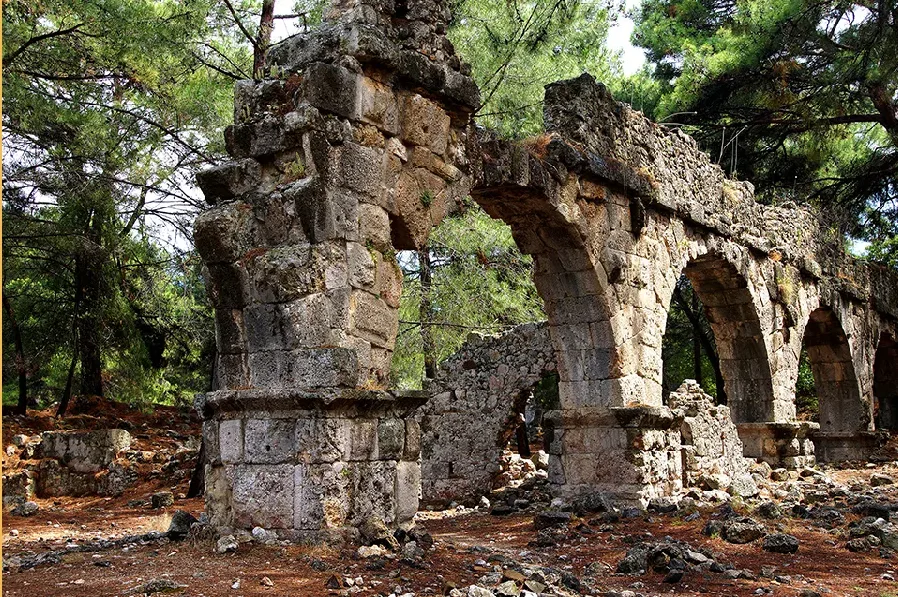
Rebuilt under Roman rule, Phaselis entered a prosperous and wealthy period that lasted at least 300 years. In 129 BC, an impressive single-arched monumental gate was constructed at the entrance of the main street in honor of Roman Emperor Hadrian’s visit, and it still stands today. The aqueduct built to bring water from the northern parts of the region to the city acts as a boundary between the pine forests and the blue waters of the Mediterranean. Though partially standing today, the aqueduct no longer serves its original function but continues to adorn the ancient city.
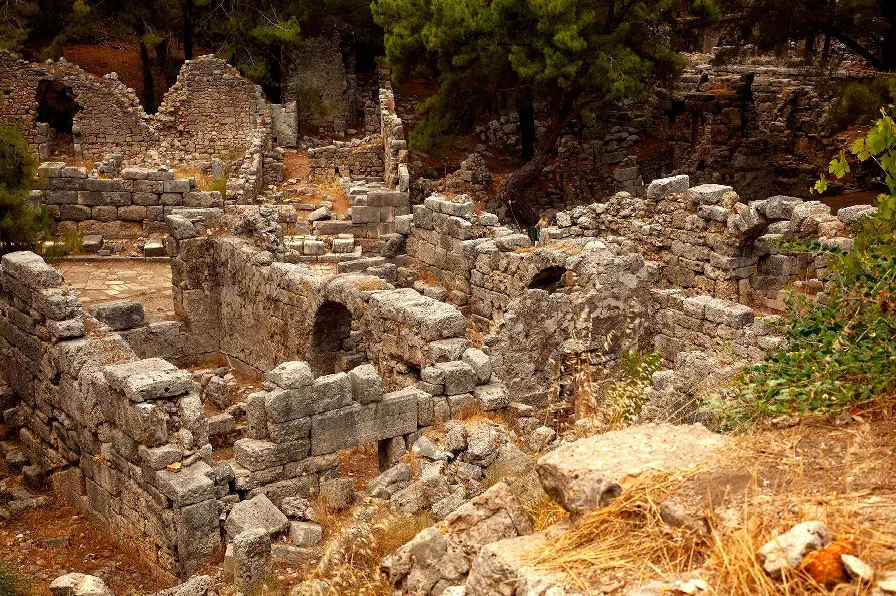
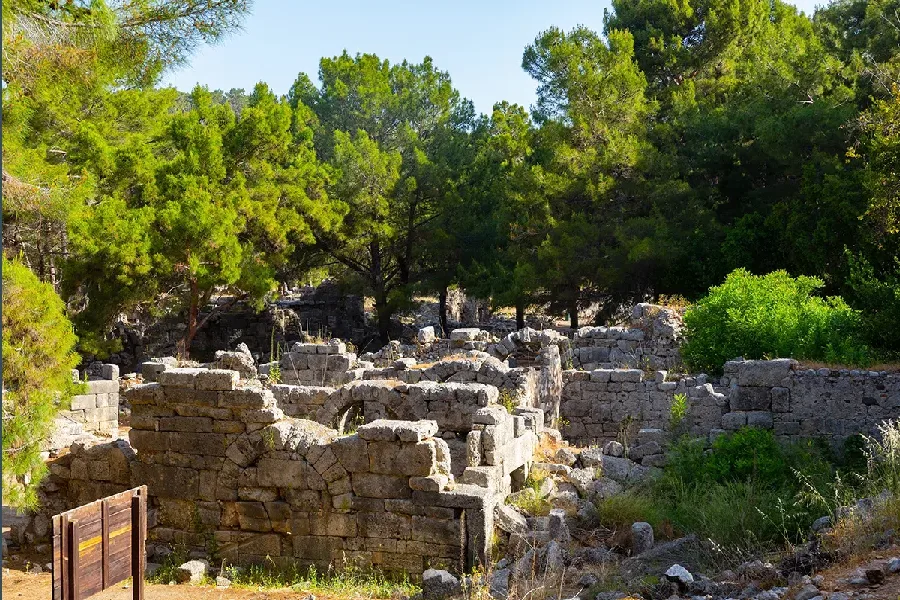
In subsequent years, earthquakes damaged the port city, and it lost its functionality, leading to its complete abandonment by the early 13th century. Today, mostly Roman and Byzantine period ruins remain. These ruins line both sides of the city’s main axis, which connects the northern and southern harbors. The street widens between the agora and the theater, forming a small square.
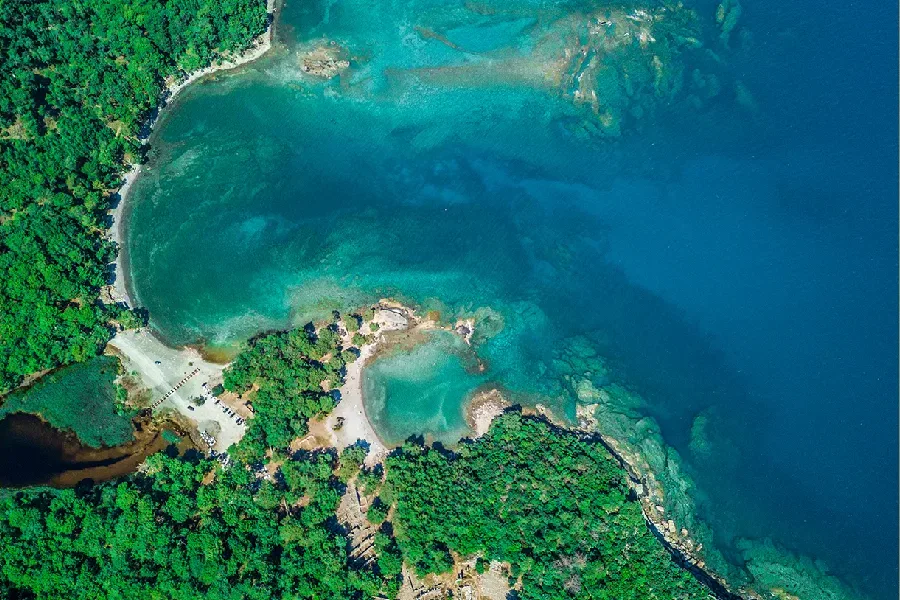
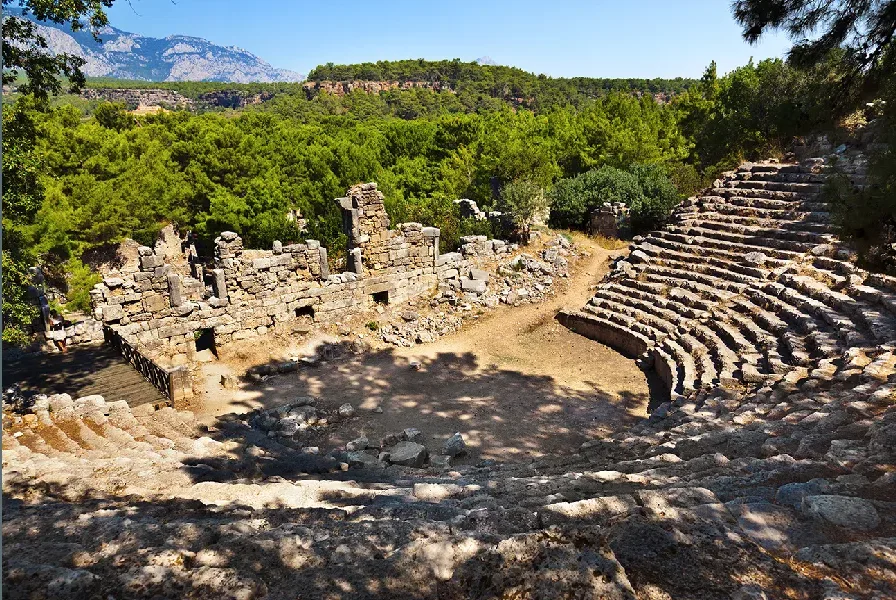
The theater and acropolis, located by the sea in Phaselis, are typical examples of Hellenistic architecture. A stage building was added during the Byzantine period. Archaeological studies have revealed that part of the added theater wall was incorporated into new city walls protecting the city. Ruins believed to be temples or monumental tombs have been found. The slope behind the northern harbor served as the city’s cemetery.
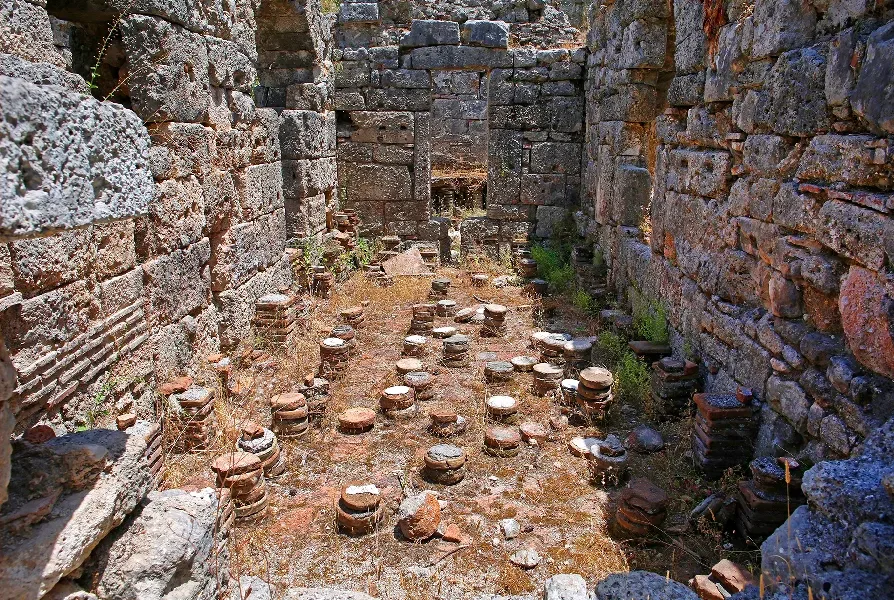
Across from the theater, within the agora, lie the remains of a small basilica from the Byzantine period. The city’s other significant ruins include two bath ruins in the square, one small and one large. The small bath ruins, in particular, provide insights into the heating system of Roman baths. Historians write that the city’s chief goddess was Athena, the goddess of war and wisdom. The yet-to-be-discovered Athena Temple and other important structures are believed to be located on the acropolis hill, now covered by forest.
Natural Beauty and Surrounding Environment
Phaselis enchants visitors not only with its historical ruins but also with its unique natural beauty. The city is situated on a peninsula with a coastline along the Mediterranean, surrounded by dense pine forests. Its beaches, clear waters, and natural bays make it a favored destination especially during summer, attracting both history enthusiasts and nature lovers. Additionally, the Lycian Way passing through Phaselis offers excellent trekking routes. Walking along forest trails provides opportunities to observe the rich flora and fauna of the region.
Mythological and Cultural Connections
Phaselis’ cultural depth is not limited to historical facts but also holds a place in ancient mythology. Athena, the goddess of war and wisdom, was considered the city’s chief deity and spiritual protector. The Athena Temple, yet to be uncovered, is thought to have been a religious and social center for the people of Phaselis. Moreover, as a port city, it likely hosted rituals and festivals dedicated to sea gods and mythological figures. In this respect Phaselis reflected the relationship ancient people had with nature and their gods.
Phaselis Through History
Phaselis underwent many changes under different civilizations throughout history, acquiring distinct identities in each era. During the Persian period, it functioned as an important trade port; with Alexander the Great’s conquest, it became a center of cultural synthesis during the Hellenistic period. At that time, the city was a hub where Eastern and Western cultures merged, and arts and philosophy flourished. The architecture from this era reflected the Hellenistic style. Under Roman rule, Phaselis entered a long period of peace and prosperity, during which baths, theaters, and monumental buildings were constructed. During the Byzantine period, the city’s strategic importance declined, and some structures were reinforced for protection. Following earthquakes and regional upheavals in the 13th century, Phaselis was abandoned and gradually reclaimed by nature.
Phaselis and Lycian Culture
Phaselis is generally considered part of the Lycian region in antiquity. The Lycian civilization is known for its unique political system, distinctive tomb architecture, and rich mythology. As one of the important port cities along the Lycian coast, Phaselis reflected the Lycian way of life closely connected with the sea. The unique governance styles and mutual defense systems of Lycian city-states left their marks in the city’s architecture and urban planning. Archaeological remains reveal the artistic and religious elements of Lycian culture present in Phaselis as well.
Architectural and Artistic Features
Phaselis presents unique examples of architecture blending Hellenistic and Roman influences. The single-arched monumental gate reflects the grandeur of Roman architecture, while the theater and acropolis are typical examples of Hellenistic style. Additions made to the theater during the Byzantine period demonstrate the city’s prolonged use and cultural transformation. The advanced heating system in the bath ruins showcases the intricacy of Roman engineering. The basilica ruins around the agora shed light on the city’s religious and social life. Artistically, the presence of yet undiscovered mosaics and sculptures suggests Phaselis was an important center of art.
Archaeological Finds and Excavations
Excavations at Phaselis have revealed the city’s rich history and cultural diversity. Numerous mosaics, statues, and ceramic artifacts unearthed here help us understand the lifestyle, trade relations, and religious beliefs of its inhabitants. For example, basilica ruins discovered around the agora provide valuable insights into early Christian religious structures. Additionally, fortifications and added structures around the theater offer clues about the city’s defense strategies. Recent archaeological work has also pointed to previously undiscovered buildings and tombs, highlighting the size and significance of Phaselis even further.
Cultural and Mythological Stories
The mythological and cultural fabric of Phaselis was shaped by ancient beliefs and social life. Athena, the goddess of war and wisdom, was highly revered as the city’s chief deity. Although the Athena Temple has not yet been fully uncovered, it is believed to be located on the acropolis hill. As a port city, Phaselis also hosted worship and festivals dedicated to sea gods. Rituals connected to seafaring and trade formed an important part of the social structure. Mythological tales associate Phaselis with the sea god Poseidon and other deities, illustrating the city’s complex cultural and religious identity.
Phaselis Today: Tourism and Conservation
Today, Phaselis is an important destination for both history enthusiasts and nature lovers. Located in Tekirova, near Kemer, the ancient city attracts thousands of local and international tourists annually. Visitors can walk among the ruins reflecting diverse civilizations across history while enjoying the pristine bays and natural beauty of the Mediterranean. Phaselis is also a key stop on the Lycian Way, appealing to trekking and outdoor sports enthusiasts. However, ongoing efforts are in place to protect the site from over-tourism and natural erosion; conservation and restoration projects continue actively. Guided tours, informative panels, and walking paths are available for visitors. While summer is the peak season, spring and autumn offer a quieter experience surrounded by nature’s calm.