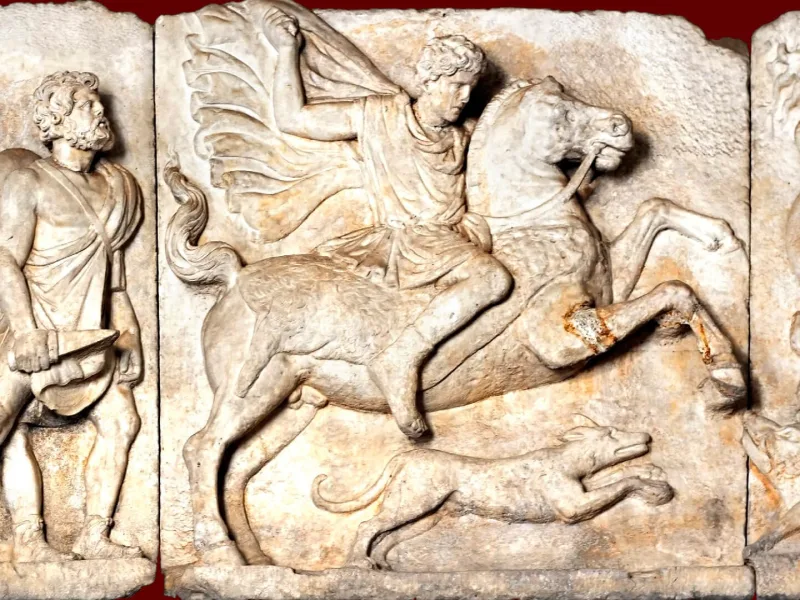
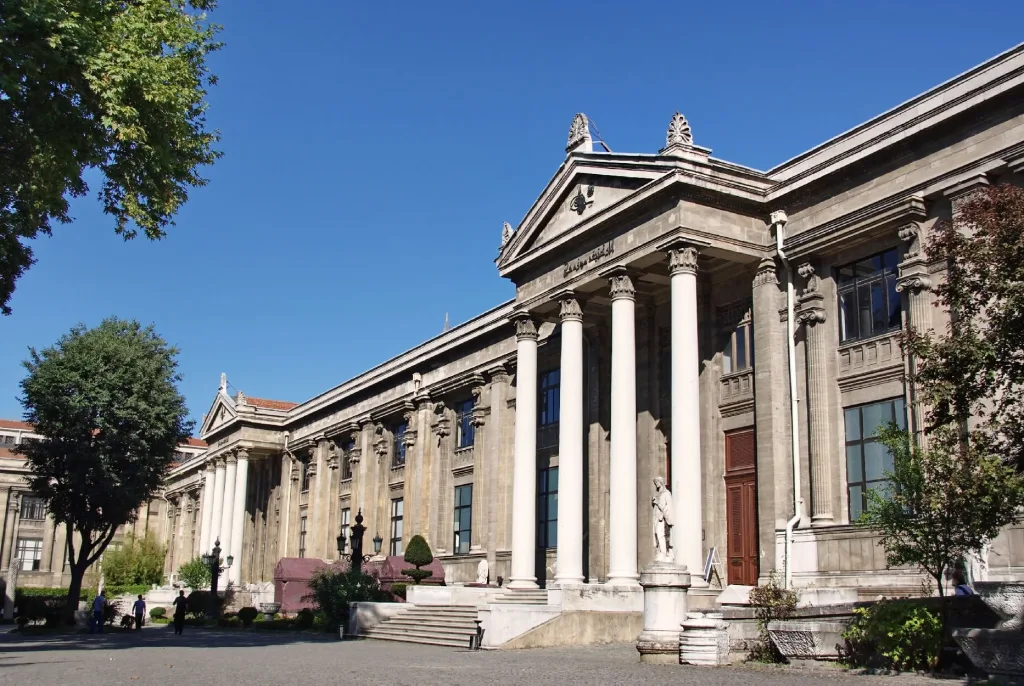
In this article, we’ll take you to one of the world’s richest museum complexes in terms of artifacts: the Istanbul Archaeological Museums. The reason it is referred to in plural form is that it includes three distinct museums located side by side in Istanbul‘s Historical Peninsula: the Archaeological Museum, the Tiled Kiosk, and the Museum of the Ancient Orient. Let’s begin our tour!
Tiled Kiosk
The Tiled Kiosk is the oldest building within the Istanbul Archaeological Museums, showcasing some of the finest examples of Turkish tiles and ceramics. However, it didn’t start out as a museum. As the space at the Aya İrini Church, where archaeological items were first gathered, became insufficient, this former 15th-century mansion built by Mehmed the Conqueror was converted into a museum in 1880.

Museum of the Ancient Orient
Built by Osman Hamdi Bey in 1883 as the Academy of Fine Arts, the building was later repurposed into a museum in 1917 to house artifacts from the Ancient Near East after the academy relocated.
Main Building: Archaeological Museum
The main structure is referred to as the Archaeological Museum and contains some of the most significant artifacts ever discovered. Among them are sarcophagi unearthed in Sidon (modern-day Lebanon), which were the very reason this museum was founded.

Sarcophagi from Lebanon
In 1888, during the excavation of the Royal Necropolis in Sidon, a need arose to build a space worthy of displaying these grand discoveries. Under the leadership of Osman Hamdi Bey, the Imperial Museum (Müze-i Hümayun) was established and opened in 1891. The building was designed by Alexandre Vallaury, who also worked on the Museum of the Ancient Orient.
Osman Hamdi Bey’s Legacy
Thanks to Osman Hamdi Bey, who served as director for 29 years, archaeological treasures from across the vast Ottoman lands -representing hundreds of civilizations- were brought together in this museum. Not only was he a pioneering archaeologist and artist (known for his painting The Tortoise Trainer), but also a reformer who laid the legal foundation of cultural heritage protection in the Ottoman Empire.
He was the architect of the Asar-ı Atika Regulation, which prohibited the export of ancient artifacts and regulated archaeological excavations; making him a true founder of modern Turkish museology.
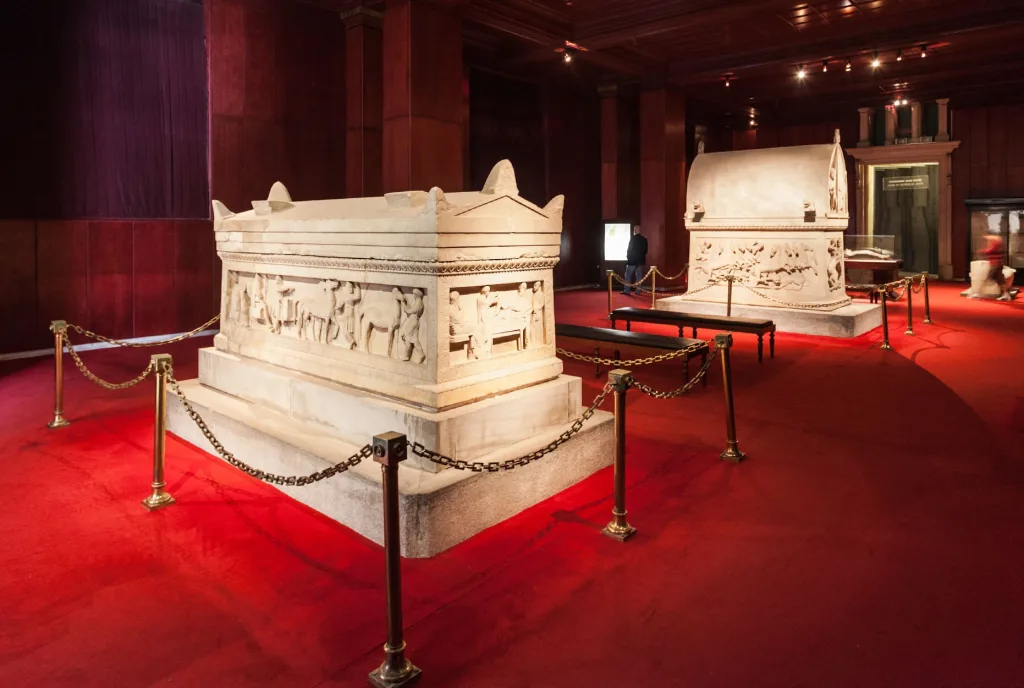
Alexander Sarcophagus & The Sarcophagus of the Mourning Women
Among the Sidon finds, the Alexander Sarcophagus is famous for its exquisite carvings depicting the military exploits of Alexander the Great. Meanwhile, the Sarcophagus of the Mourning Women portrays sorrowful female figures in deep emotion: considered a masterpiece of ancient sculpture and symbolism.

The Treaty of Kadesh Tablet
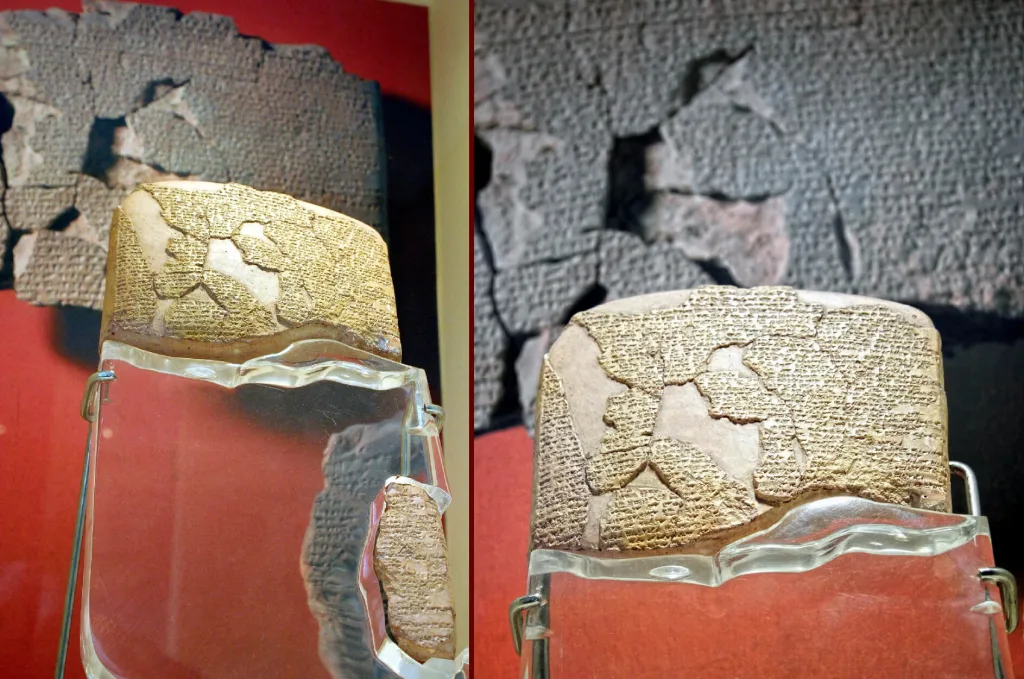
The Treaty of Kadesh Tablet, one of the museum’s most iconic artifacts, is regarded as the world’s oldest known peace treaty. It was made between the Hittite and Egyptian kings around the mid-13th century BCE after the Battle of Kadesh. The tablet was found during excavations in Hattusa, the Hittite capital, located in today’s Çorum-Boğazköy.
Sidamara Sarcophagus
Another treasure in the museum is the Sidamara Sarcophagus, one of the largest sarcophagi ever found. Discovered in Ereğli, the sarcophagus was so massive that it took 40 oxen to move it to the Konya railway, and required specially modified train cars to reach Istanbul. Dating to the 3rd century CE, its richly detailed reliefs are a striking representation of Roman funerary art.
Cuneiform Love Poem & Ishtar Gate
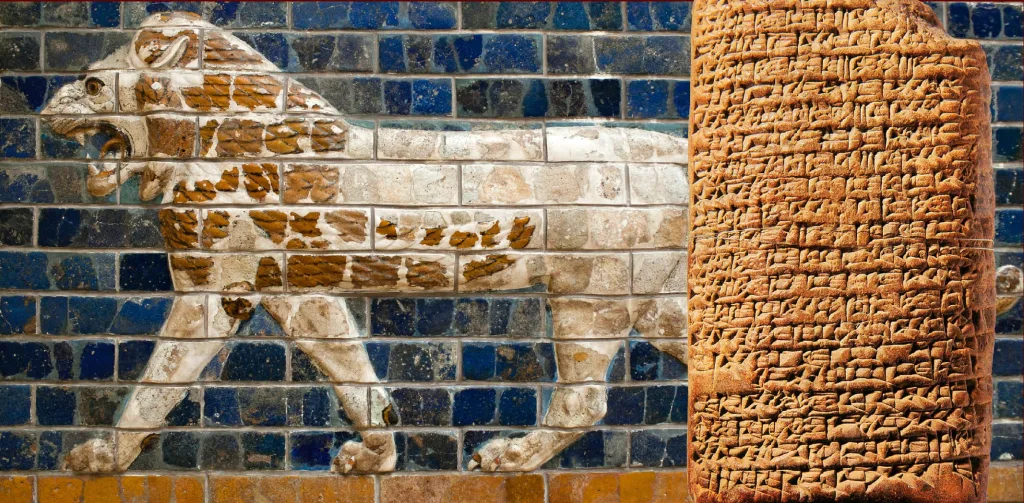
The museum houses nearly one million artifacts from periods ranging from the Paleolithic to the Byzantine era. These include the Hammurabi Law Tablet, a cuneiform tablet inscribed with the world’s first love poem, and fragments from the Ishtar Gate of Babylon: each an irreplaceable cultural relic.
Visiting Information
Located just a short walk from Gülhane Park, the museum is easily accessible and Museum Pass is accepted. For up-to-date ticket prices, guided tours, and temporary exhibitions, visit kultur.gov.tr or the museum’s official site. It’s best to visit during weekday mornings, especially in the summer months.
European Museum of the Year Award
In 1993, the Istanbul Archaeological Museums were awarded the prestigious European Museum of the Year Award by the Council of Europe. This recognition wasn’t merely for its collection, but also for its educational outreach and responsible preservation of historical heritage. It marked the museum as a cultural beacon not only in Turkey but throughout Europe.