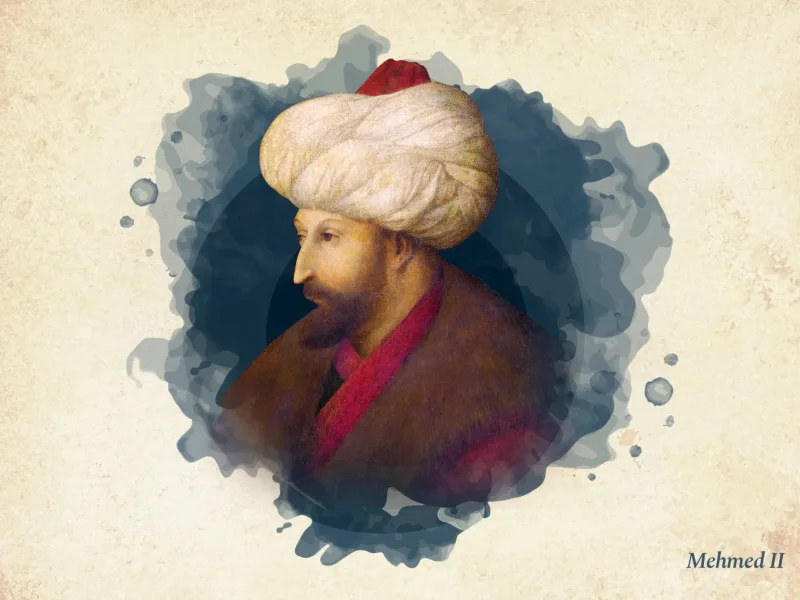
Although he lived only 49 years, Sultan Mehmet II left an indelible mark on history. As the seventh sultan of the Ottoman Empire, he ascended the throne at the age of 19 and earned the title “The Conqueror of Istanbul” with his extraordinary vision and achievements. Known in the West as “Grand Turco”, Mehmet II was a military genius, a patron of the arts and sciences, and one of the most respected rulers of the Islamic and Western worlds alike. Let’s explore his legacy from multiple perspectives.
Early Years and First Reign
Mehmet II first ascended the throne in 1444, at the age of 12. Due to his young age and political unrest, his father Murad II reclaimed the throne. This early experience played a pivotal role in shaping Mehmet’s political maturity and leadership skills.
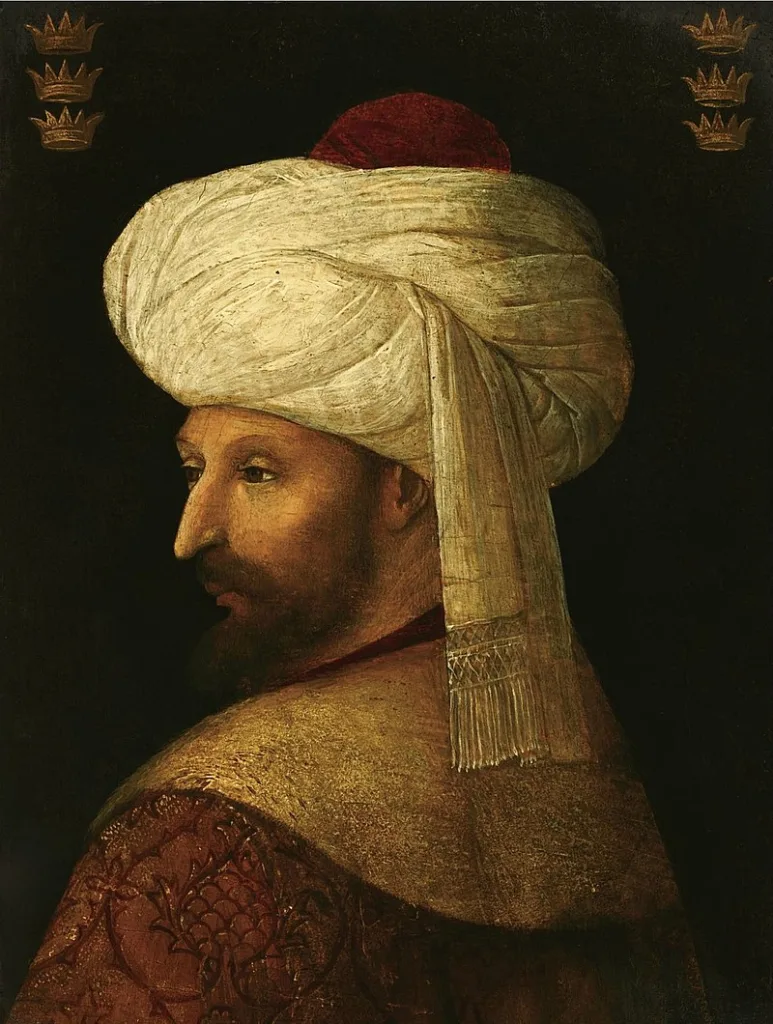
Portrait of Mehmet II painting by Gentile Bellini
The Conquest of Constantinople and a New Era
In 1453, at the age of 21, Mehmet achieved one of the most significant military triumphs in world history by conquering Constantinople after a 53-day siege.This victory marked the end of the Byzantine Empire and the Middle Ages. His use of innovative strategies, including transporting ships overland to the Golden Horn, astonished the world.
Rebuilding Istanbul as a Capital
Following the conquest, Sultan Mehmet focused on transforming a war-torn city into a thriving imperial capital. He invited people from various ethnic and religious backgrounds to repopulate the city and allowed the Orthodox Church to continue functioning. He appointed Gennadios Scholarios as the new Patriarch of Constantinople, exemplifying his religious tolerance.
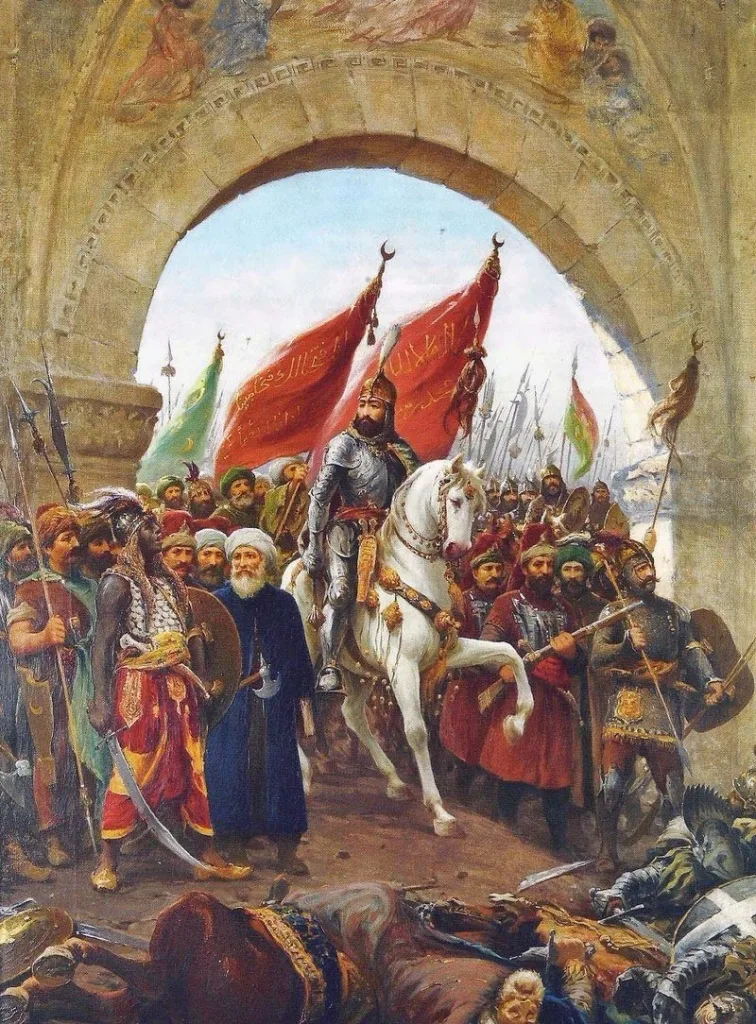
The entry of Sultan Mehmet II into Constantinople depicted in a painting by Fausto Zonaro.
Military Infrastructure and the Rumeli Fortress
Prior to the conquest, he ordered the construction of Rumeli Hisarı (Boğazkesen) to control the Bosphorus Strait. He also founded the Kasımpaşa Naval Arsenal, laying the groundwork for the future strength of the Ottoman navy in the Mediterranean.
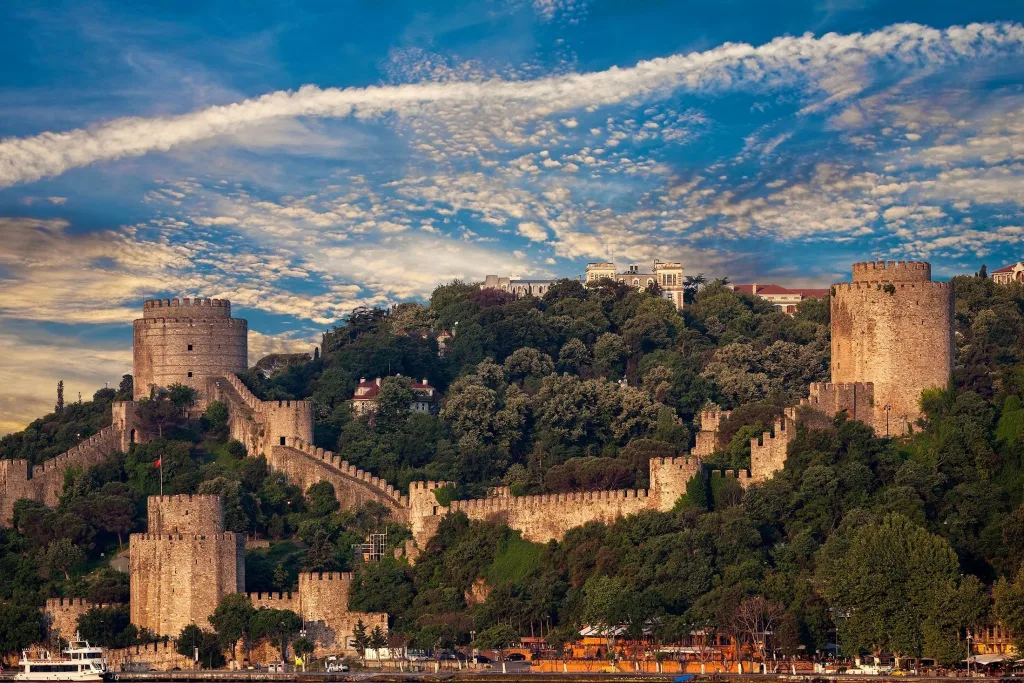
Rumeli Hisarı
Political Expansion in Anatolia and the Balkans
During his reign, Mehmet subdued the Karamanid Beylik in Anatolia and conquered the Empire of Trebizond. In the Balkans, he led campaigns in Serbia, Bosnia, and Albania, clashing repeatedly with Skanderbeg, a prominent Albanian resistance leader.
Legal Reforms and the Kanunname-i Ali Osman
Sultan Mehmet codified one of the first written Ottoman law books, the Kanunname-i Ali Osman, which reinforced centralized authority and clarified succession laws. It included the controversial yet historically significant principle of fratricide, aimed at securing the stability of the empire.
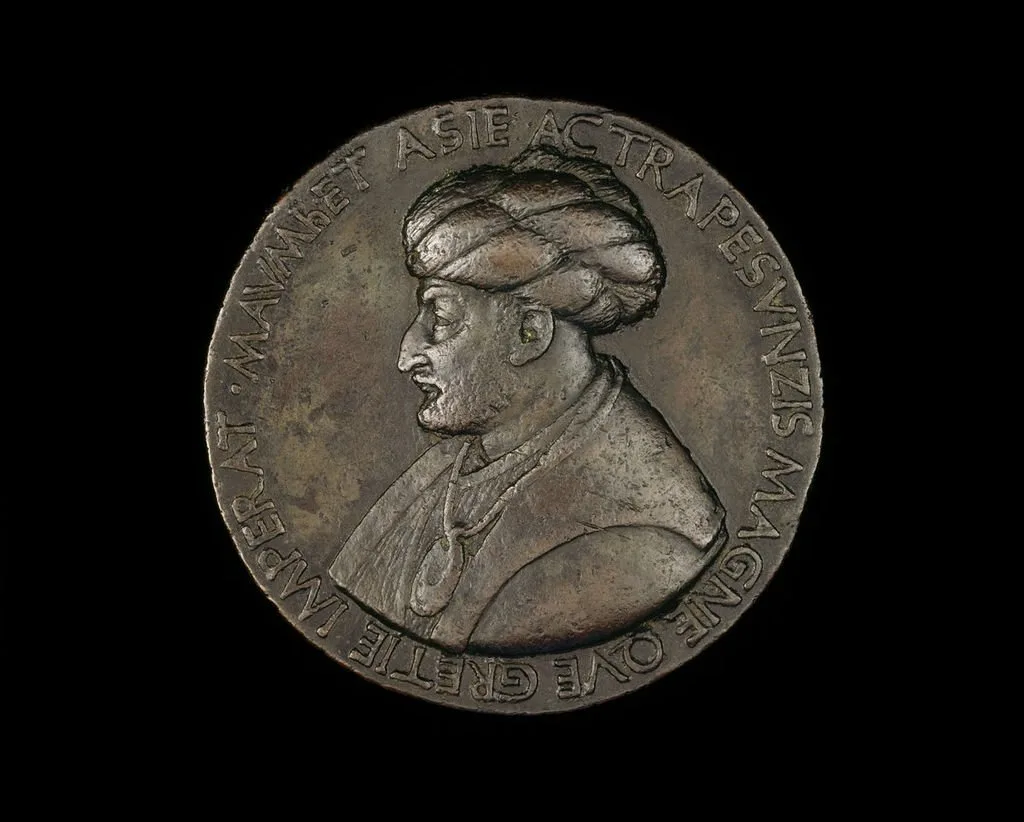
A bronze medal of Mehmet II by Bertoldo di Giovanni.
Science and Knowledge at the Imperial Court
He invited scholars such as Ali Qushji, a renowned mathematician and astronomer, to his court and held scholarly debates in Hagia Sophia. He also established the Sahn-ı Seman Madrasahs, which became the foundation of what would later evolve into Istanbul University.
Patron of the Arts: The Bellini Portrait
An admirer of Western art, Sultan Mehmet invited the Italian painter Gentile Bellini from Venice to create his portrait. This iconic work not only introduced oil portraiture to the Ottoman court but also shaped the European image of the Turkish sultan as a sophisticated ruler.

A portrait of Mehmet II by Nakkaş Sinan Bey, showing symbolically both rose (peace) and arrow trigger (zıhgir – war) on his hand.
Language Mastery and Literary Pursuits
Fluent in Arabic, Persian, Ottoman Turkish, Greek, Latin, Hebrew, Slavic, Chaldean, and Italian, Mehmet was a highly educated polymath. He was not just a reader of literature but also a poet himself. Using the pen name “Avni”, he composed many elegant poems within the classical Ottoman divan tradition.
Death and Enduring Legacy
Sultan Mehmet passed away near Gebze in 1481 under mysterious circumstances: some historians suspect poisoning. He was buried in Fatih Mosque Complex in Istanbul. Today, his name lives on through bridges, parks, schools, and countless works of art and literature across Turkey and beyond.
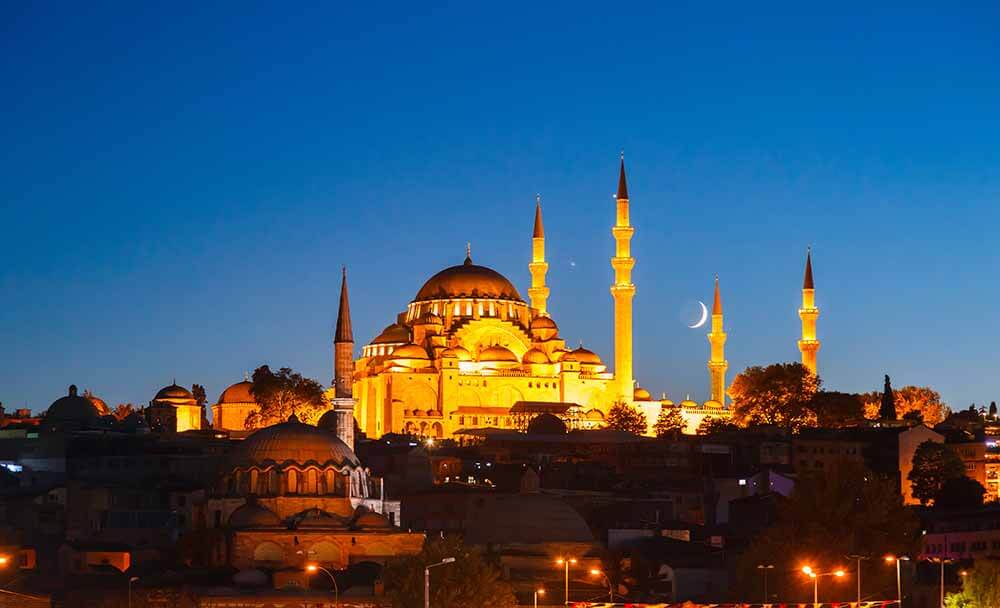
Fatih Mosque in Istanbul, with beautiful sunset in background.