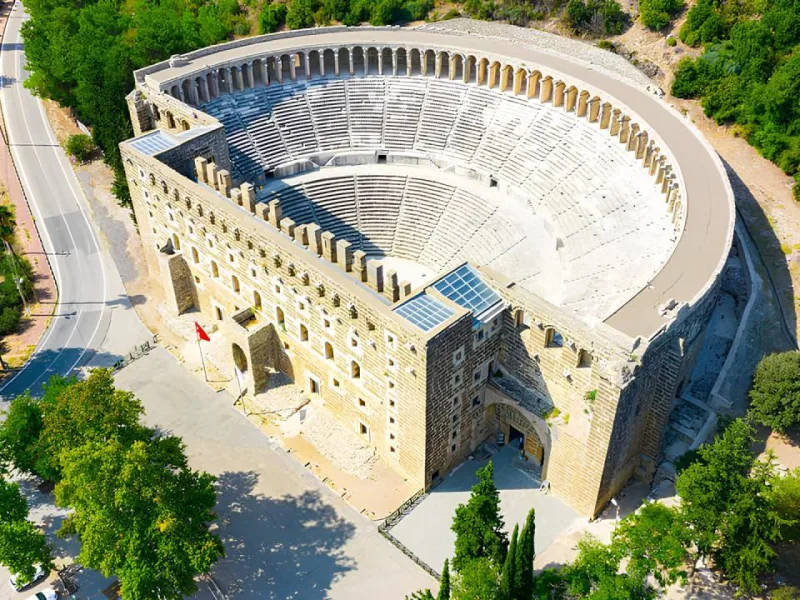
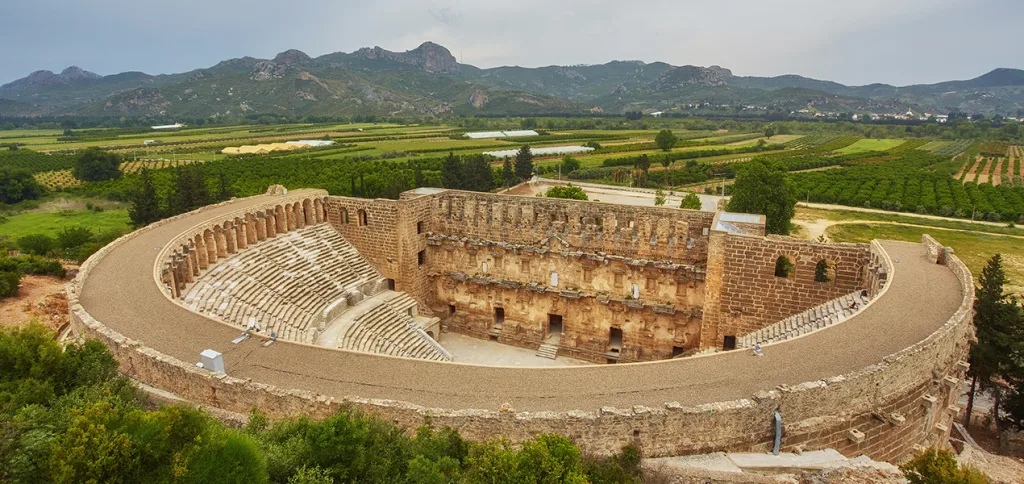
Located in the Serik district of Antalya, Aspendos is a magnificent ancient city that has survived to the present day. Famous for its ancient theater, the city was established by the Achaeans. Positioned on two hills, one large and one small, Aspendos is visited by thousands of tourists every year. It is believed that the city was one of the wealthiest settlements of its time.
The Origins of Aspendos
There are various theories regarding the origin of the name “Aspendos.” Some suggest it comes from the Luwian language, meaning “the city by the water.” The city is also believed to have been founded either by colonists from Argos or the mythological hero Mopsos.
From the Bronze Age to Roman Splendor
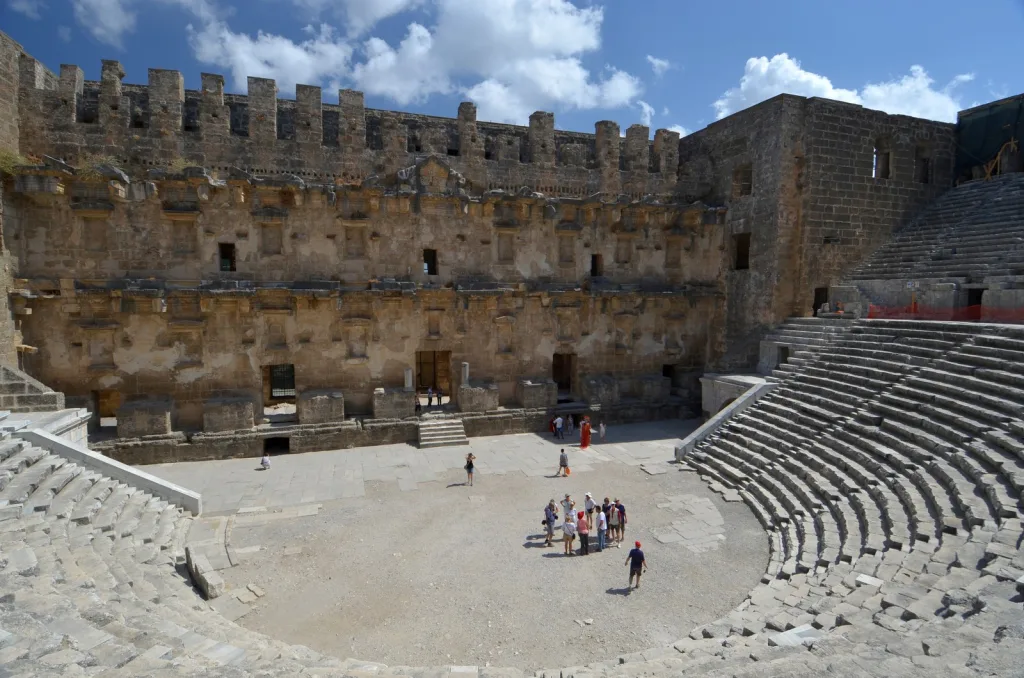
The history of Aspendos dates back to the Bronze Age and was founded in the 10th century BCE near the Köprüçay River (formerly Eurymedon). Its iconic theater, however, was built in the 2nd century CE by the Romans. For many years, the city’s main source of income was salt extracted from Lake Kapria. Since salt was a highly valuable commodity at the time, this greatly increased the city’s wealth. With the expansion of trade routes, Aspendos became one of the golden cities of its era.
A Hub for Trade and Craftsmanship
Aspendos played a vital role in agriculture and trade, particularly in winemaking, olive and olive oil production, grain, and fresh fruit exports. It was also famous for its textiles and furniture, especially wooden furniture made from lemon trees, which supported the local economy.
Engineering Marvel: The Aspendos Aqueduct
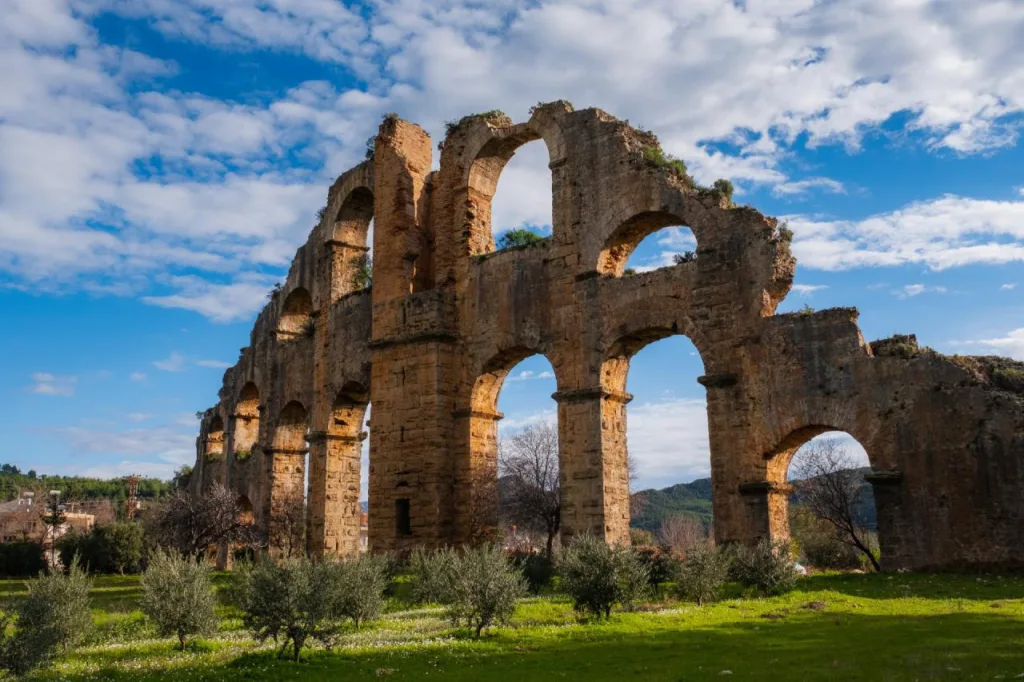
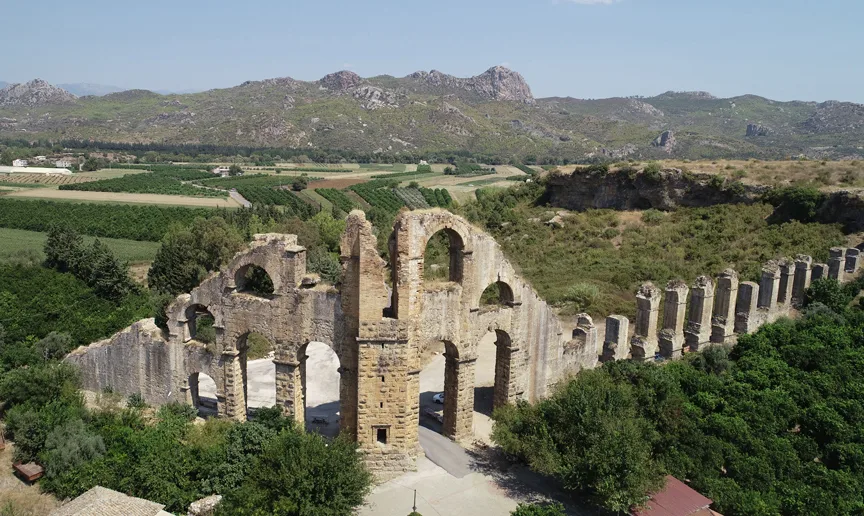
One of the most significant surviving structures in the city is the Aspendos Aqueduct, which once supplied the city’s water. Considered an engineering marvel of its time, the aqueduct was commissioned by Tiberius Claudius Italicus and opened for public use.
The Legendary Theater of Aspendos
Of course, the most iconic structure in Aspendos is its ancient theater. It is one of the best-preserved Roman theaters in Anatolia. With a seating capacity of around 15,000, the theater impresses not only with its size but also with its outstanding acoustics: so perfect that even whispers on the stage can be heard from the uppermost rows. The theater was designed by Zenon, a local architect and son of Theodorus. Because the theater is located in the village of Belkıs, Aspendos is sometimes referred to by the same name.
A Living Stage: Culture and Festivals
Today, the Aspendos Theater remains a vibrant cultural venue, hosting the annual Aspendos International Opera and Ballet Festival each summer. This proves that the ancient structure continues to serve as a living stage for the arts.
Architectural Treasures Beyond the Theater
The city also includes other Roman-era structures, such as the agora (marketplace), basilica (public building), gymnasium (training ground), stadium (arena for races), and necropolis (cemetery), all of which offer a window into the city’s organized urban design.

The Legend of Princess and the Architects
Aspendos is also the subject of local legends. One tells of a king whose daughter was famed for her beauty. Many suitors sought her hand in marriage, but the king could not decide. He announced a competition: whoever provided the greatest benefit to the city would marry his daughter. One contender built an aqueduct, while the other constructed the theater. The king was initially torn, but was so impressed by the acoustics of the theater that he chose architect Zenon as his son-in-law.
A Gem of Anatolian Civilization
With its architectural brilliance, historical richness, and legendary stories, Aspendos remains one of the most treasured ancient heritage sites in both Antalya and all of Anatolia. It is a host place for many festivals throughout the year.