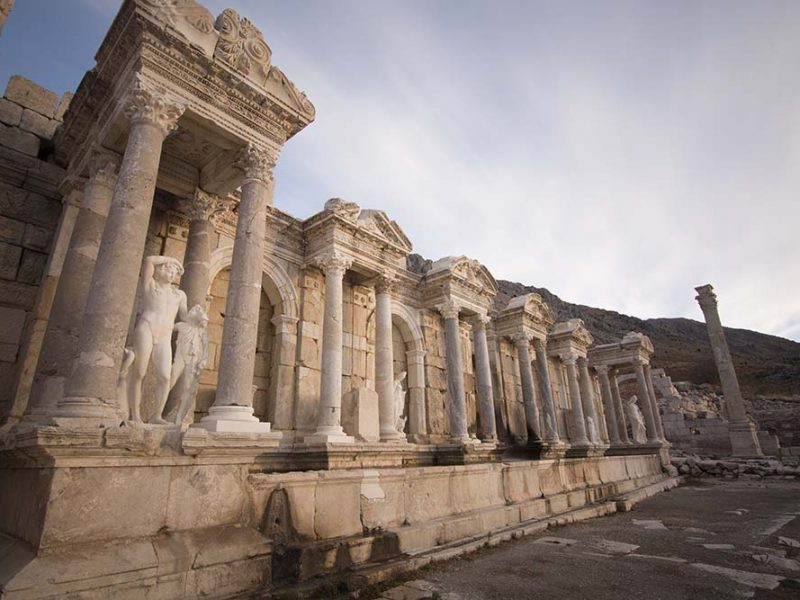
Nestled in the southwestern region of Turkey, in the district of Ağlasun in Burdur province, lies Sagalassos Ancient City, one of the best-preserved ancient cities from the Roman era. Although most of the standing remains date back to Roman times, the origins of settlement in the area stretch as far back as the 3rd century BCE, during the Hellenistic period. As one of the major cities of the ancient Pisidia region, Sagalassos evolved into a significant political and cultural center. It was even among the cities conquered by Alexander the Great during his campaign through Anatolia.
Rediscovery and Archaeological Significance
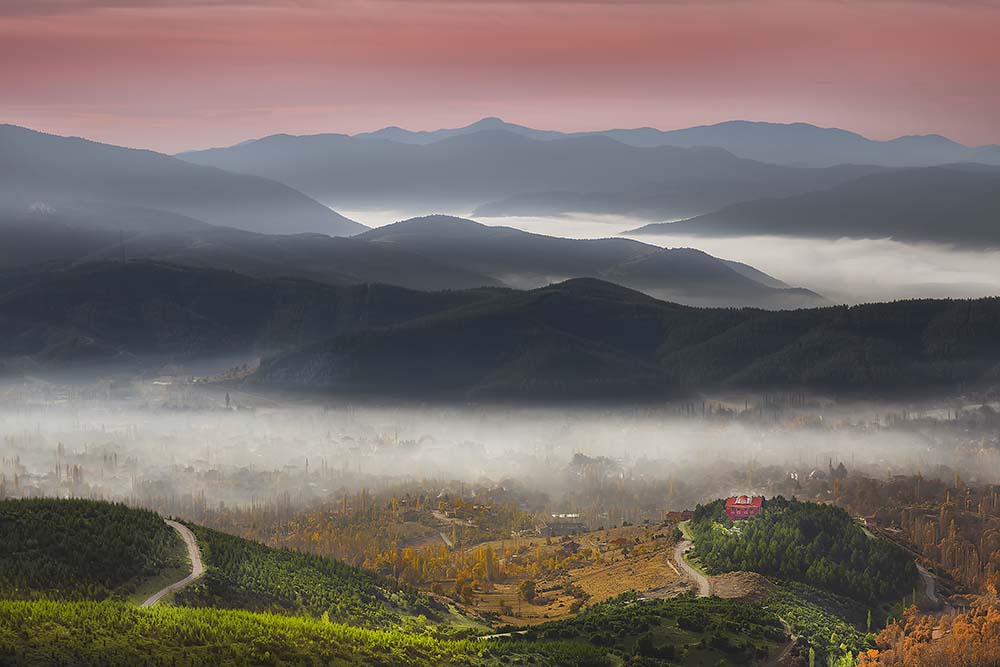
Sagalassos was first brought to Western attention in 1706 by French traveler Paul Lucas, but it wasn’t until 1990 that systematic excavations began. Perched 1,700 meters above sea level on the slopes of Mount Akdağ, the city’s strategic position and proximity to natural resources made it a vital settlement throughout antiquity. Fertile lands, abundant water sources, and clay deposits ideal for high-quality ceramic production contributed to the city’s prosperity.
Urban Planning in the Clouds
Surrounded by mist and clouds at high altitude, Sagalassos features a variety of well-preserved structures: residential buildings, Roman baths, an agora (marketplace), monumental fountains, kilns, temples, a church, and one of the world’s highest-altitude ancient theatres. Remarkably, the city was laid out using a terracing system adapted to the mountainous terrain, which not only ensured safety but also enabled the functional and aesthetic placement of public spaces. The agora served as a bustling hub of commerce and civic life, while temples hosted religious ceremonies. The baths, a hallmark of Roman life, offered not just cleanliness but social interaction.
A Roman Center of Art and Culture
Under Emperor Augustus, Sagalassos reached its zenith, becoming a thriving center for art and culture. The rich local stone quarries allowed the construction of grand monuments and colossal statues. Among the most impressive discoveries are the nearly 5.5-meter-tall statues of Emperors Marcus Aurelius and Hadrian, now housed in the Burdur Museum.
The Antonine Fountain: A Masterpiece of Prestige
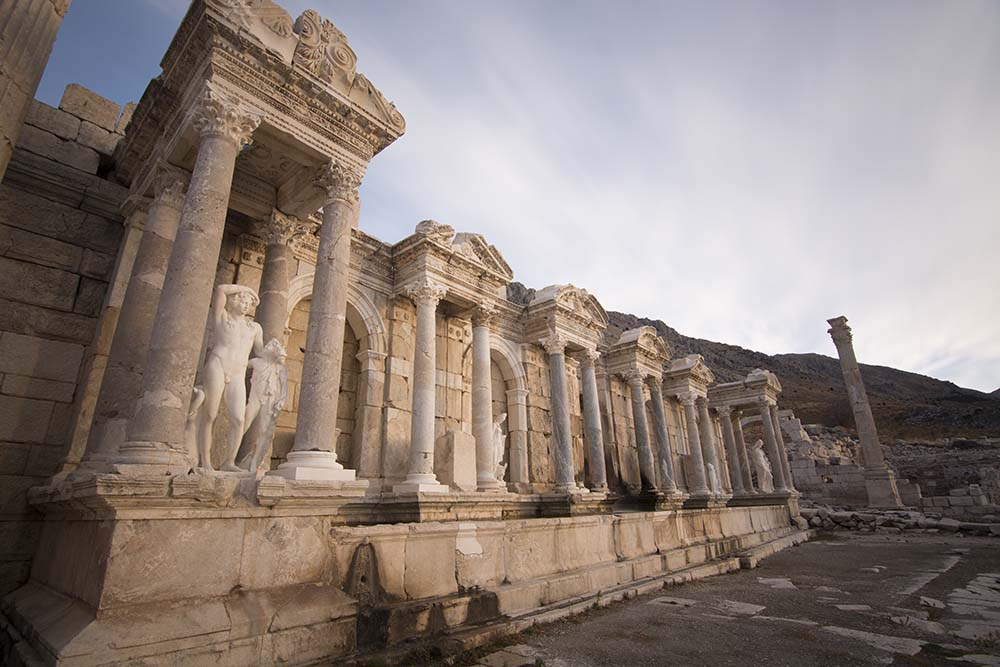
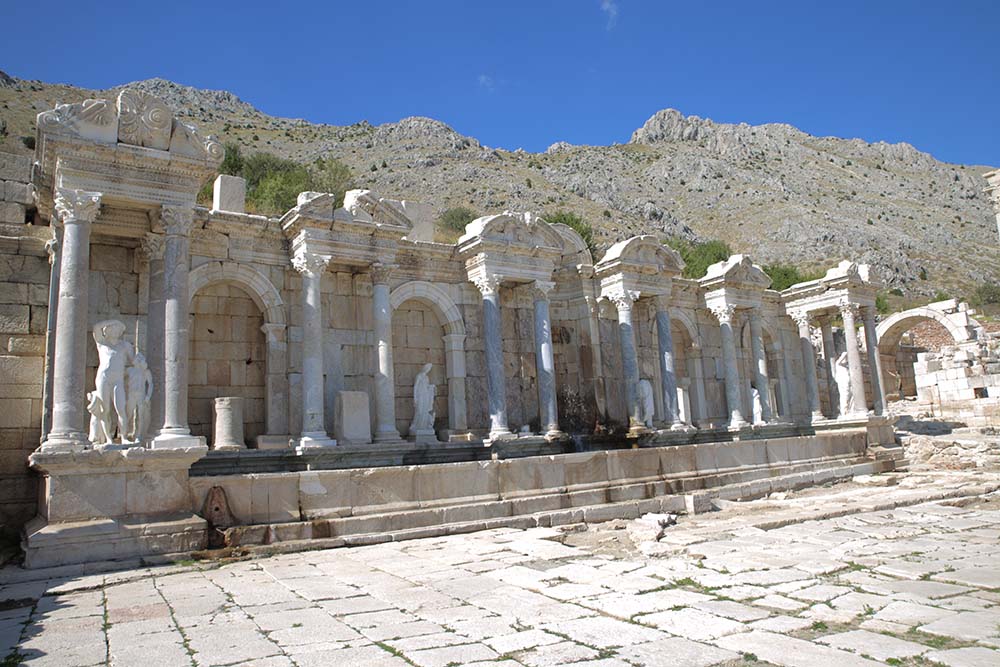
One of the city’s most iconic landmarks is the Antonine Fountain, built during the reign of Emperor Marcus Aurelius as a symbol of prestige. This monumental structure measures 28 meters in length and 9 meters in height. It is adorned with decorative elements dedicated to Dionysus, the Roman god of wine and festivity.
The Theatre: The Jewel of the Mountains
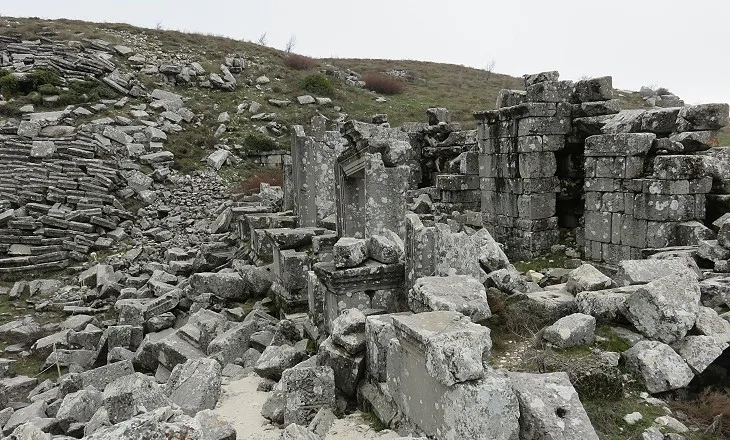
The city’s theater, carved into a sloping hillside, was praised by British archaeologist Charles Fellows as “the most elegant and beautiful theatre I have ever seen or heard of.” With a capacity of approximately 9,000 spectators, it is the highest-altitude ancient theater in the world, offering stunning views and remarkable acoustics.
The Heroon: Monument to Heroes
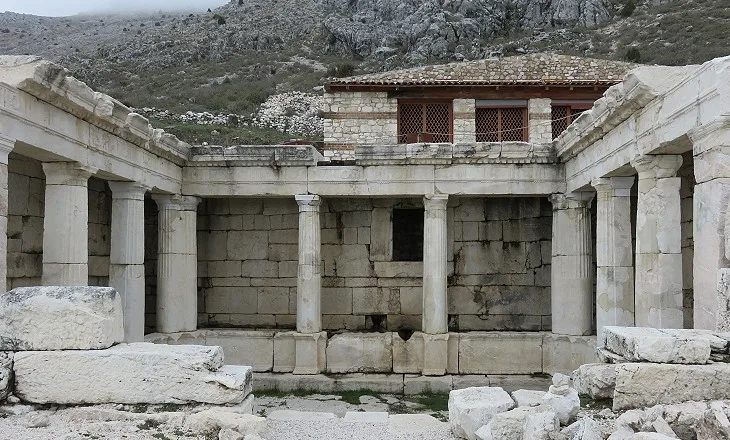
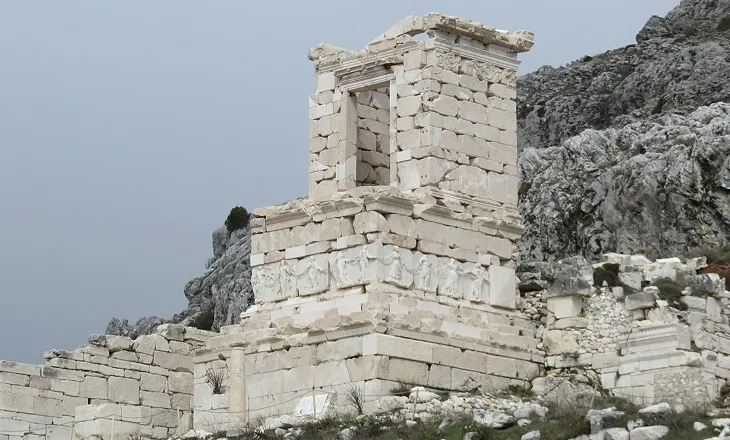
Another significant structure is the Heroon, a memorial dedicated to local heroes. This 14-meter-long monument features a beautifully sculpted frieze of 14 dancing maidens, a podium, and a central structure. Both architecturally and artistically, the Heroon exemplifies the aesthetic sophistication of Roman Sagalassos.
Rock-Cut Tombs of the Northern Necropolis
In the northern necropolis, visitors can find arcosolia: imperial-era tombs carved into the rock face with arched niches. These provide important insights into Roman funerary architecture and practices.
A Living Archaeological Landscape
Today, Sagalassos attracts both tourists and scholars alike. Walking trails, interpretive signage, and directional markers make exploring the site both educational and enjoyable. Ongoing excavations and restoration efforts have helped revive many of the city’s structures, with the Antonine Fountain, theatre, and Heroon being the most popular attractions.
Easily accessible from Burdur city center, Sagalassos is best visited in spring or autumn, when the mountain air is cool and clear. A visit to the Burdur Museum, where many of the city’s most important artifacts are displayed, provides additional context and enriches the experience. While around, why not visit Salda Lake?
From Earthquake to Eternal Legacy
In 590 CE, a devastating earthquake led to the abandonment of Sagalassos. Remarkably, the site remained largely untouched by later settlements, preserving its ruins in extraordinary condition. This level of preservation earned it a place on the UNESCO World Heritage Tentative List in 2009, and it remains a strong candidate for full inscription on the World Heritage List.