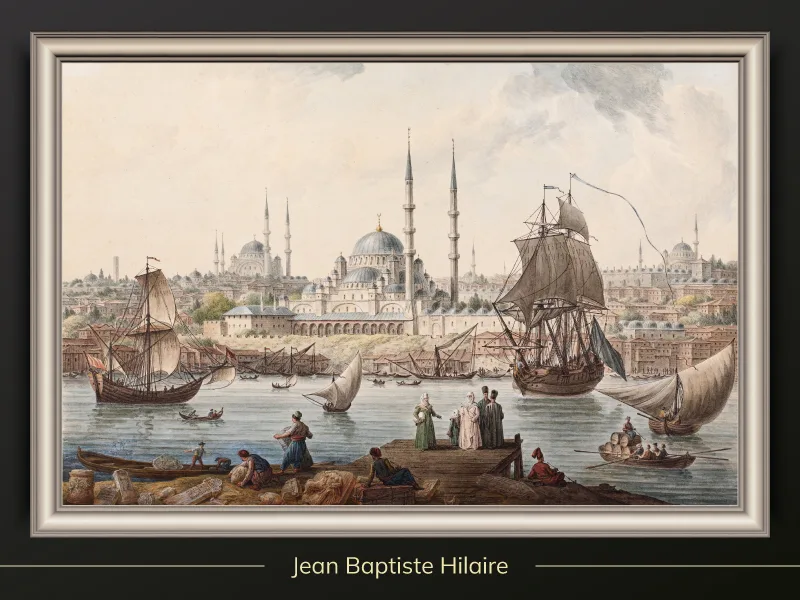
Straddling the continents of Asia and Europe and serving as the capital of the Roman, Byzantine, and Ottoman Empires, Istanbul has been a major hub of trade and culture for centuries, with its islands, architecture, and natural beauty. The city’s impact on artists can be seen in countless works of art. In this article, you can explore Old Istanbul paintings as reflected in the brushstrokes of 10 painters who visited our country from the late 1700s onward.
Istanbul from Ortaköy at Sunset
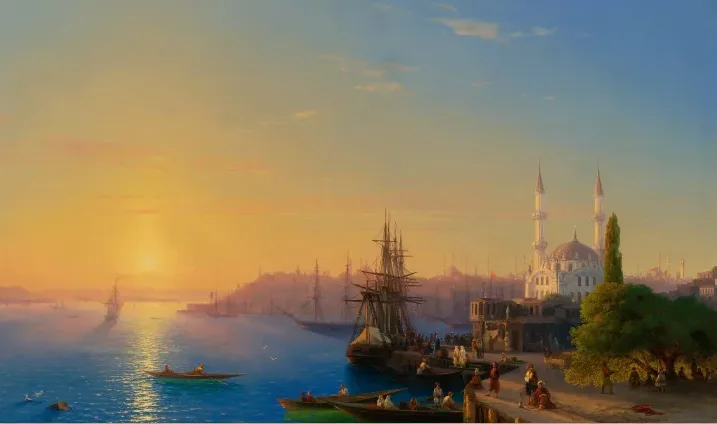
Dated 1856, Istanbul from Ortaköy at Sunset features the Büyük Mecidiye Mosque in Ortaköy. Russian painter Ivan Aivazovsky, a prominent 19th-century artist, visited Istanbul in 1874 at the invitation of Sultan Abdülaziz. Known for his delicate romantic depictions of Istanbul’s landscapes, Aivazovsky visited the city eight times over 45 years. One of his paintings for the Sultan was so admired that he was awarded the Order of Osmaniye. This sunset scene, with ships at the pier and people engaged in their daily routines, is among the rare visual records of the era’s Istanbul.
Sunrise on the Golden Horn
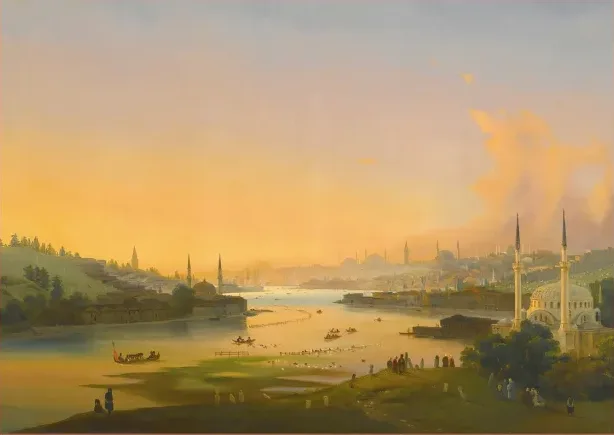
Venetian painter Ippolito Caffi, famous for his landscapes, was known for his mastery in capturing light and sunlight. During a journey through Greece, the Middle East, and Anatolia in the 1840s, he spent two years in Istanbul. The oil paintings he created here are now displayed in some of the world’s most prestigious art galleries. His Sunrise on the Golden Horn vividly showcases his skillful use of light.
The Patrona Halil Rebellion
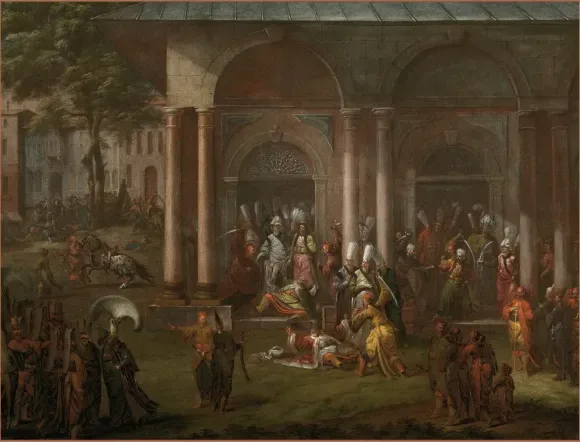
French painter Jean Baptiste Vanmour arrived in Istanbul in 1699 with the newly appointed French consul. While the consul eventually returned home, Vanmour remained in Istanbul for the rest of his life. He painted both everyday life in the Ottoman Empire and scenes from the imperial court, becoming one of the first artists to paint inside the palace. His depiction of the 1730 Patrona Halil Rebellion is considered one of the most fascinating visual documents of 18th-century Ottoman history. Many of Vanmour’s works are displayed at the Rijksmuseum in Amsterdam, while others can be seen at the Italian Consulate in Istanbul.
Panorama of Istanbul
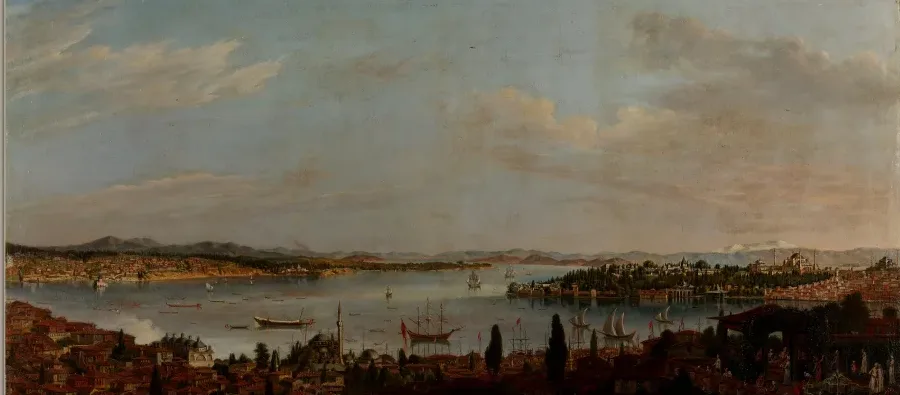
Italian painter Antoine de Favray arrived in Istanbul in 1762 to create works depicting Turkey and the Turks. In addition to portraits and scenes of ceremonial receptions, he became famous for his views of the city drawn from the slopes of Beyoğlu, then known as Pera. His Panorama of Istanbul, among his best-known works, captures the view from the Russian Palace where he resided for a time. The gardens in the foreground belong to the palace, while in the background, beyond Topkapı Palace and the now-lost Kavak Palace, rises the snow-covered Uludağ.
Sultan Abdülmecid’s Arrival at the Beylerbeyi Mosque
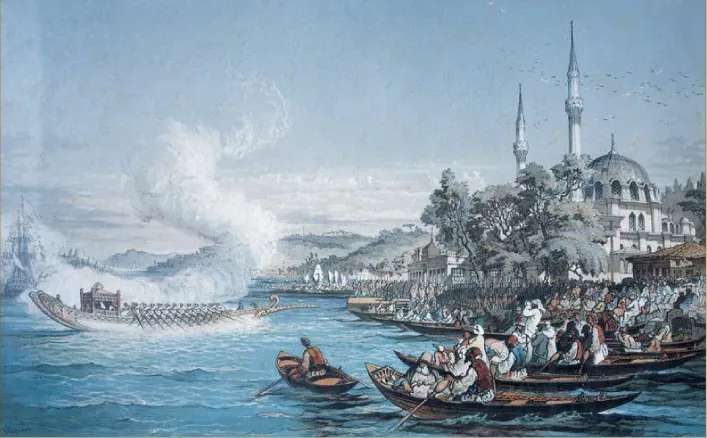
Maltese painter Amedeo Preziosi, a devoted lover of Istanbul, first visited the city in the early 1840s and decided never to leave, settling in Beyoğlu. Using part of his home as a studio, he produced many works featuring Istanbul. Some are in the collection of the British Embassy, others in the British Museum. One of his most famous works, Sultan Abdülmecid’s Arrival at the Beylerbeyi Mosque, depicts the Sultan’s ceremonial Friday procession arriving by imperial caique.
Istanbul View
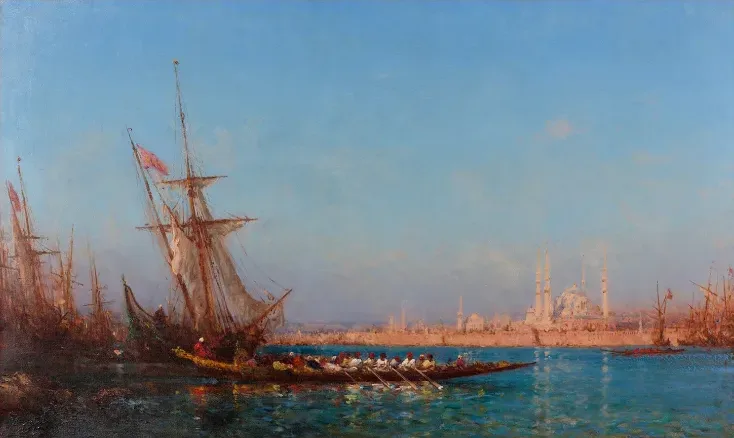
French artist Félix Ziem, one of the most distinctive landscape painters of the 19th century, was deeply inspired by his 1856 visit to Istanbul, during which he lived for several months in Beyoğlu. His works capture Istanbul and its urban life in vivid detail. In Istanbul View, he portrays the city’s skyline crowned with grand mosques, with sailboats in the harbor and rowers navigating a caique in the foreground.
View of the Princes’ Islands from the Fenerbahçe Coast
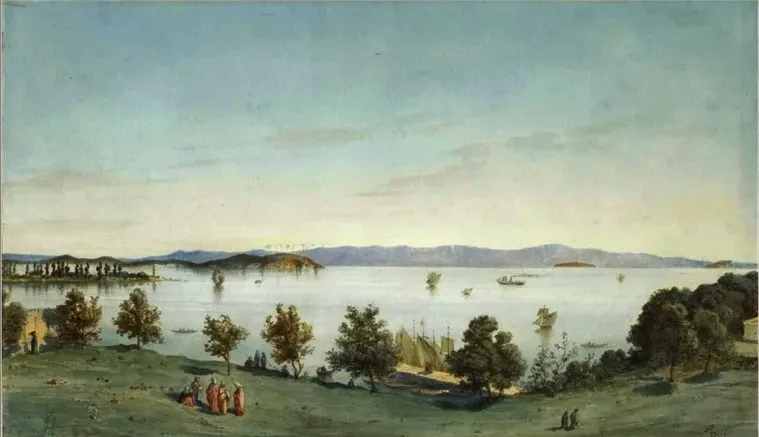
Italian painter Salvatore Valeri, who arrived in Istanbul in 1883 and lived in Şişli, was among the first art teachers at the Sanayi-i Nefise Mektebi (the Imperial School of Fine Arts). Serving there for over 30 years, he taught many prominent Turkish painters and even gave private lessons to Sultan Abdülhamid II’s sons. Known for his frequent depictions of human figures and daily life, Valeri’s View of the Princes’ Islands from the Fenerbahçe Coast offers a rare glimpse of Istanbul’s Asian shoreline.
Istanbul from the Entrance of the Golden Horn
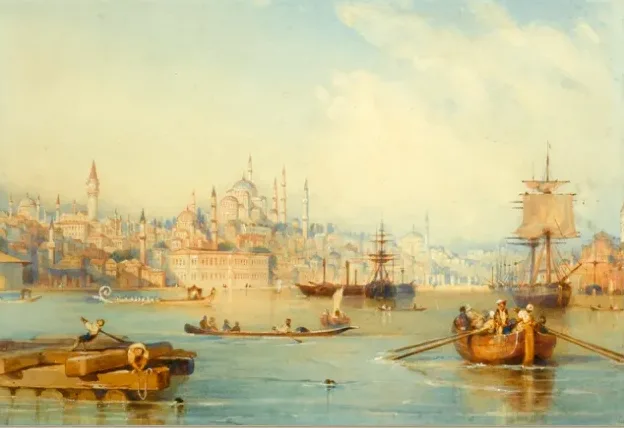
British painter Thomas Allom visited the Ottoman Empire in the 19th century during the reign of Sultan Mahmud II, traveling through many cities and residing in Istanbul for a period. Allom’s works stand out for their vibrant colors and the intricate detail in his figures. In Istanbul from the Entrance of the Golden Horn, he meticulously portrays the grandeur of the Historic Peninsula’s architecture and the bustling maritime traffic of the Golden Horn.
The Conquest of Constantinople
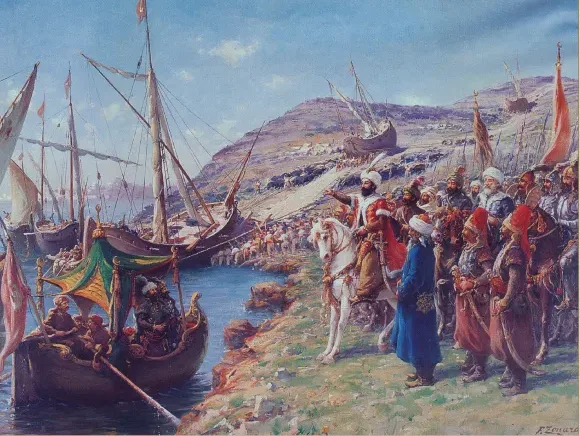
Italian painter Fausto Zonaro, famed as a palace artist, came to Istanbul in 1891 and created works that earned him international acclaim. In addition to historical scenes, he painted depictions of daily life, ceremonies, traditions, landscapes, and portraits. After Sultan Abdülhamid II admired his painting The Imperial Cavalry Regiment Crossing the Galata Bridge, Zonaro was awarded the Order of the Medjidie. One of the few artists to paint the Sultan’s portraits, Zonaro completed The Conquest of Constantinople in 1908. It is now on display at the Palace Collections Museum in Beşiktaş.
The New Mosque and Istanbul Harbor
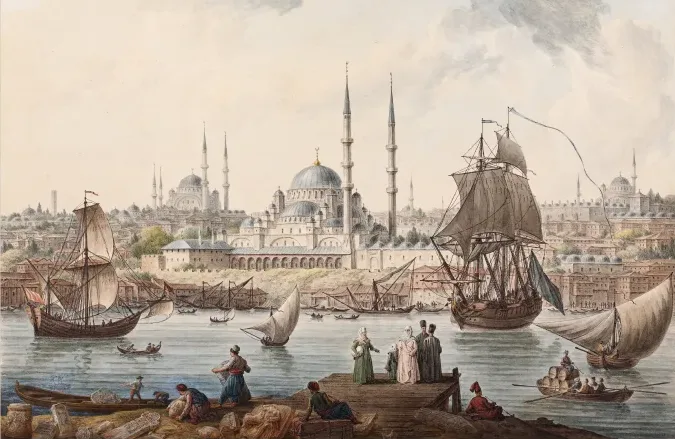
French painter Jean Baptiste Hilaire was renowned for his landscapes with figures and his ability to capture the details of everyday life. Visiting the Aegean cities and Istanbul in the 18th century, he produced many oil paintings and engravings during his travels. His work The New Mosque and Istanbul Harbor depicts the loading of ancient artifacts -collected by the French Ambassador Count Choiseul-Gouffier- onto a ship in the Golden Horn for transport to France.