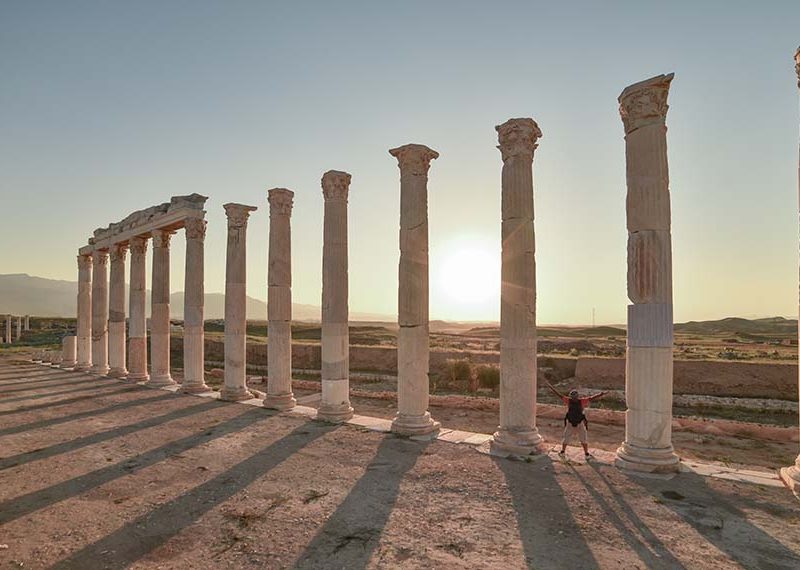
Situated in the heart of the Lycus Plain, on the southwestern border of the Phrygia region, the ancient city of Laodicea was once one of Anatolia’s largest and most prosperous metropolises.
Located just 6 km north of modern-day Denizli, within the boundaries of the villages of Eskihisar, Goncalı, Korucuk, and Bozburun, Laodicea lies on the road to Pamukkale (ancient Hierapolis), about 10 km to the north. Together with Hierapolis and Tripolis, it forms one of the most important archaeological heritage sites in the region. Excavations reveal that the area saw continuous settlement from the Chalcolithic Age (c. 5500 BC) until the 7th century AD.
Foundation and Historical Development
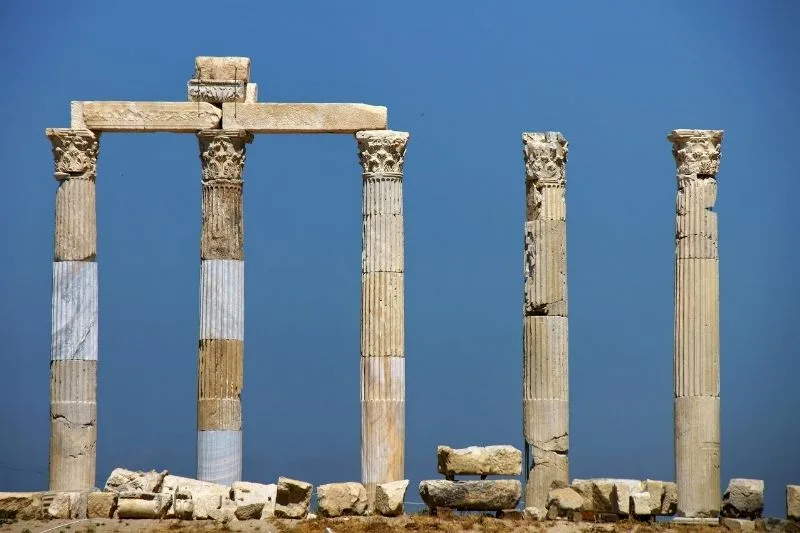
According to ancient sources, Laodicea became a recognized city during the Hellenistic period. It was founded in the mid-3rd century BC by Seleucid King Antiochus II and named in honor of his wife, Laodice. Over the centuries, the city came under the influence of various kingdoms before becoming part of the Roman Republic in 130–129 BC. Laodicea reached its peak during the Hellenistic and Roman Imperial eras, evolving into a thriving hub of commerce, art, and culture.
A Center of Trade and Religion
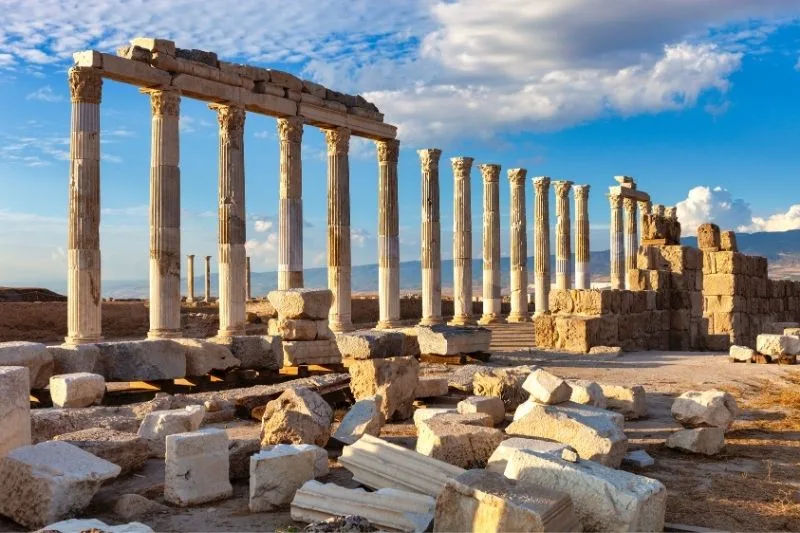
Thanks to its position at the crossroads of major trade routes, commerce -especially textile production and trade- was the city’s lifeblood. Laodicea also profited from the trade of marble, grain, and livestock. As one of the Seven Churches of Asia mentioned in the Book of Revelation, the city became an influential religious center during the Early Byzantine period. The discovery of numerous medical instruments suggests that Laodicea may also have served as a healing center in antiquity.
Urban Planning and Architecture
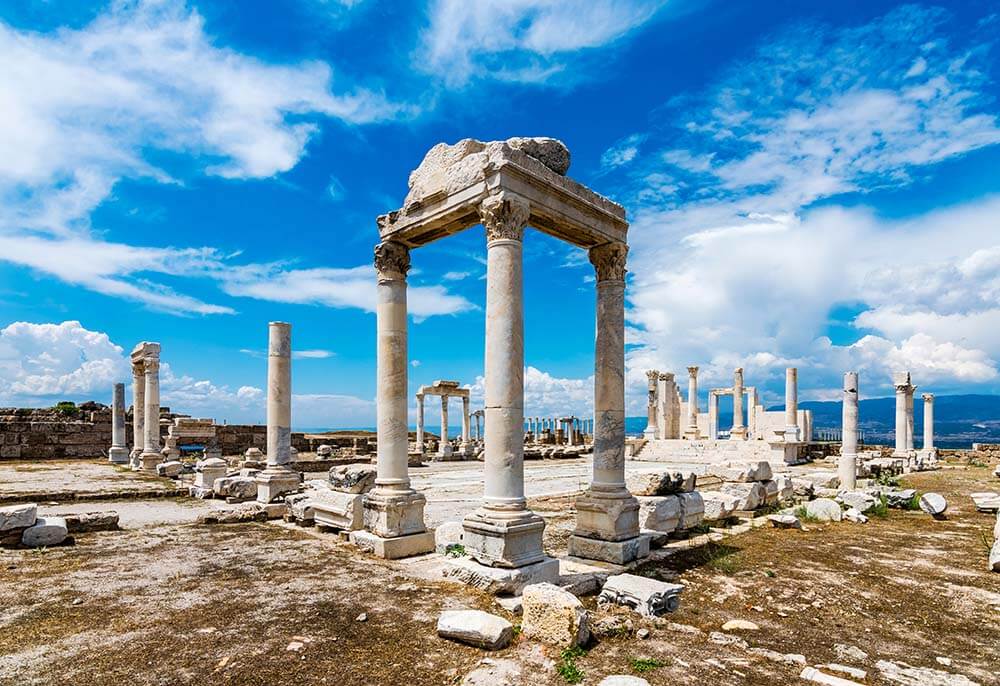
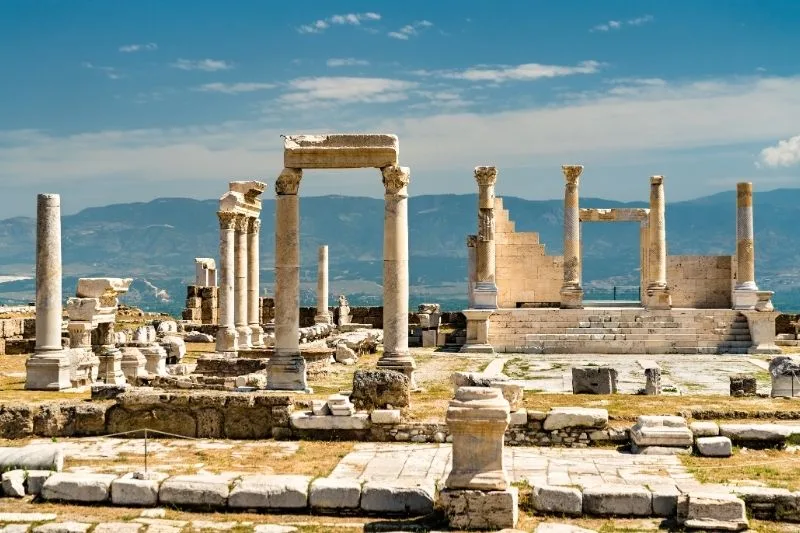
City planning in the Hellenistic and Roman periods was remarkably advanced. The urban layout followed a grid system, with main and side streets intersecting at right angles. Temples, civic buildings, and public spaces were carefully integrated, and the infrastructure was highly functional. Vast bath complexes were connected to agoras (marketplaces).
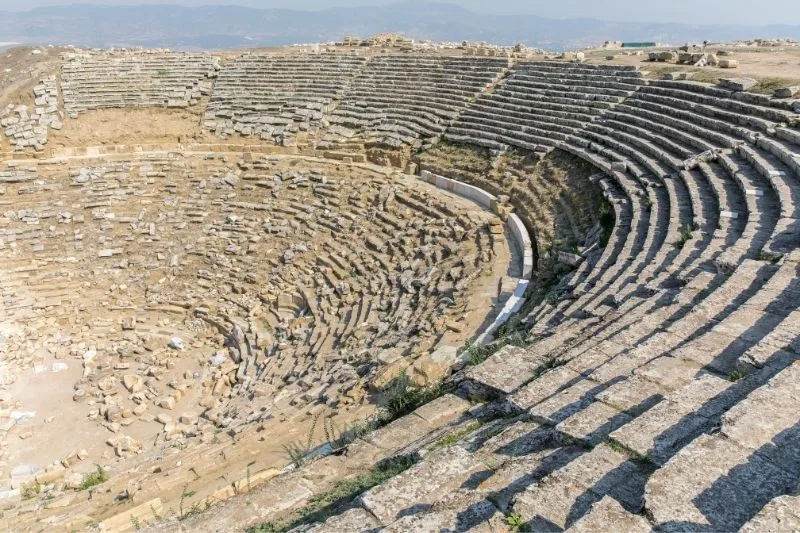
On the city’s southern side stood Anatolia’s largest known stadium, while to the north, two theaters -one facing east and the other west- reflected the city’s cultural vitality. Peristyle houses were flanked by shops, blending residential and commercial life into a vibrant urban fabric.
Symbols, Agriculture, and Textile Heritage
Intriguingly, ancient rooster reliefs point to the origins of today’s famous Denizli Rooster symbol. Carvings of pomegranates, poppies, and gourds illustrate the continuity of agricultural production from antiquity to the present. Excavations have unearthed spindle whorls dating back 4,000 years and textile dye workshops with pigments from 1,600 years ago, underscoring Denizli’s ancient role as a textile powerhouse.
Earthquakes and Abandonment
Over its long history, Laodicea endured numerous earthquakes, each time being rebuilt: until a devastating tremor during the reign of Emperor Phocas in the 7th century AD led to its complete abandonment. Survivors relocated to the northern slopes of Mount Salbacus (modern Babadağ), in present-day Denizli-Kaleiçi and Hisarköy.
Laodicea Today
Today, Laodicea is on the UNESCO World Heritage Tentative List, with excavations ongoing since 2003 under the leadership of Professor Celal Şimşek from Pamukkale University. The city continues to reveal its grandeur, offering an extraordinary glimpse into the urban life, commerce, and culture of ancient Anatolia.
Visitor Information
Location & Getting There
- Located just 6 km north of Denizli city center, near Goncalı neighborhood, around 16 km from Pamukkale
- Easily accessible via minibus from Denizli terminals, or by private car; approximately 10 minutes along the Pamukkale road
Opening Hours
- Summer (April-October): 08:00 – 19:00
- Winter (October-April): 08:00 – 17:00
- From July 1 to October 1, 2025, extended summer hours until 21:00 for Laodicea have been introduced by local authorities
Entrance Fees
- Approximately 18 TL for adults (some variation across sources from 18 to 50 TL)
- Museum Card (Müzekart): Up to 2 free visits per year, or unlimited entry with Müzekart+
Visitor Experience
- The site features a 2 km walking path from the parking area through the ruins, offering views of the major monuments in about 1–2 hours
- Facilities include a small café and restrooms near the parking lot