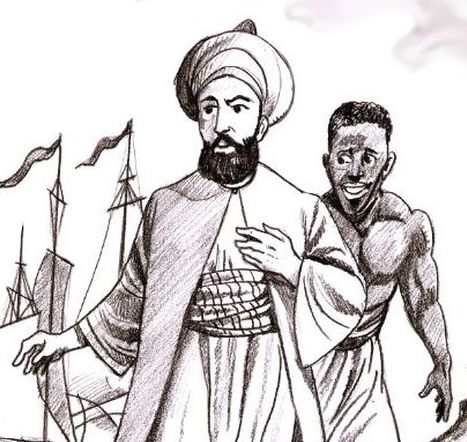
In the autumn of 1865, two Ottoman corvettes – Bursa and İzmir – set sail from Istanbul on a mission that should have been unremarkable: a long but well-charted voyage around the Cape of Africa to reach Basra in the Persian Gulf. The Suez Canal had not yet been opened, so the route demanded sailing the full length of the Atlantic. Aboard one of those ships was a quietly extraordinary man: Abdurrahman Efendi of Baghdad, the ship’s imam.
He would never complete the mission. A ferocious Atlantic storm off the West African coast drove both ships hopelessly off course. Days of helpless drifting followed – and when the ocean finally released them, the crews found themselves looking at an entirely unexpected coastline: Brazil.

What happened next would produce one of the most singular documents in Ottoman literature: a travelogue that offers the only surviving first-hand, written account of Muslim life in 19th-century Rio de Janeiro.
Abdurrahman Efendi was a Baghdad-born Arab scholar and cleric who served as a ship’s imam on Ottoman corvettes in 1865. He is primarily known for choosing to remain in Brazil to teach Islam to the local Afro-Brazilian Muslim community, and for subsequently writing the travelogue Müselliyetü’l-Garib.
A Storm Changes Everything
The Ottoman Empire’s decision to send warships around Africa to reinforce its Persian Gulf presence was a statement of imperial ambition. The route – south past the Iberian Peninsula, down the length of the African coast, around the Cape of Good Hope, and north to Basra – was arduous but established. Abdurrahman Efendi boarded as a religious official, responsible for leading prayers and maintaining the spiritual health of the crew.
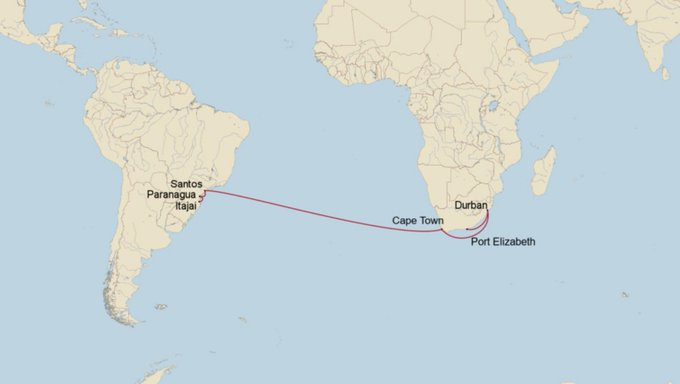
Somewhere past the Canary Islands, in the open Atlantic, the weather turned catastrophic. The two corvettes survived, but they lost all navigational control for days. When the skies cleared, the currents had done their work: the ships were far to the west, approaching the coast of South America. With damaged rigging and dwindling supplies, the commanders made the only practical decision – they put in at Rio de Janeiro.
Two Months in Rio – and a Discovery That Changed the Plan
The Ottoman ships remained in Rio de Janeiro for approximately two months while repairs were made and provisions restocked. During that time, something unexpected unfolded on the dockside.
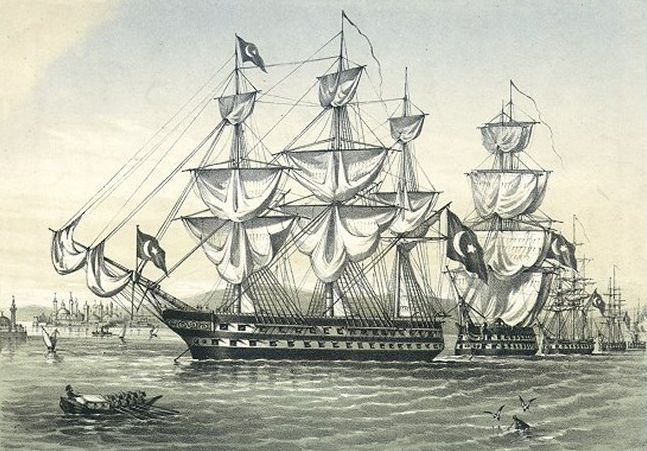
Rio’s harbor drew curious onlookers: Afro-Brazilian Muslims, descendants of enslaved West Africans who had been brought to Brazil across the preceding centuries, came to see the Ottoman warships. They had heard stories – apparently including alarming ones. According to Abdurrahman Efendi’s account, some believed the Ottomans to be cannibals. The sight of a living, breathing Ottoman crew rapidly dispelled that myth.
A second, deeper shock followed. The Afro-Brazilian Muslims had assumed Islam was exclusively a religion of Black Africans. Seeing Ottoman Turks – non-African, non-Black – prostrate themselves in prayer was, by Abdurrahman Efendi’s description, a moment of profound communal astonishment. The encounter shattered an isolation that had persisted for generations.
The “Moroccan Jew” and a Community Adrift
What Abdurrahman Efendi observed among the Afro-Brazilian Muslim community disturbed him deeply. Forced to practice their faith secretly under a slave-holding, Catholic-dominated society, these communities had drifted significantly from orthodox Islamic observance over the years.
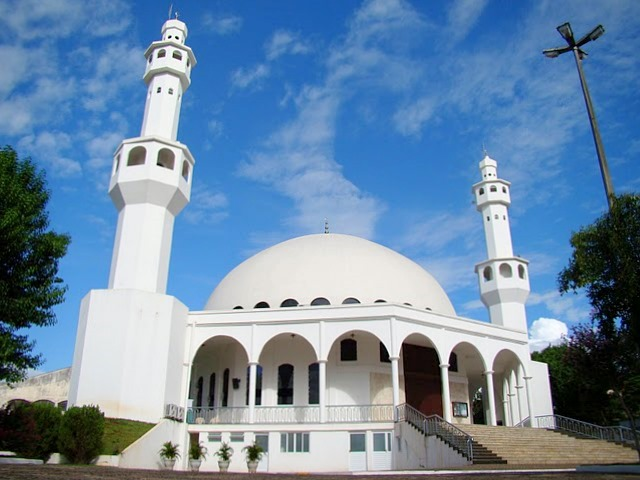
Most troubling was the figure who had installed himself as their religious authority: a man described in the travelogue as a Moroccan Jew who presented himself as a Muslim scholar. He had devised a series of practices with no Islamic basis whatsoever:
- He charged money for leading prayers.
- He told the community to observe Ramadan fasting in Sha’ban– the month before Ramadan.
- He taught that swallowing one’s own saliva would break the Ramadan fast.
- Consequently, community members walked through the streets wearing small bowls around their necks to spit into.
For a trained religious scholar, this was not merely eccentric – it was exploitation of an isolated community that had no access to correction. Abdurrahman Efendi made his decision.
The Decision to Stay
He would not re-board the ship. He explained his situation to the ship’s commander, who – in what reads as a quietly sympathetic act of bureaucratic creativity – reported to the authorities that a crew member had gone missing: “Despite all searches, he could not be found; he may have fled or become lost.”
The ships departed. Abdurrahman Efendi remained in Rio de Janeiro – voluntarily, deliberately, and at significant personal risk – to teach.
Years of Teaching in Rio de Janeiro
The historical record on the precise length of his stay is not perfectly uniform, but the consensus among scholars is approximately six years in Brazil. During that time, Abdurrahman Efendi taught Quranic recitation, corrected religious practice, and served as a de facto imam for Rio’s Afro-Brazilian Muslim community.
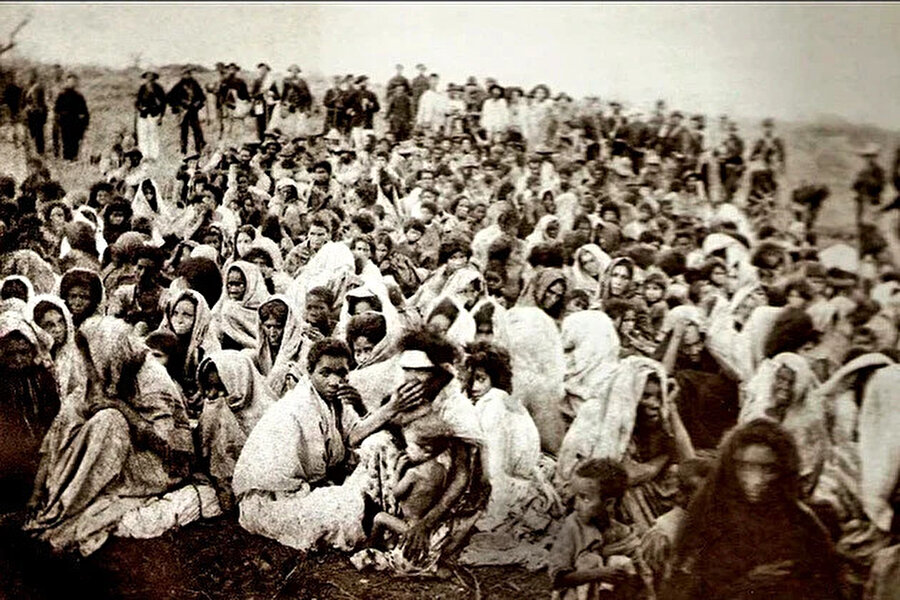
The community he served occupied a particularly harrowing social position. Afro-Brazilian Muslims were legally compelled to appear Christian. Open Islamic practice was forbidden. Worship was conducted in secret. The combination of forced concealment and isolation from the wider Muslim world had produced the doctrinal drift that had so alarmed Abdurrahman Efendi when he first encountered them.
His presence represented – for the first time in the living memory of that community – a connection to the broader Islamic world, to trained religious scholarship, and to correct practice.
The Return Journey and the Writing of the Travelogue
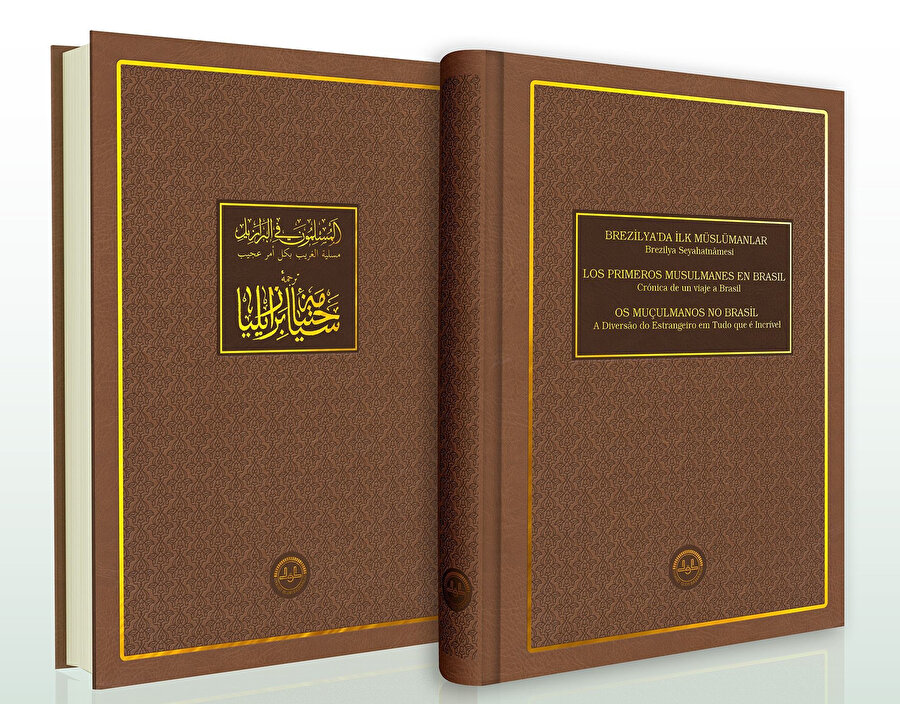
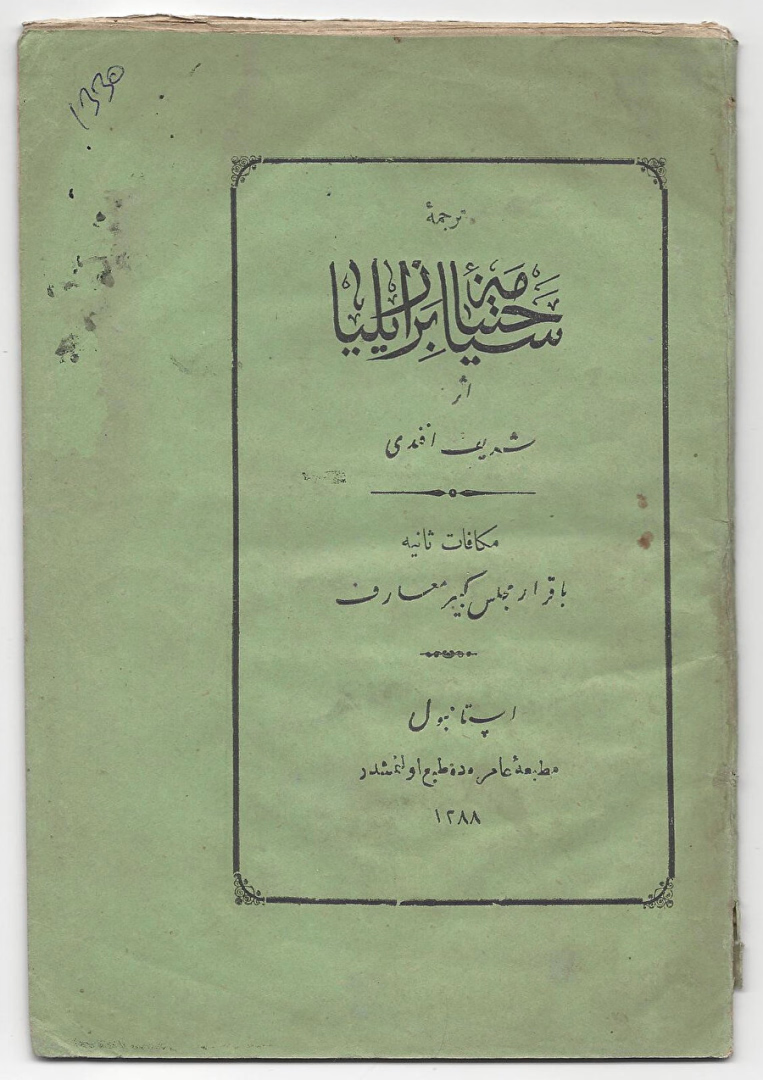
When Abdurrahman Efendi finally judged that his work was done, he made his way back to Istanbul. He composed his travelogue during that journey: Müselliyetü’l-Garib Bi Külli Emrin Acib – a title that translates, roughly, as “The Consolation of a Stranger Through Every Wondrous Affair.”
The book was published in Istanbul in 1871, in Arabic. It was subsequently translated into Ottoman Turkish by Antepli Mehmet Şerif Bey. Modern translations exist in Turkish (by Ahmet Özalp), Portuguese, Spanish, and English.
Historical Significance
The Müselliyetü’l-Garib is not merely a colorful adventure story. It is a primary historical source of rare value, for several overlapping reasons:
1. The Only Surviving First-Hand Account
For the Afro-Brazilian Muslim experience in 19th-century Rio de Janeiro, Abdurrahman Efendi’s travelogue is – as far as scholars can determine – the only surviving written, first-hand document produced during that era. No comparable source exists.
2. Evidence of Pre-Slave-Trade Muslim Presence?
The travelogue raises, without definitively answering, a significant historical question: were Muslims present in certain Brazilian regions – particularly Bahia – before or beyond the slave trade? The organized, if distorted, religious practice Abdurrahman Efendi encountered suggests deep roots. This remains an active area of scholarly inquiry.
3. A Window into Ottoman Perceptions of the Americas
The account is equally valuable as a document of Ottoman consciousness – how an educated Ottoman intellectual of the 1860s perceived Brazil, race, slavery, religious syncretism, and the Islamic diaspora.