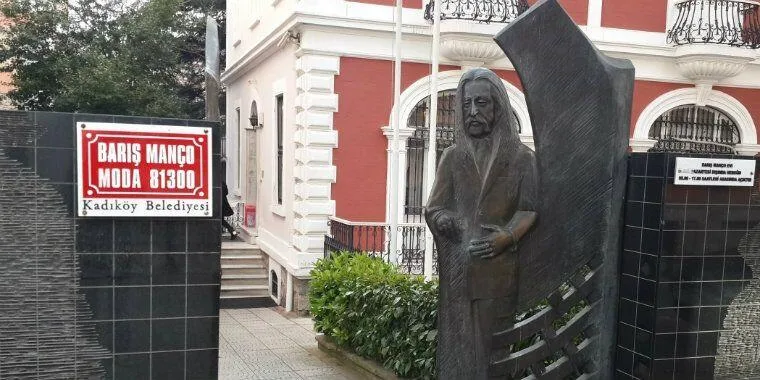
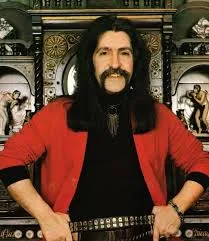
Every Turkish child of the 80s and 90s knows him well. The moment he appeared on screen, all the ‘children who would become good people’ would sit in front of the TV to watch him, each dreaming of the day they would join his show and be with their ‘Brother Barış.’ But it wasn’t just the children of that era: fans from ‘7 to 77’ followed him lovingly on TV. Every holiday, his songs would be hummed everywhere. With his song ‘Ayı‘ (The Bear), he became children’s first teacher, and with ‘Arkadaşım Eşek‘ (My Donkey Friend), he taught them to love animals. It’s fair to say that several generations were raised on his songs. The whole world respected him, named him a peace ambassador, and thanks to him, bridges of brotherhood were built with other countries. This extraordinary person filled his 56 years of life with so much that it made us say, ‘Someone like Barış comes once in a lifetime.’ Surely, there’s still much we don’t know or haven’t heard about Barış Manço.
#BugünGünlerdenBarışManço – As the motleyturkey.com team, we celebrate Brother Barış’s 83rd birthday.
Tosun Yusuf Mehmet Barış Manço
He was born in the midst of a world-shaking war, on January 2, 1943, at Üsküdar Zeynep Kamil Hospital. His son Doğukan Manço once explained in an interview: “My father was born in 1943 in Istanbul and was actually the first person named Barış (which means ‘Peace’) in Turkey; in a way, he’s the godfather of the name. My uncle was born in 1941, the start year of the war. But in 1941, my father’s uncle Yusuf -whom he never met- passed away. He was nicknamed Tosun Yusuf (Tosun meaning ‘strong lad’). Due to the grief of that loss, they named my father Tosun Yusuf Mehmet Barış Manço. But when he started school, they removed Tosun Yusuf from the official records, and his ID card only showed Mehmet Barış Manço.” That’s how we learned that he was the first person named Barış in Turkey and that his full name was Tosun Yusuf Mehmet Barış Manço.
His Musical Interest Came from Family
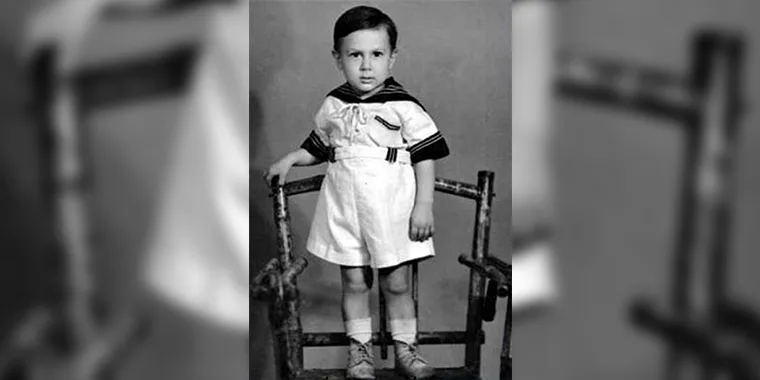
Born as the second child of Rikkat Uyanık and Hakkı Manço, Barış Manço developed a passion for music at a young age. His mother, Rikkat Uyanık, taught at Istanbul Radio and the Conservatory for many years. A musician herself, she would sing Classical Turkish Music pieces to lull little Barış to sleep instead of traditional lullabies. As seen in the photo above, even at just seven months old, Barış posed with a guitar in his hands.
Bill Haley and His First Guitar
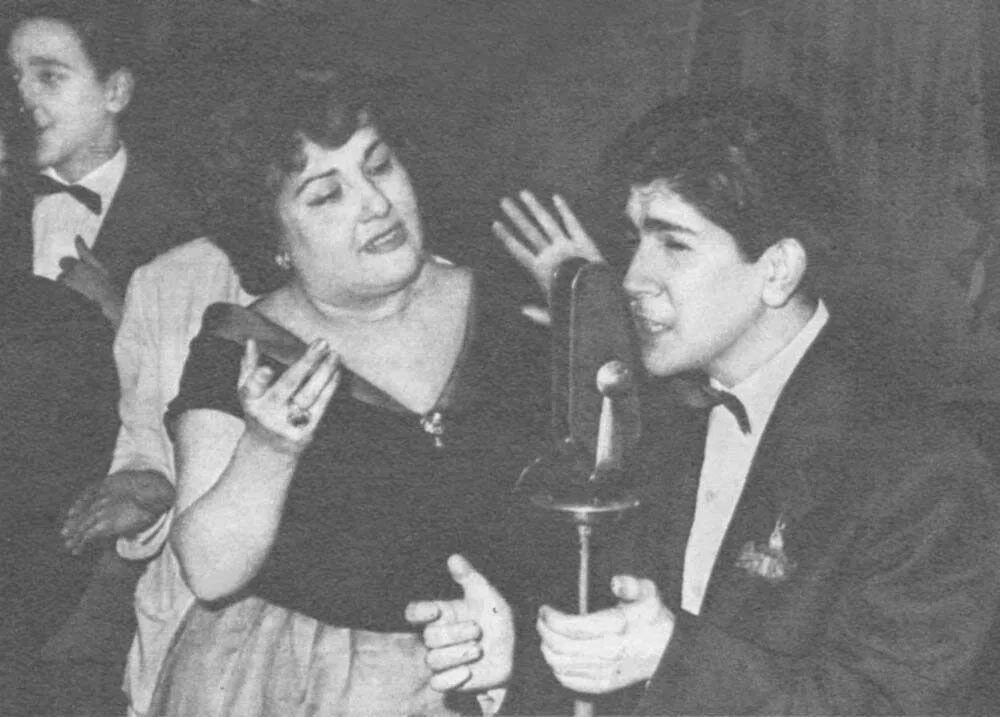
Bill Haley, who sang Western songs while playing guitar and harmonica, was a turning point in Barış Manço’s life. At just 14 years old, inspired by a Haley movie, Manço asked his mother for a wind instrument. Thinking his lungs weren’t strong enough for such instruments, she instead offered to buy him a guitar. That’s how Barış Manço got his first guitar. In the photo above, he’s performing on stage with his mother.
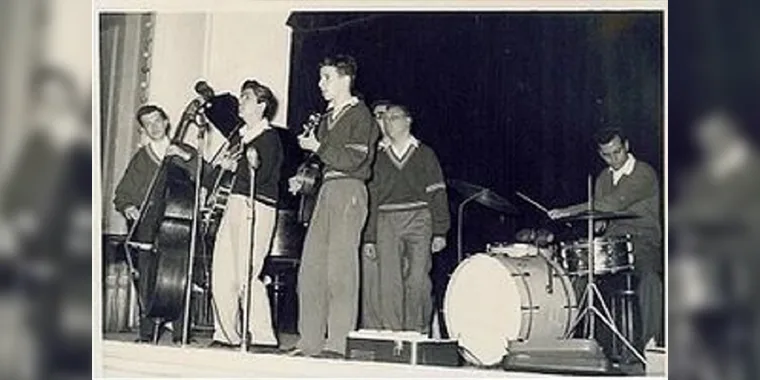
1958 and ‘Kafadarlar‘ (The Buddies)
After getting his first guitar at 14, Barış began amateur music work and, during his middle school years, decided to form his first band. At age 15, he made this dream a reality by founding his first music group: Kafadarlar. With this band, they performed rock’n roll covers. Later, he composed ‘Dream Girl,’ his first original song, and won a small music award in Ankara.
In 1958, he had his first stage experience. He wrote the following note on the back of the photo from that day: “1958 – Chrysanthemum Club – The Day I First Performed on Stage.”
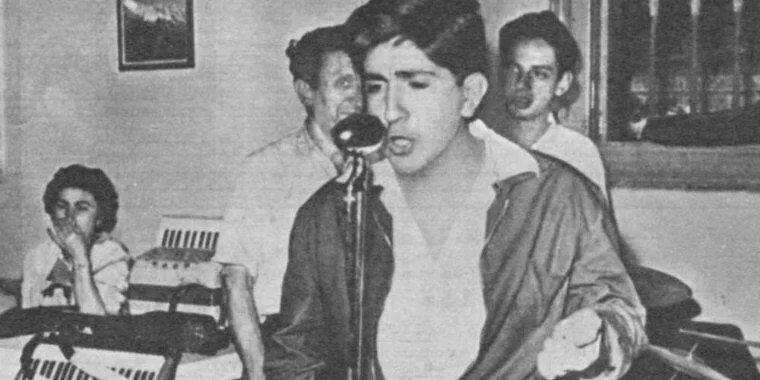
The 60s: Les Mistigris, Kaygısızlar, Kurtalan Ekspres
In 1966-67, he joined a Belgian band called Les Mistigris (meaning ‘wild cat’). They released three singles together and performed concerts across Belgium, Germany, France, and Turkey. But when legal and financial issues arose during their time in Turkey, all band members except Manço returned to Europe. Barış then decided to collaborate with a Turkish band.
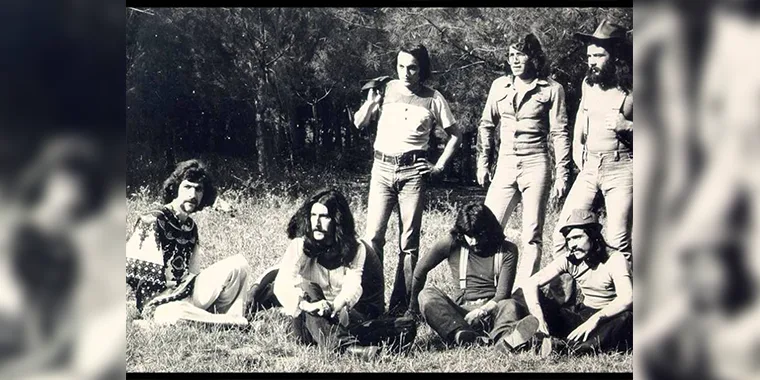
Leaving Les Mistigris behind, Manço teamed up with Kaygısızlar, a band that included names we’d later recognize as part of ‘MFÖ’ (Mazhar-Fuat-Özkan): Mazhar Alanson and Fuat Güner, alongside Ali Serdar and Mithat Danışan. Kaygısızlar, already an active band, worked with Manço until some incidents in France caused them to part ways. Young Fikret Kızılok occasionally joined Kaygısızlar as well. Their only recording with Kızılok, “Ay Osman,” was released unauthorized in 1971.
1967 and His Mustache
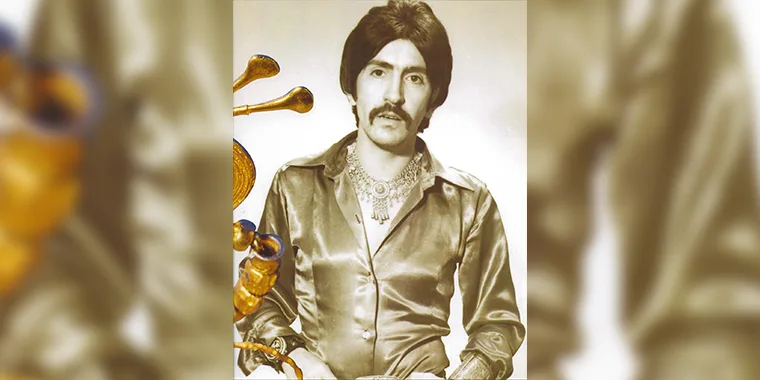
In 1967, Manço traveled to the Netherlands, where he had an unfortunate accident that left a scar above his upper lip. From then on, he began growing a mustache to cover it.
Caught in the Middle of Politics
His album ‘Küheylan‘ unexpectedly thrust him into political controversy, with many labeling him a right-winger. Shortly after, his single ‘Hey Koca Topçu / Genç Osman’ led some to brand him a nationalist. In a 1973 concert, when some in the audience gave him a nationalist salute, he replied, “We didn’t come here just for you; we came for everyone.” He even raised his left fist to protest requests for ‘Hey Koca Topçu.’
From Barış Manço to Baris Mancho
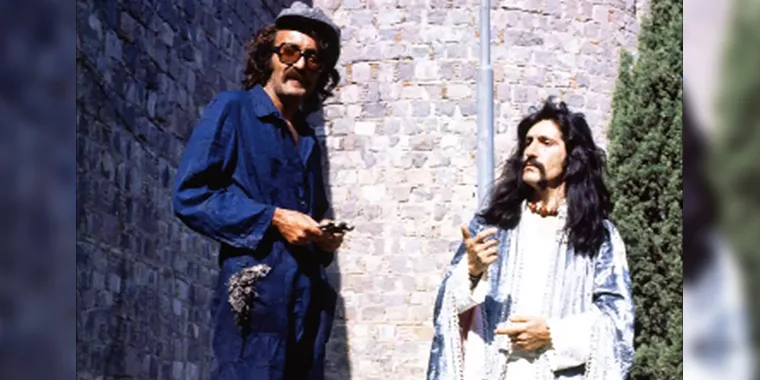
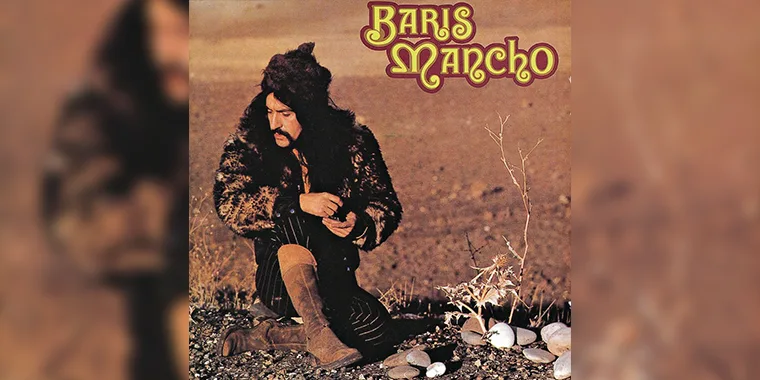
In March 1976, he signed a contract with CBS, a world-renowned label, to release an album aimed at the European market. This album, performed entirely in English under the name ‘Baris Mancho,’ charted in many countries but failed to achieve major success. Released in Turkey in 1977 as ‘Nick the Chopper,’ the album became a local hit.
Support for Education and His Collections
Believing that children should receive a good education, Barış and his wife Lale Manço founded a school in Tuzla, Istanbul, supporting efforts to extend basic education from five to eight years. Opened in 2000, Tuzla Barış Manço Primary School has 30 classrooms and serves children to this day.
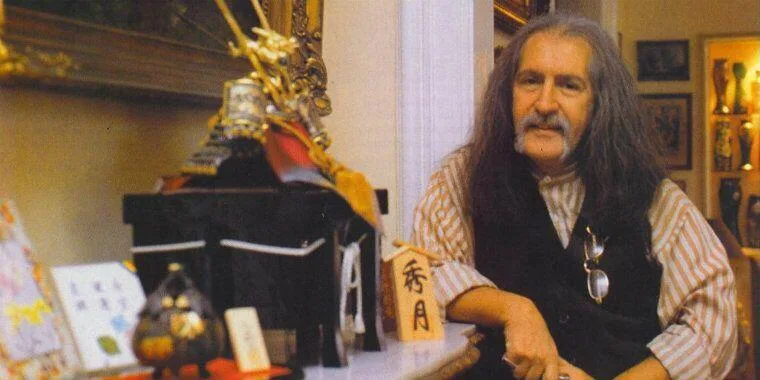
Barış also had a vast camera collection- 310 cameras gathered from around the world and donated to Turkey’s Press Museum before his death. He also collected newspapers and magazines starting from 1962, compiling a 60-volume archive.
The First Record in Turkish TV History
In October 1988, he launched a new type of family-friendly educational and entertainment program on Turkey’s sole channel, TRT 1. His show ‘7’den 77’ye’ (‘From 7 to 77’) entered Turkish homes, teaching countless lessons and opening the world to children through the small screen. By June 1998, with its 378th episode, the show set an unbroken record in Turkish TV history.
In the ‘Adam Olacak Çocuk‘ (‘This Child Who Will Be a Good Person’) segment, children held placards showing 10 points for their peers, and Manço always sent all the children off as champions with 50 points each; showing that friendship and kindness mattered more than competition.
His other show, ‘İkinci Kahvaltı’ (‘Second Breakfast’), sometimes replaced ‘Adam Olacak Çocuk‘ and featured guests aged over 60, with whom he chatted and sang. In all his programs, he emphasized the importance of loving the young and respecting elders.
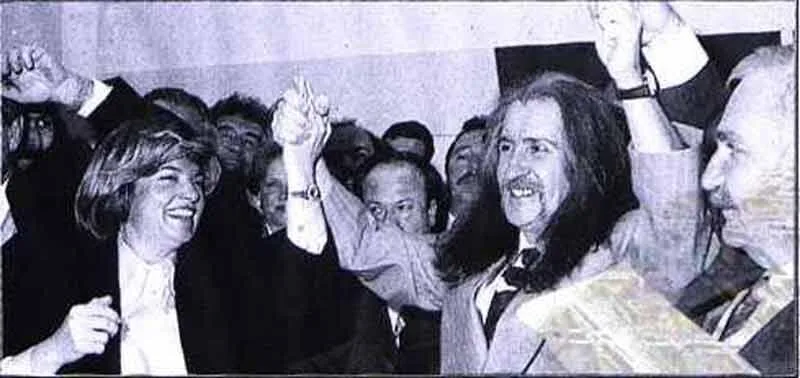
Kadıköy Mayoral Candidate: Barış Manço
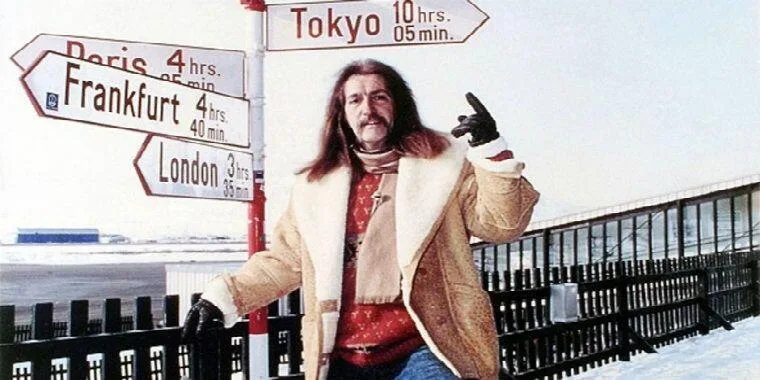
In 1994, Manço, who taught all of Turkey that Moda is a district in Kadıköy, ran for Kadıköy mayor in the local elections. However, he withdrew from the race after suffering a heart attack before the elections.
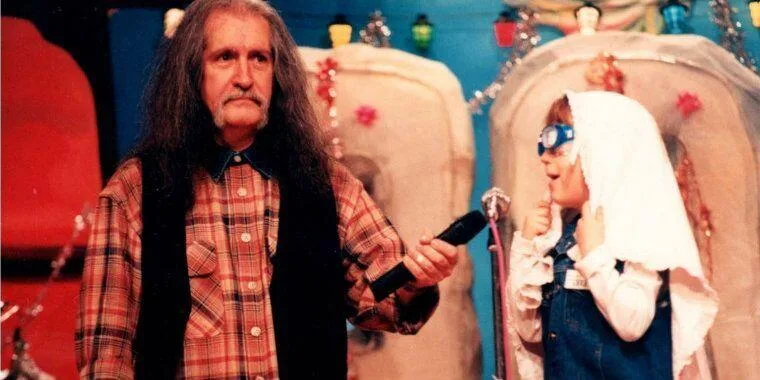
No Barriers in Barış Manço’s World!
Everyone from 7 to 77 called him Brother Barış for good reason. We always remember his hand gestures because he was the first artist in Turkey to learn sign language for the hearing impaired.
And every Sunday, he closed his show with the same farewell: “My address is very simple: Barış Manço, Moda, 81300 Istanbul.”
“I don’t even claim to be an artist. If, after I die, my grandchildren read about Barış Manço being called an ‘artist’ in encyclopedias, then perhaps I’ll have been officially recognized as one. What matters is what you leave to the future. Otherwise, one shouldn’t go around saying, ‘I’m an artist,’ while alive.”