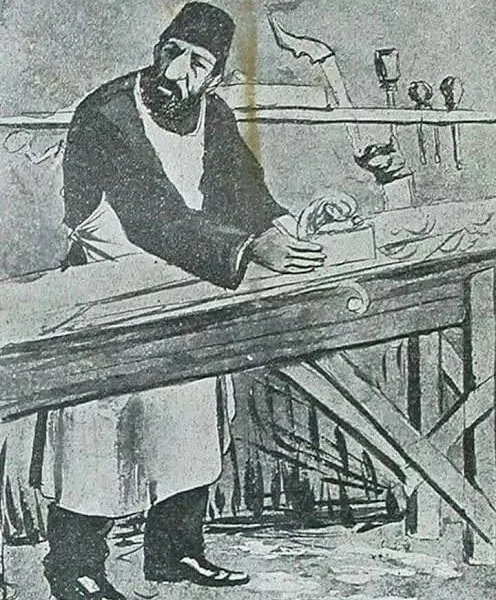
Sultan Abdulhamid II, who took his personal passion for carpentry a step further after ascending to the throne, practically turned introducing and teaching Western-style furniture across the empire into a state policy.
From Traditional Interiors to Western-style Furniture
In the Ottoman Empire, which had sustained its traditional interior design identity for centuries, modernization brought a rupture: there was now a shift from floor mattresses to beds, from low seating to sofas and armchairs, from chests to cabinets, and from floor trays to dining tables.
Western-style furniture first appeared in palaces, adopted by the sultans themselves. With modernization and the move to Dolmabahçe Palace, these items became central to interior spaces. Their presence then extended beyond palaces, especially into upper-class homes in areas like Pera and Eyüp, where owning such furniture also symbolized status and wealth.
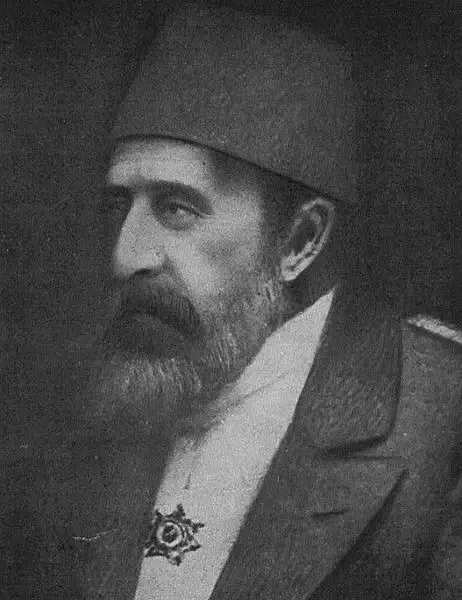
Abdulhamit II
Outside private homes, people encountered Western furniture in hotels, arcades, state buildings, ferries, and even barbershops. Public interiors like Pera Palace and Markiz captivated visitors with their unique interiors furnished in Western style, while ferries of Şirket-i Hayriye and modernized barbershops similarly embraced this aesthetic shift.
This widespread adoption of Western furniture also appeared in art, photography, and family portraits-where armchairs, desks, and tables often served as backdrops, signaling modernity and refinement.
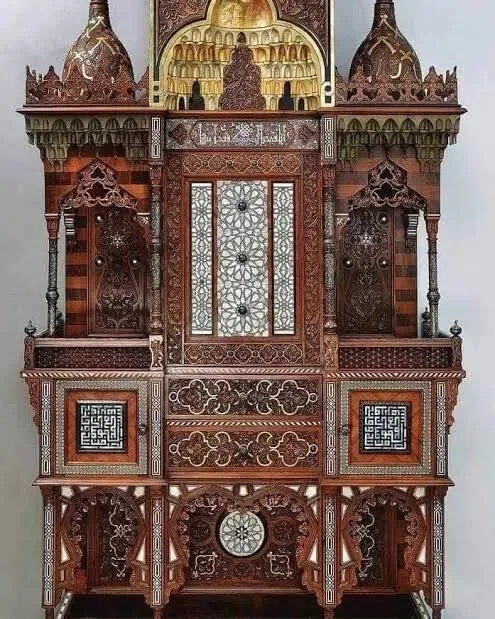
The cabinet offered for sale in 2014 by Czerny’s International Auction House S.r.l.
Abdulhamid II: The Artisan Sultan and Patron of the Arts
Known for his involvement in multiple art forms -photography, theatre, music, painting, and archaeology- Abdulhamid II distinguished himself as a designer and craftsman. He personally intervened in artworks he commissioned, earning a reputation for his exacting standards.
His passion for carpentry was influenced by his father, Sultan Abdulmecid. Trained by master Halil Efendi, Abdulhamid’s skills eventually surpassed those of his father. His 1867 European tour, along with his extensive furniture catalog collection, shaped his design sensibilities.
Wherever he resided -including during exile in Thessaloniki- the sultan maintained a personal carpentry workshop. The most notable of these was in Yıldız Palace, where he pursued woodworking alongside his duties as sultan.
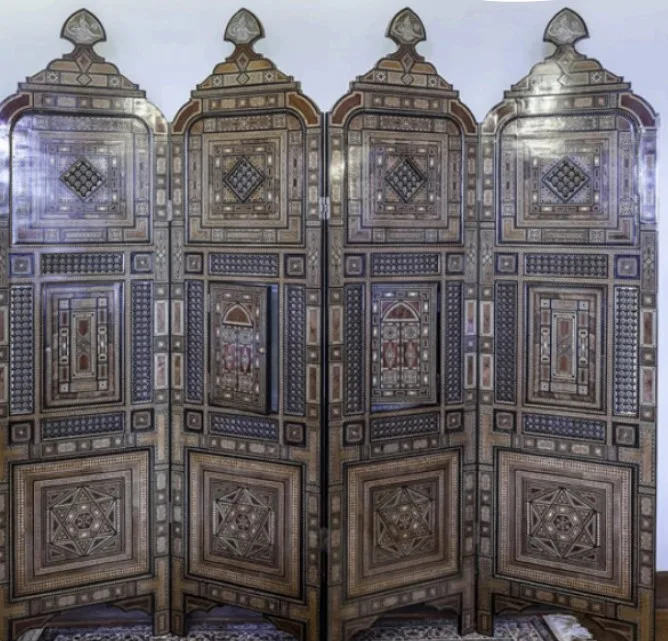
A screen with colorful woodwork attributed to Sultan Abdulhamid II.
Carpentry as Imperial Policy and Industrial Advancement
Abdulhamid II turned his personal passion into an imperial-scale project, aiming to introduce and promote Western-style furniture across the empire. He upgraded workshops like the Imperial Repair Workshop (Tamirhane-i Hümayun), sourcing materials from different regions and following international production trends.
This initiative also served industrial goals: reducing imports, encouraging local production, and providing employment. Schools like Sanayi Nefise and other industrial institutions taught Western-style furniture making, contributing to the empire’s modernization.
Furniture produced under his guidance often bore his tughra, initials, or the Ottoman coat of arms, though the exact number of items he personally created remains uncertain. He collaborated closely with master carpenters, both local and foreign, who proudly associated their craftsmanship with the sultan.
His creations, from desks to chairs, cabinets to dining suites, were often presented as gifts to royalty, ambassadors, and state officials. Today, these can be seen in national museums, private collections, and especially within the National Palaces Collection.
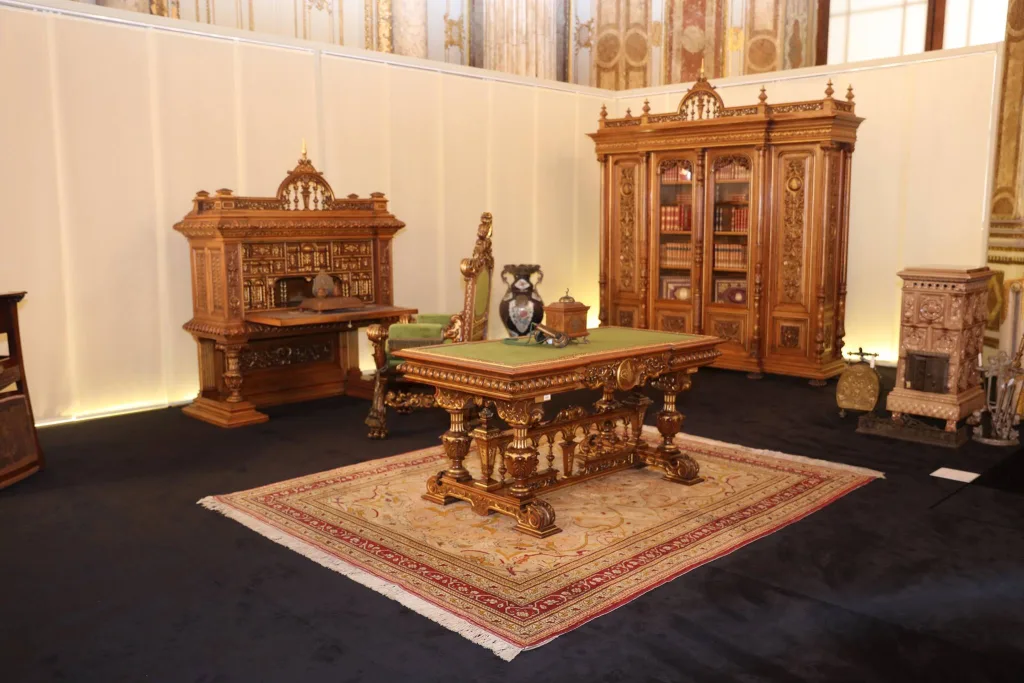
A table and cabinet set made by Sultan Abdulhamid II, featuring secret drawers.
Innovations, Unique Designs, and Legacy
Abdulhamid’s designs were notable not only for their craftsmanship but also for their creativity and security features. He created multifunctional furniture with secret drawers and rotating doors, reflecting his cautious personality. His “sulking chair” in Yıldız Palace and his modernized lectern with a built-in bookshelf illustrate his blend of tradition and innovation.
His work combined Ottoman, Seljuk, and Islamic motifs with Western forms, favoring mother-of-pearl inlays and carving techniques. In a rare design choice, he used dolphin and lion figures in his staircase-chair piece.
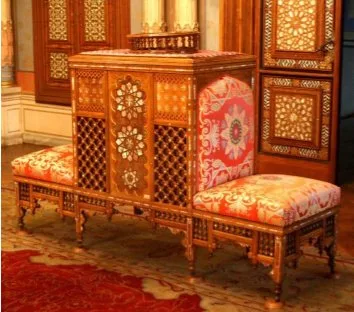
Sulking chair, useful in political tensions (!)
For his arms museum, he crafted furniture sets decorated with weapon motifs; highlighting his ability to merge function, theme, and aesthetics. His designs sometimes resembled architectural forms, such as domes and arches, connecting his architectural ideology to his furniture.
Competitive by nature, he even reproduced a famed Beyoğlu store’s desk with remarkable precision, impressing its original maker.
Today, Abdulhamid II’s role as a designer and industrial pioneer is recognized as a significant contribution to both Ottoman furniture art and industry; earning him the title of “master carpenter sultan.”