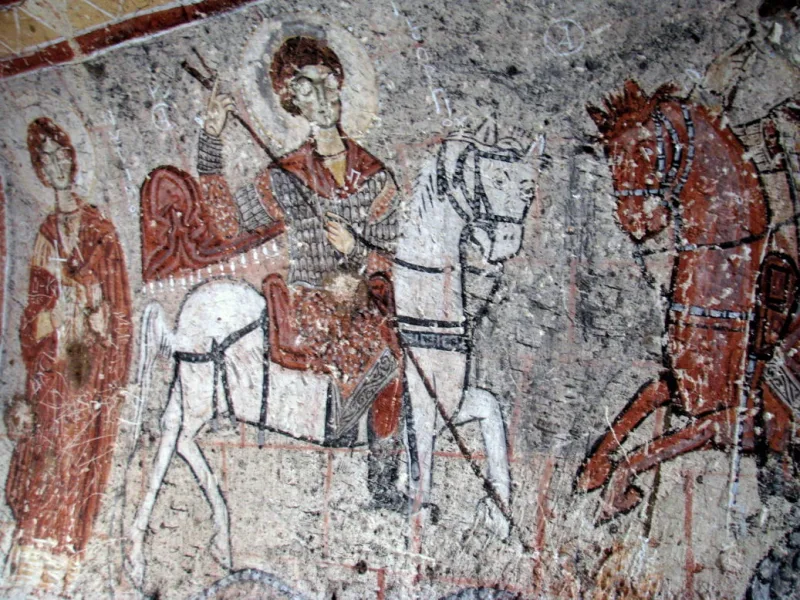
Every year, 23rd of April marks the feast day of Saint George ,known by various names such as Sankt Jordi in Catalonia and Aya Yorgi in Turkey, who is revered as a holy figure in both Eastern and Western Christianity. Originating from Cappadocia, this saint is globally recognized and honored, especially for the legendary tale of his battle with a dragon. His story has left profound marks not only in religious contexts but also in cultural and symbolic traditions worldwide.
Historical Background and the Life of Saint George
While concrete historical details about Saint George’s life remain limited, it is believed that he lived during the 3rd century under the Roman Empire and was a devout Christian who suffered persecution for his faith. Thought to be from Cappadocia, George served as a soldier in the imperial army but was martyred due to his steadfast Christian beliefs.
From the Middle Ages onward, the legend of Saint George fighting a dragon and protecting the innocent gained immense popularity, especially during the Crusades, spreading widely throughout Europe. This legend came to symbolize courage, sacrifice, and justice.
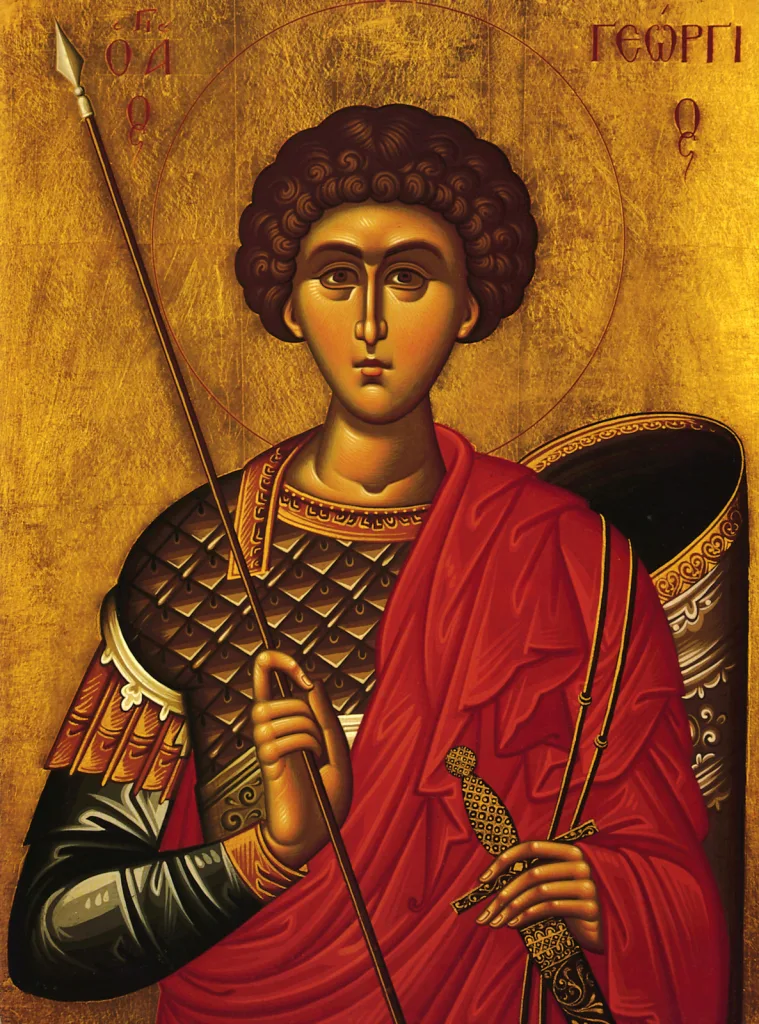
The Legend of Saint George and the Dragon
According to the legend, a fearsome dragon terrorized the lands where Saint George lived, threatening the lives of villagers and destroying their homes. To appease the beast, the people offered sacrifices, including the king’s own daughter. When the princess was about to be sacrificed, Saint George courageously confronted the dragon. After a fierce battle, he defeated the creature, saving the people from its menace. This heroic act symbolizes not only a physical battle but also the triumph of good over evil, faith over fear, and courage over adversity.
In many cultures, the dragon represents chaos, evil, and obstacles. Saint George’s victory over the dragon embodies the power of faith and heroism in overcoming oppression, fear, and injustice. Since the Middle Ages, this legend has served as a powerful emblem reflecting the ideals of chivalry and bravery across Europe.

Saint George’s Connection to Anatolia
Saint George’s roots trace back to the heart of modern-day Turkey in the Cappadocia region, an area rich with history and cultural intersections. In Turkey, especially among the Greek Orthodox communities, he is venerated as Aya Yorgi and remains a cherished religious figure celebrated through various churches and local traditions.
Regions such as Bayraklı in İzmir, the Adalar (Princes’ Islands), Marmara Island, and certain Greek Orthodox villages in Istanbul house churches dedicated to Aya Yorgi. Around April 23rd, the Aya Yorgi Festival (Panayır) is held, serving as an important religious and cultural event in these communities.

The English Flag and Saint George’s Cross
Saint George is also known as the patron saint of England. The red cross on the English flag, known as the St. George’s Cross, is dedicated to him. This emblem has long symbolized courage and heroism and is an essential part of English national identity.

Saint George and AC Milan
Interestingly, Saint George’s symbolism extends into the world of football. The prestigious Italian club AC Milan incorporates a red and black color scheme and a cross motif in its crest, evoking the spirit of Saint George’s heroism and fighting spirit. The cross on the club’s emblem represents strength and courage, echoing the saint’s legendary battle.

Barcelona’s Rose Festival: The Sankt Jordi Celebration
Saint George’s cultural impact is not limited to England or Turkey. In Barcelona, Spain, the Sankt Jordi Festival is celebrated annually on April 23rd in his honor. On this day, people exchange roses and books; symbols of love and knowledge. The festival commemorates the legend of Saint George’s victory over the dragon and celebrates the triumph of good over evil, expressed through a unique cultural tradition.
Celebrations of Aya Yorgi in Turkey
Aya Yorgi’s feast day in Turkey carries both religious and social significance, similar to other saints’ days. Typical customs include:
- Church Services: Special liturgies and prayers are held in Aya Yorgi churches, with hymns celebrating his life and deeds.
- Festivals and Fairs: Traditional public gatherings known as “Panayır” take place, featuring religious rituals alongside local foods, music, and dances.
- Visits and Offerings: Devotees visit Aya Yorgi churches and monasteries, offer prayers, make wishes, and leave small gifts.
- Nature Walks and Picnics: Celebrants often organize outdoor activities in rural or mountainous areas, reflecting the belief that the saint lived in harmony with nature and protected it.
These customs remain vibrant particularly in the Marmara and Aegean regions, as well as in some interior parts of Anatolia.
Saint George’s Reflections in Other Cultures
- Ethiopia and Eritrea: Saint George is highly revered, known as “Gebre Meskel” in the Ethiopian Orthodox Church, with many significant churches dedicated to him.
- Middle East: In Lebanon, Syria, and Palestine, Saint George is respected by both Christian and Muslim communities, where his legends are well known.
- Russia: He is among the most beloved saints in the Russian Orthodox Church. The Order of Saint George is a military decoration symbolizing bravery and state protection.
- Greece: Aya Yorgi enjoys deep veneration in Greece, with many villages and towns hosting churches in his name and celebrating his feast with great enthusiasm.
Saint George is a sacred figure whose influence extends far beyond his Cappadocian origins, embodying profound religious, cultural, and symbolic significance worldwide. With direct historical ties to Turkey, his image lives on through the English flag’s iconic cross and the emblem of AC Milan. The rose festival in Barcelona beautifully illustrates the universal message of love, knowledge, and heroic triumph that his legend conveys.
In Turkey, celebrations during Aya Yorgi’s feast day highlight the saint’s place in everyday life, preserving a cultural heritage that spans centuries and continues to strengthen community bonds and spiritual faith.