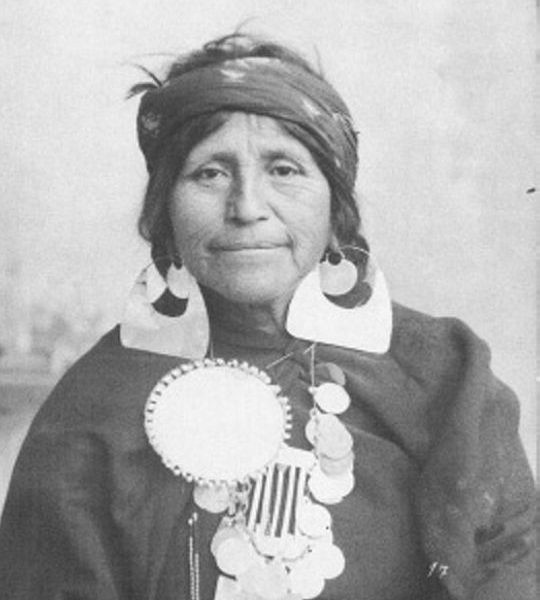
The Mapuche are indigenous people of South America, primarily in Chile and Argentina. The Turks trace their origins to Central Asia, with centuries of migration into Anatolia and beyond. At first glance, these two peoples seem entirely unrelated: separated by oceans and continents. Yet, a growing body of linguistic and cultural observations raises an intriguing question: Could the Mapuche and the Turks share ancient ties? Let’s discover Mapuche and Turkic similarities.
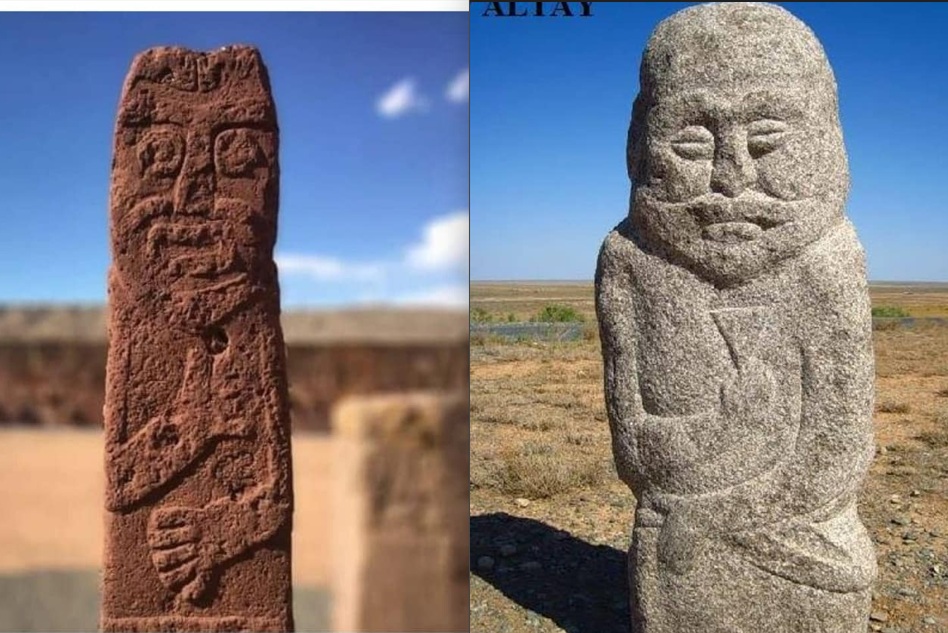
A stone statue (taşbaba) belonging to the Mapuche natives of Chile and a stone statue from the Altai region of the Turks. An interesting similarity between these two statues from the ancient world, separated by thousands of kilometers…
Linguistic Similarities: More Than Coincidence?
Linguists and independent researchers have noted structural and phonetic similarities between the Mapudungun language (spoken by the Mapuche) and Turkic languages such as Turkish, Uzbek, and Kazakh. These include:
- Shared word roots with similar meanings
- Agglutinative grammar, where suffixes build up meaning
- Comparable pronoun systems and verb constructions
Some examples include similar-sounding words for natural elements (like sun and fire), emotional concepts, and basic verbs. While these resemblances may seem coincidental, the frequency and pattern suggest a possible connection worth exploring.
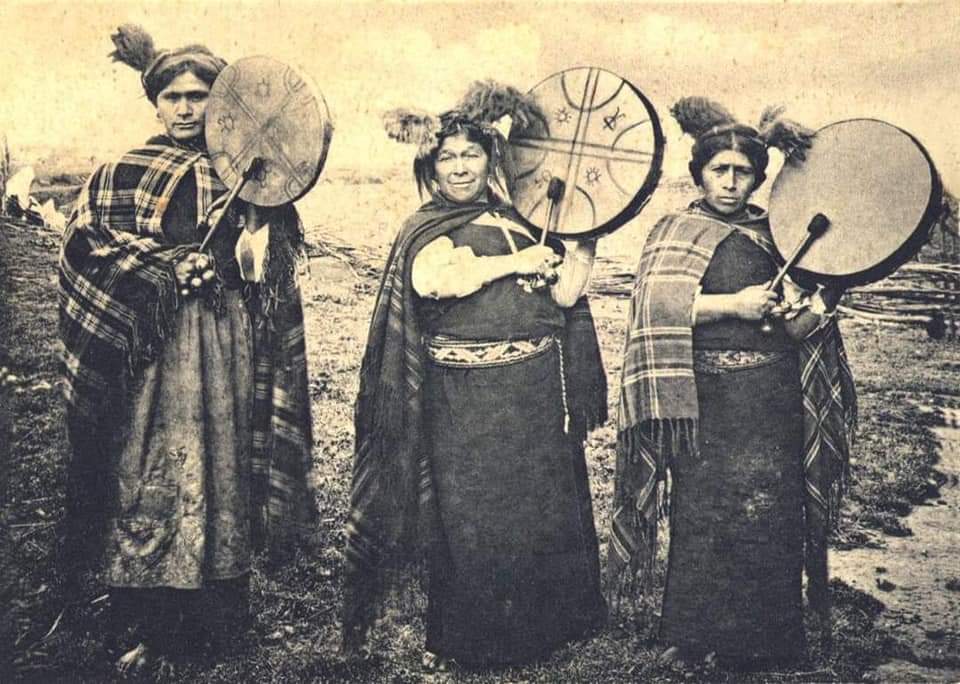
The symbol similarity on the tambourines or drums of Mapuche Native American women living in the Andes mountains.
Cultural and Spiritual Parallels
Beyond language, the two cultures share some fascinating spiritual and social elements:
- Shamanic traditions: The Mapuche “machi” and Turkic “kam” both serve as spiritual healers and community guides.
- Sun and sky symbolism: Both cultures emphasize celestial bodies in their cosmology.
- Warrior identity: The Mapuche fiercely resisted Spanish conquest, just as the early Turks resisted external domination in Central Asia.
These parallels may stem from shared ancestral practices or similar adaptations to life as independent, often nomadic, peoples.
Theories of Migration: A Forgotten Bridge?
Some researchers speculate that ancient migrations, possibly during the Ice Age via the Bering Land Bridge, could have facilitated contact between early Altaic-speaking peoples and the ancestors of the Mapuche. This theory is controversial and not widely accepted by mainstream scholars, who generally consider the Mapuche an isolated group indigenous to South America.
However, proponents of the Altaic hypothesis argue that such long-distance linguistic diffusion is possible; especially given ancient human mobility and oral traditions.
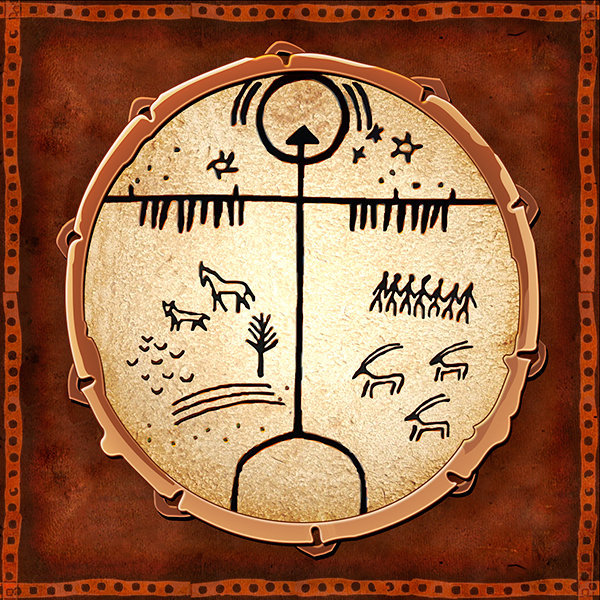
A frame drum from Central Asia with shamanic symbols on it.
A Modern Perspective: Rediscovering Mapuche and Turkich Similarities
Whether these similarities reflect a real historical connection or are simply remarkable coincidences, they invite us to rethink assumptions about isolated civilizations. They also encourage renewed interest in comparative linguistics, cultural anthropology, and pre-Columbian migration theories.
What is certain is that the Mapuche and Turkic peoples both demonstrate deep resilience, rich oral heritage, and spiritual depth; worthy of cross-cultural recognition and continued study.
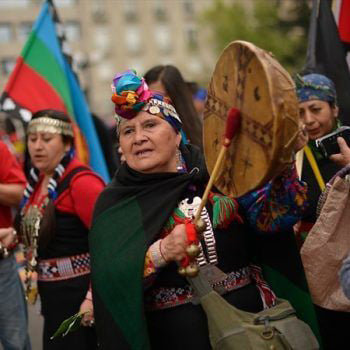
Mapuche woman playing drum.
Opening the Door to Dialogue
Could the Mapuche and the Turks be distant relatives? The answer remains open, but the idea offers a captivating lens through which we can view ancient human history; not as a set of isolated stories, but as a vast, interconnected tapestry. At the very least, this comparison serves as a reminder that human cultures may share more than we assume.
Further reading can be done here.