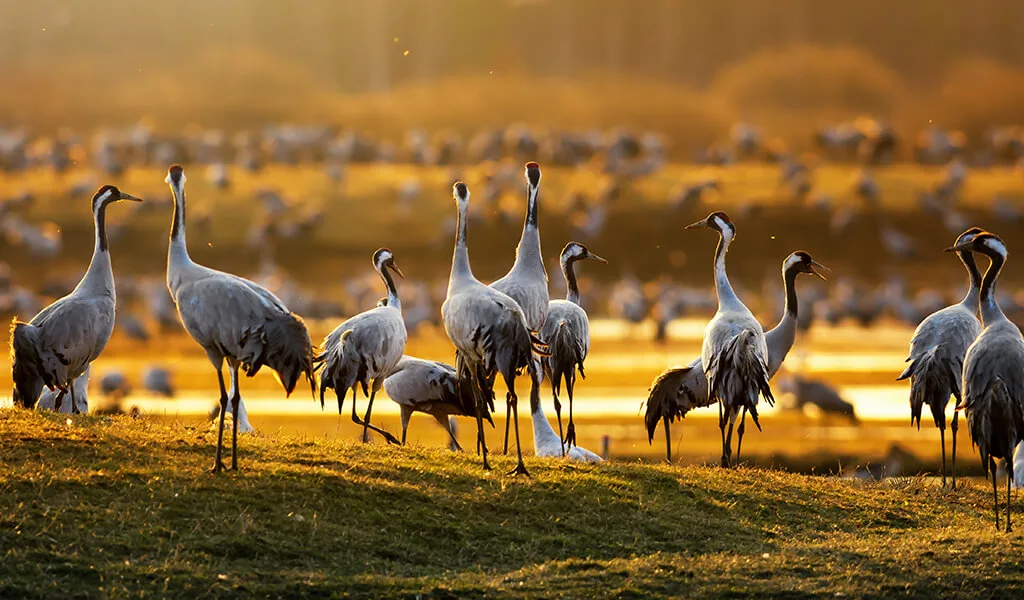
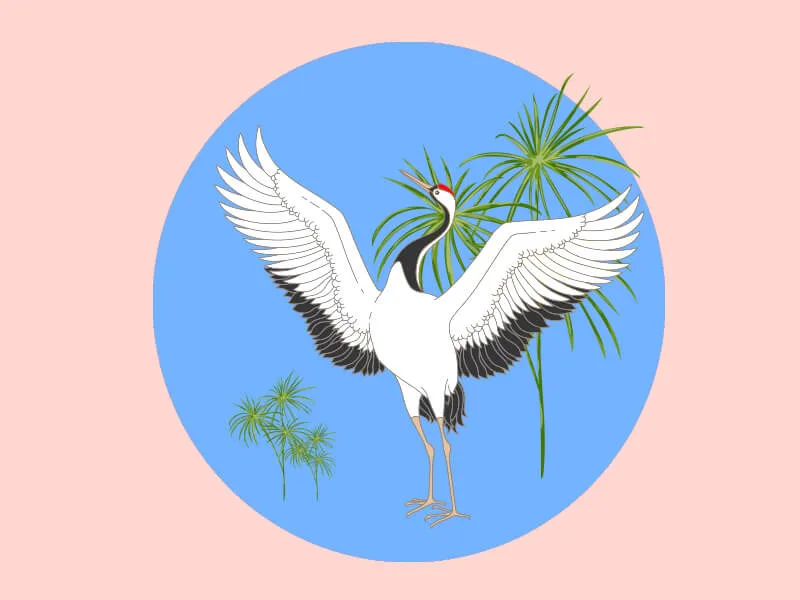
With its elegant long legs and graceful neck, the crane is a bird known across nearly every corner of the world, embodying different meanings in different cultures. In Anatolia, however, the crane has come to symbolize something deeply rooted in the collective heart of the land: abundance, prosperity, and sacredness.
The Cranes of Turkey: Rare Yet Revered
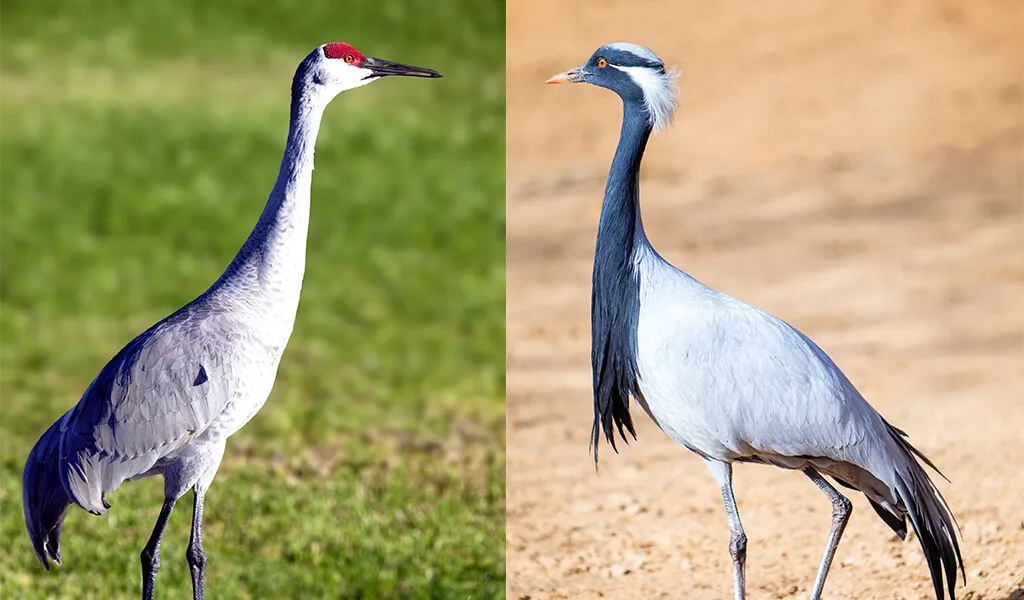
Although there are many species of cranes around the globe, only two types of cranes are known to pass through Turkey. These birds migrate in flocks, flying majestically across the skies of Anatolia, leaving behind cultural imprints far deeper than their physical presence.
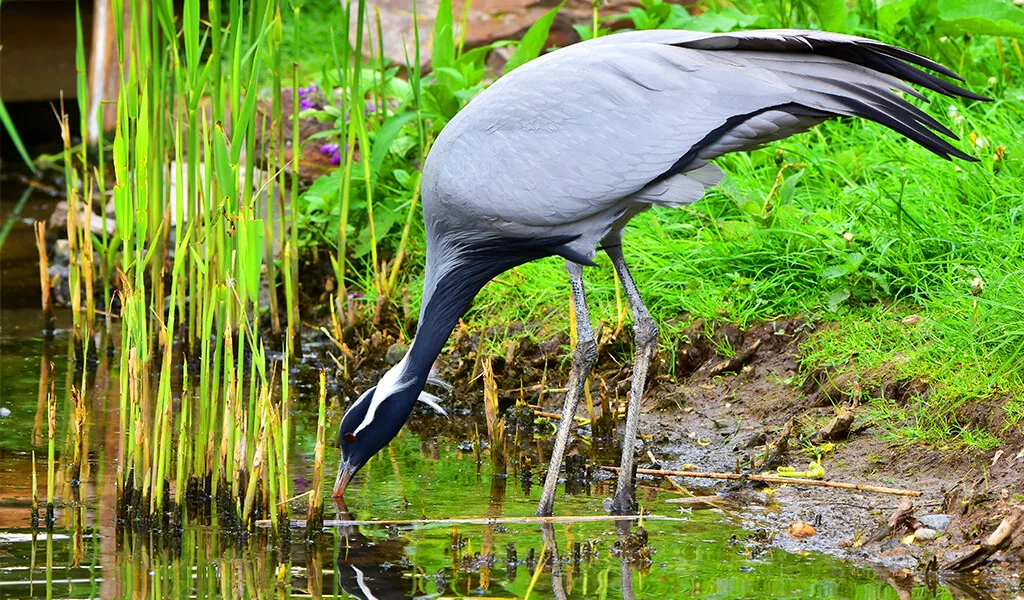
One of these, the Demoiselle Crane (Telli Turna), is now on the brink of extinction. It’s estimated that only around 11 demoiselle cranes remain in Turkey today, primarily living in the Bulanık Plain in Muş. Despite their scarcity, these birds continue to soar in the imagination of the Turkish people; appearing in folk songs, ballads, and oral traditions.
Cranes as Eternal Messengers in East and West
In East Asian cultures like China, Japan, and Korea, the crane is a symbol of immortality. This belief likely made its way westward during the great migrations of the Turkic peoples, taking root in Anatolia where the crane similarly came to represent eternal life.
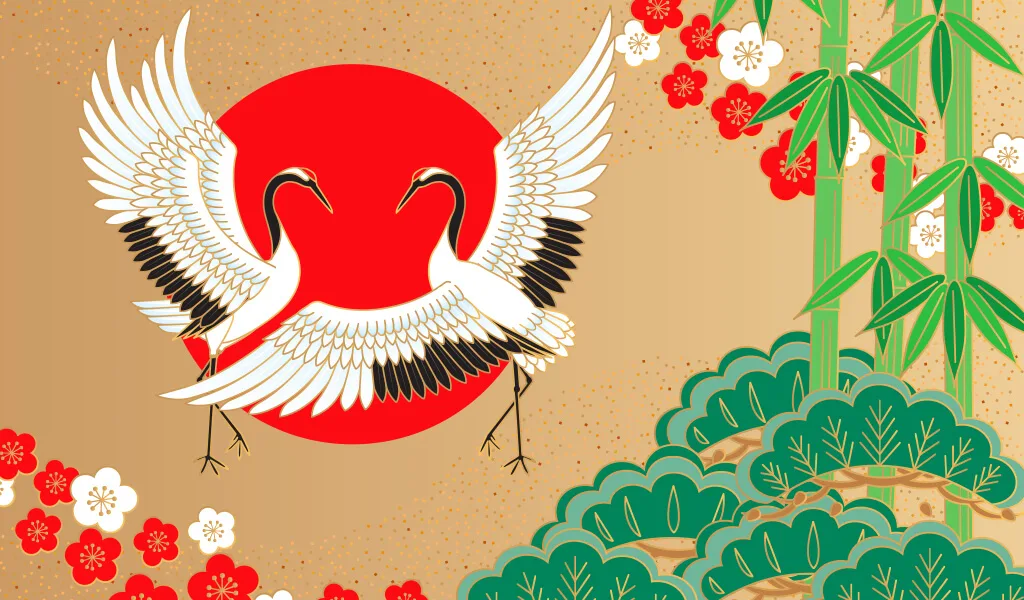
In Alevi and Bektashi traditions, the crane is considered a manifestation of the divine on Earth, much like in Eastern philosophies. In Bektashism, the crane is associated with Imam Ali, making the bird a sacred figure. One of the ceremonial devotional dances, known as “Turna Semahı” (The Crane Ritual Dance), is named after the crane.
The Crane Semah: A Dance of Unity with the Divine
In the Turna Semahı, dancers whirl in a style inspired by the crane’s flight. Their movements emulate the gliding elegance of the bird as they symbolically journey toward divine union. It’s said that the bird’s call resembles the voice of Imam Ali, and that as it flies across Anatolia, it carries greetings and blessings from one end of the land to the other.

Ancient Beliefs: Cranes and the Sky God
Among pre-Islamic Turkic peoples, cranes were believed to be associated with Tengri, the Sky God. When a person died, it was believed that their soul ascended into the heavens, taking the form of a crane. There, it would soar eternally across the skies, free and divine.
The Depiction in Turkish Folk Songs
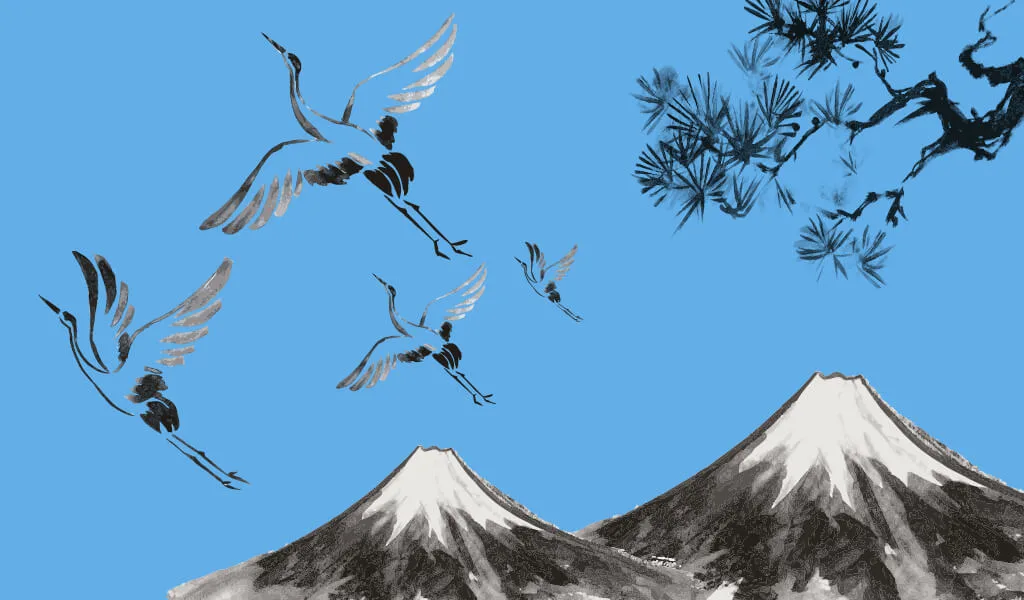
The image of the bird is deeply woven into Turkish folk poetry and music. Legendary bards like Pir Abdal Sultan, Dadaloğlu, Hayali, and Erzurumlu Emrah all included the crane in their verses. In these songs, the bird often plays the role of a companion in sorrow or a messenger between lovers. Even in contemporary Turkish music, the motif of the crane continues to appear in lyrics, preserving its poetic legacy.

A Symbol of Blessing in Daily Life
In Anatolia today, the belief that cranes bring blessing and fertility still lives on. A beautiful tradition involves attaching a crane feather to the bride’s hair: a gesture believed to bring good fortune. If a crane happens to land in a field, it’s seen as a sign that the harvest will be plentiful.