With its deep-rooted cultural richness, Turkey projects many Ramadan traditions and values into the present day. As the month of Ramadan begins, we have listed enduring Ramadan customs -passed down from generation to generation- that reinforce social solidarity, strengthen communal unity, and contribute to the preservation of cultural heritage.
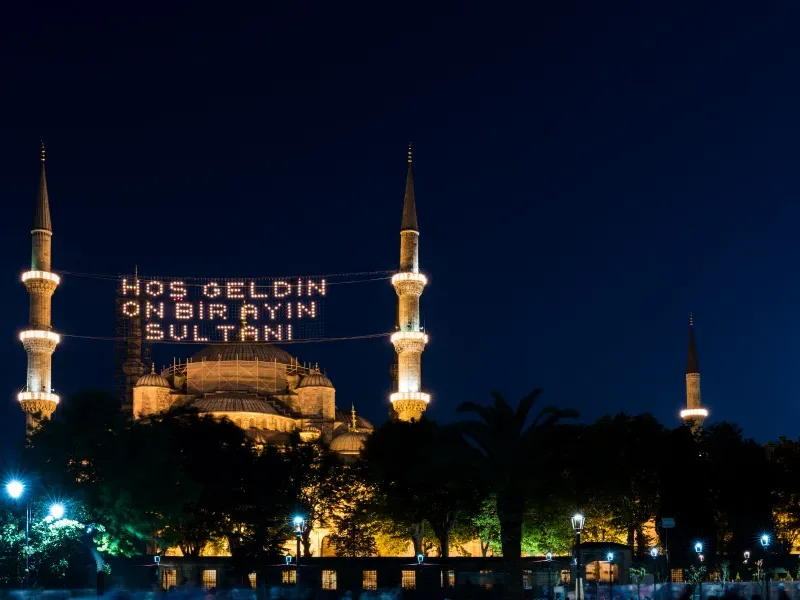
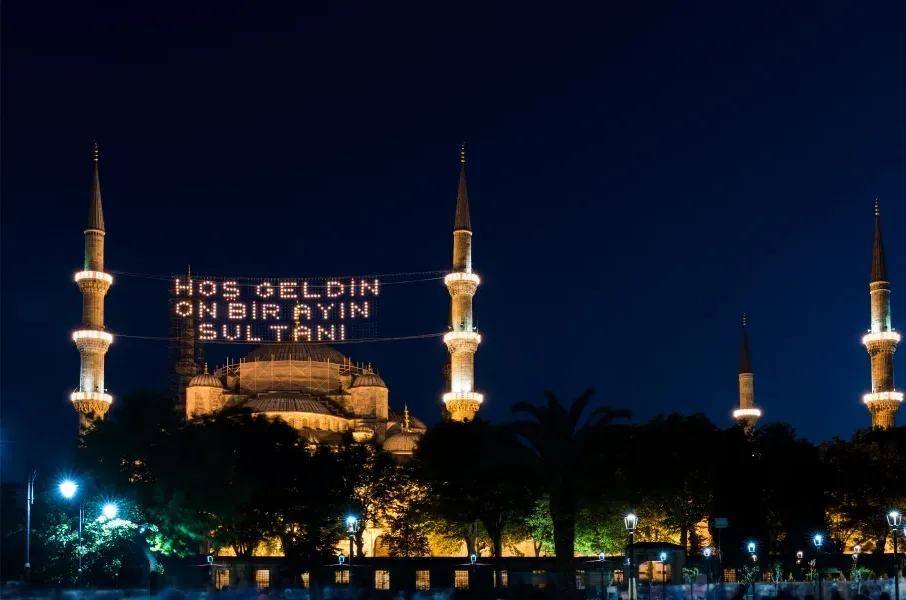
Mahyas on Mosque Minarets
Although the tradition of lighting oil lamps in mosques dates back to the early years of Islam, illuminating minarets with suspended lights is a practice unique to the Ottoman era. Known as mahya, these illuminated inscriptions -featuring Qur’anic verses, hadiths, or motifs such as roses and crescents- have adorned the skyline since the 16th century, conveying messages that encourage virtue and righteousness.
Iftar and Sahur Festivities
During Ramadan, communities gather in specially erected Ramadan tents. At sunset, the firing of the iftar cannon signals the breaking of the fast, accompanied by light refreshments distributed in the tents. After a full day of fasting, meals are shared, tarawih prayers are performed, and modest festivities continue with neighborhood conversations lasting until sahur (the pre-dawn meal). In recognition of its enduring social and cultural significance, collective iftar practices have been inscribed by UNESCO on the Representative List of the Intangible Cultural Heritage of Humanity.
Since the Ottoman period, traditional shadow plays such as Karagöz and Hacivat have been staged in public squares between iftar and sahur, entertaining both children and adults. Children play games in the streets, while adults perform their prayers and keep the Ramadan spirit alive through folk poetry and musical gatherings. For sahur, those intending to fast have historically gathered in Istanbul -particularly around Feshane and Sultanahmet Square- at communal pre-dawn tables.
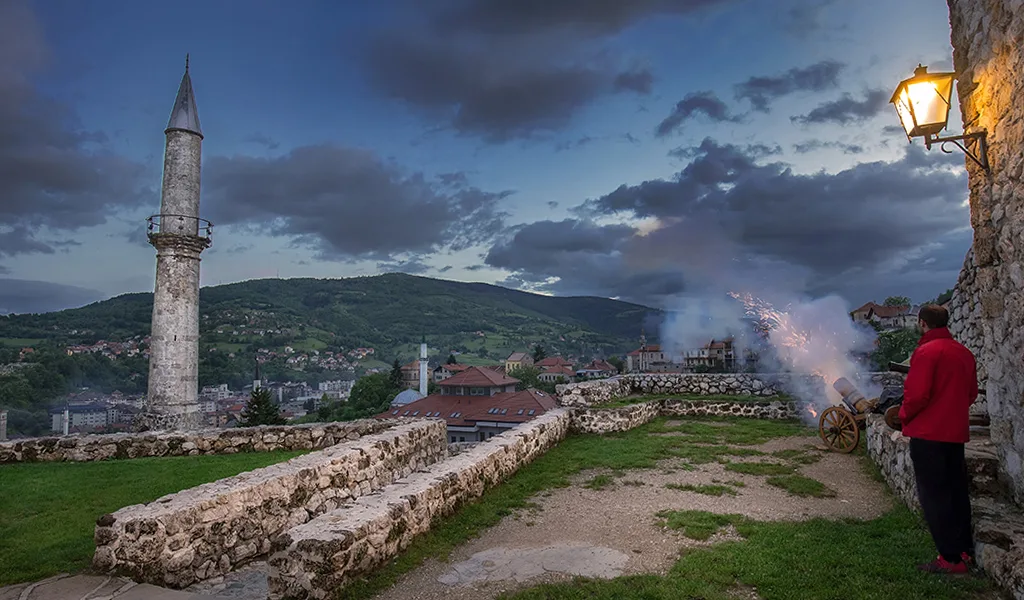
The Ramadan Cannon: Herald of Iftar
After a day of self-restraint, the long-awaited call to prayer and cannon fire announces the time to break the fast. The Ramadan cannon, fired from a secure location each evening throughout the month, has been a longstanding Ottoman tradition. Before the advent of modern communication technologies, its sound served as an essential signal, informing households across the city that iftar time had arrived.
The Zimem Ledger (Debt Book Tradition)
During Ramadan in the Ottoman period, affluent individuals would anonymously visit local grocers, butchers, and greengrocers to pay off debts recorded in credit ledgers. This practice, known as the Zimem Defteri (Debt Ledger), derived its name from these account books.
In accordance with the principle that charity should be given discreetly, the benefactor would ask, “Do you have a zimem ledger?” and settle part or all of the outstanding debts within their means. Neither the donor knew whose debt was paid, nor the debtor knew who had paid it. A note would then be posted in the shop informing residents that certain debts had been cleared -without causing embarrassment to anyone.

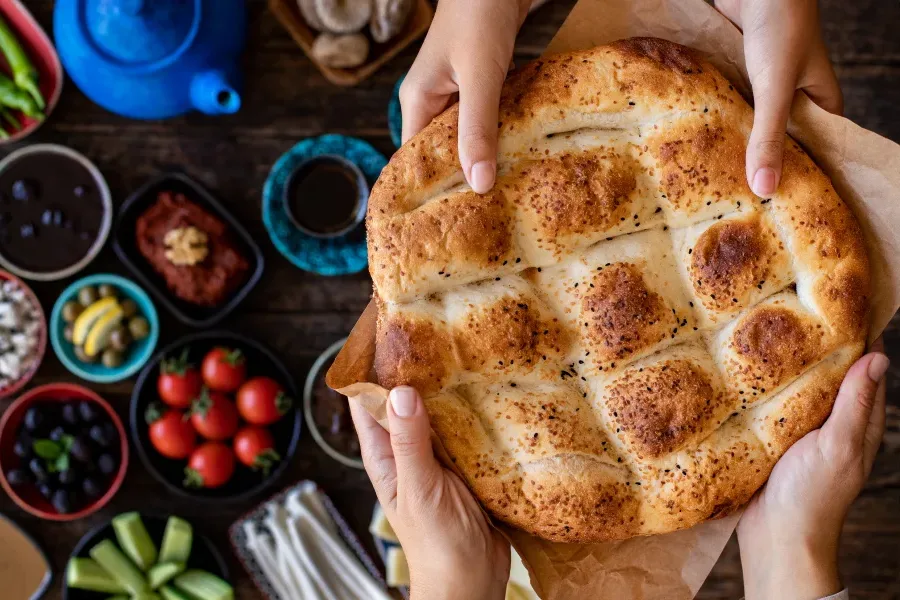
Ramadan Pide
Regardless of varying culinary preferences, Ramadan pide -a round, flatbread baked exclusively during the holy month- remains an indispensable element of the iftar table. Despite long queues, it claims its place at meals throughout Ramadan. With its distinctive aroma filling the streets near sunset, Ramadan pide has been one of the most memorable symbols of the month since Ottoman times. Historically, special pides were baked upon the Sultan’s request and shared with the public. Their preparation is more labor-intensive than that of ordinary bread.
Tooth Rent
In the Ottoman era, no one who knocked on a door at iftar time was turned away. In grand mansions, tables were set for both the wealthy and the needy. After the meal, the host would present guests with gifts known as diş kirası (“tooth rent”) as a gesture of appreciation for honoring the table.
Well-off families would deliberately invite less fortunate households to iftar, offering children gold or silver coins. These gifts were placed discreetly in modest pouches and presented without ostentation.

Another significant element was the role of imarets: public soup kitchens established through charitable endowments (waqf). Prominent complexes such as the Süleymaniye Mosque regularly distributed free meals to the poor, travelers, students, and members of religious institutions. During Ramadan, the scale of these distributions increased. These kitchens were not ad hoc charitable efforts but structured social welfare mechanisms financed by legally binding foundations. In modern Turkey and other former Ottoman regions, municipal iftar programs and NGO-led food distributions function as contemporary equivalents of this institutionalized charity model.
Ramadan also intensified the culture of waqf-based philanthropy. Wealthy patrons frequently allocated additional funds to existing endowments during the holy month, ensuring mosque maintenance, Qur’an recitations, public lighting, and food distribution. In major cities such as Istanbul, endowment records indicate that Ramadan expenditures were often itemized separately, reflecting the month’s distinct financial and social significance.
The “Boat Fast”
To accustom young children to fasting -one of the pillars of Islam- they would observe a half-day fast, typically until noon. Known as the “boat fast” (tekne orucu), this practice tested their willpower in a gradual manner. It was customary to reward children with small gifts in recognition of their effort, helping them internalize religious practices and appreciate the significance of Ramadan.

Eid Shopping and Cleaning
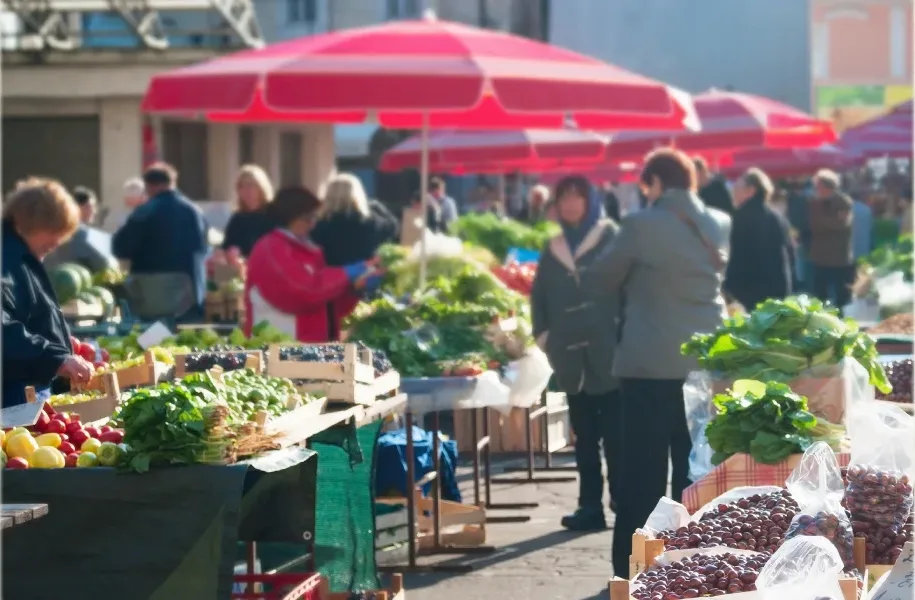
With the arrival of Ramadan, households enter a period of pleasant preparation. Homes are thoroughly cleaned in anticipation of both Ramadan and the upcoming Eid celebration. Special tableware reserved for significant occasions is brought out. Shopping is done at neighborhood markets for nourishing dishes and treats to be served at modest Ramadan tables. Pastries, stuffed vine leaves, and regional specialties are prepared, allowing families to share both meals and common values around the same table.
Güllaç
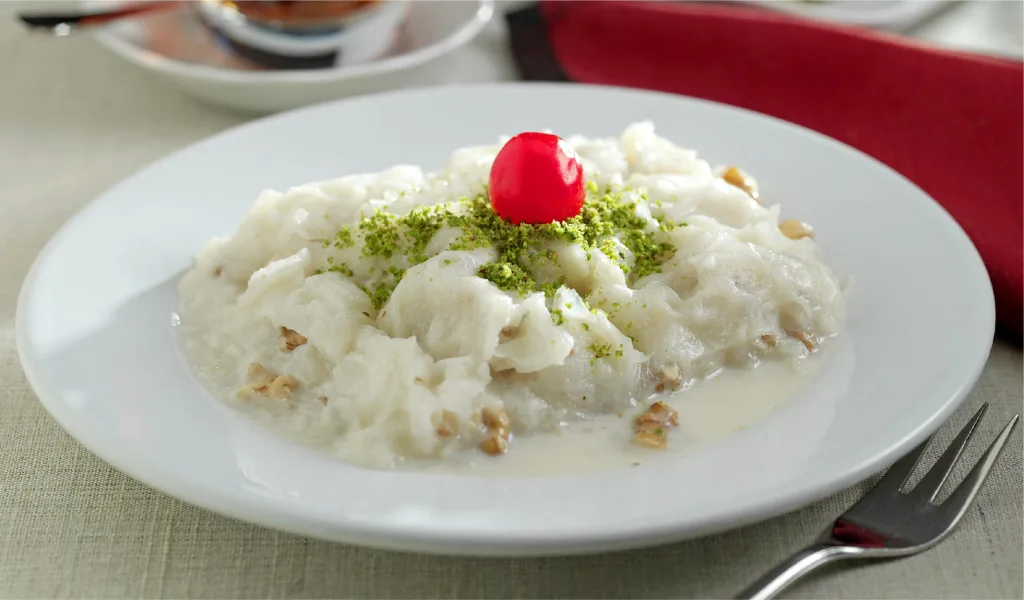
Although some describe it as merely a “napkin soaked in milk,” the mention of güllaç immediately brings Ramadan to mind, as its light texture makes it the most preferred milk-based dessert after iftar meals. While moistening its thin pastry layers with milk, rose water is also added; the name evolved in Turkish from “güllü aş” (rose-flavored dish) into its present form, güllaç.
Full Read of Quran
Another tradition was the increased public recitation of the Qur’an in mosques, particularly the completion of a full recitation (hatim) over the course of the month. Large imperial mosques such as the Blue Mosque became focal points for nightly gatherings. These recitations were often sponsored by benefactors who covered the stipends of reciters, reinforcing the intersection of devotion and patronage.
In addition, Ramadan reshaped the urban rhythm. Markets extended their operating hours; coffeehouses remained open late into the night; artisans adjusted production schedules to accommodate fasting hours. Nightlife during Ramadan was not secular entertainment in the modern sense but a socially regulated extension of communal interaction- structured around prayer times and religious observance.
Taken together, these elements demonstrate that Ramadan in the Ottoman context functioned simultaneously as a religious observance, a social solidarity mechanism, and an institutionalized framework of economic and charitable redistribution—an integrated model that continues in modern Turkey through municipal iftar programs, organized charitable foundations, and community-based aid initiatives.