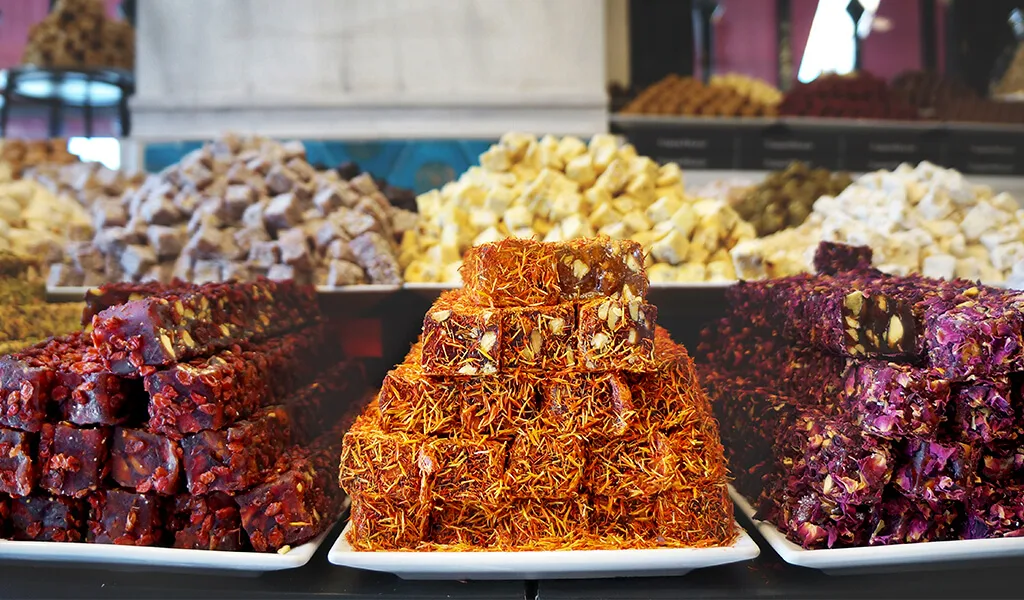
A beloved treasure of Turkish cuisine, lokum –known worldwide as Turkish Delight- is a time-honored symbol of hospitality. Carefully arranged in elegant bowls and offered with ceremony, lokum is traditionally presented to guests by the youngest member of the household. Its irresistible sweetness is enjoyed by everyone, from children to elders, making it a staple of festive gatherings.
Especially associated with Bayram (religious holiday) visits, lokum has long transcended Turkey’s borders. With its delicate textures and captivating aromas, this iconic confection has earned global fame as Turkey’s signature sweet offering.
A Treat with Centuries of Tradition
The name “lokum” is believed to derive from the Arabic phrase rahat al-hulqum, meaning “comfort for the throat.” And comfort it brings: both to the palate and to the spirit.
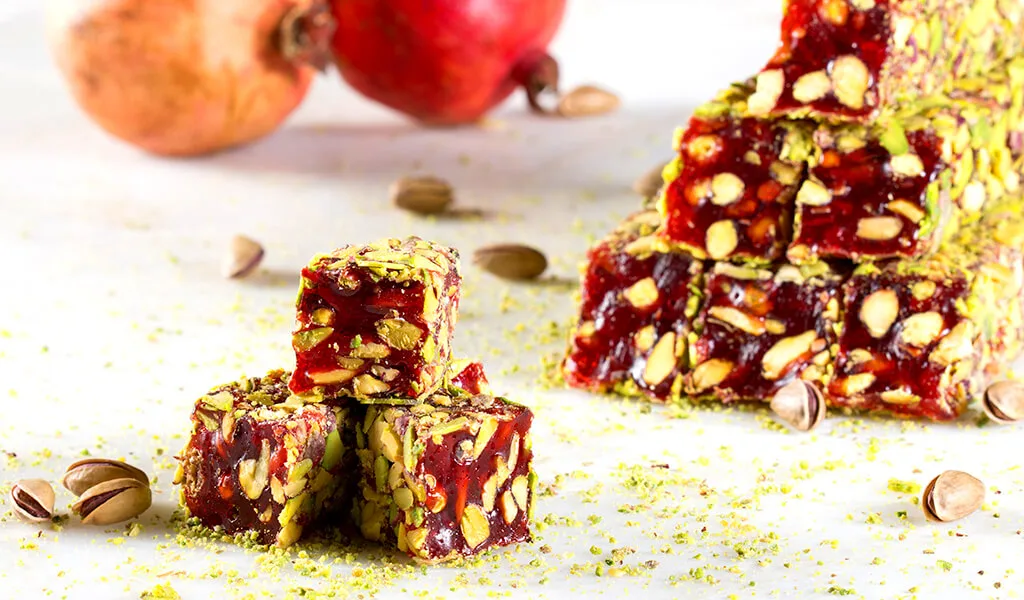
Produced in Anatolia since the 15th century, lokum became an official part of the Ottoman palace cuisine in the 17th century. Its transformation into the treat we know today came at the hands of Hacı Bekir, the renowned chef of Sultan Abdul Hamid I. Replacing molasses with refined sugar, he created the first example of modern Turkish Delight.
Thanks to Hacı Bekir’s innovation, lokum quickly gained popularity across Europe, where it became known as “Turkish Delight.” Today, this jewel-like sweet is loved around the world, representing not just taste, but a rich cultural legacy.
What Is Lokum Made Of?
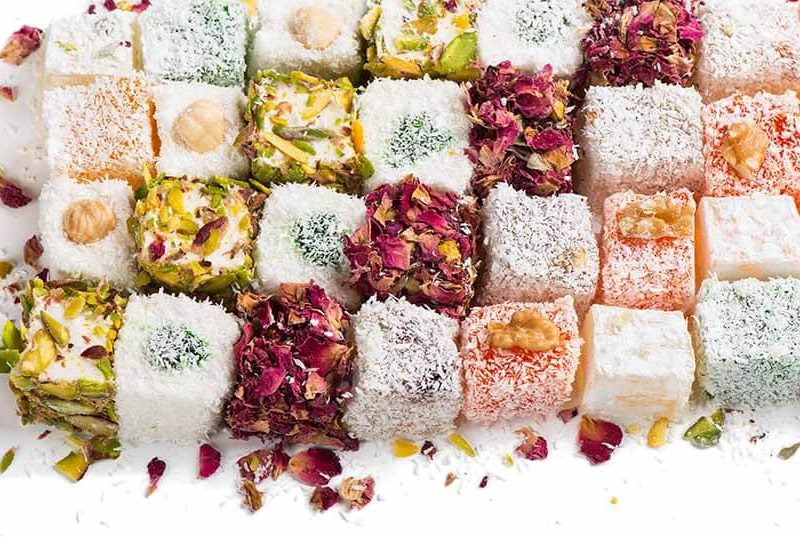
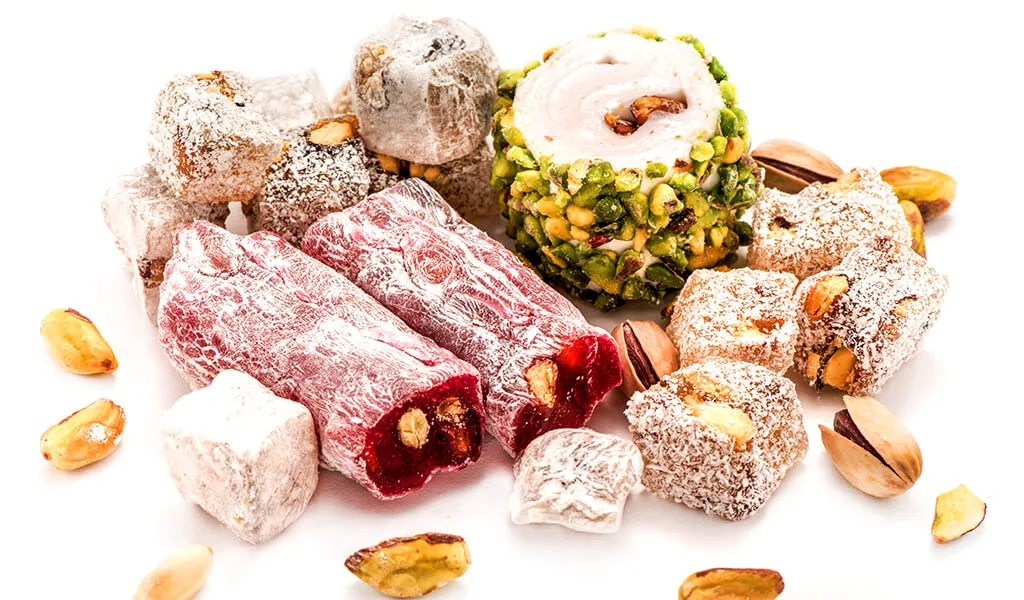
At its core, lokum is a simple blend of water, starch, and sugar, but its charm lies in its variety. Flavored with natural ingredients like rosewater, lemon, pomegranate juice, or mint, each lokum type offers a distinct sensory experience.
After being slow-cooked to the perfect consistency, the mixture is rested, then cut into soft, bite-sized cubes. These are then dusted with powdered sugar or coated in grated coconut to prevent sticking and to add a final layer of flavor.
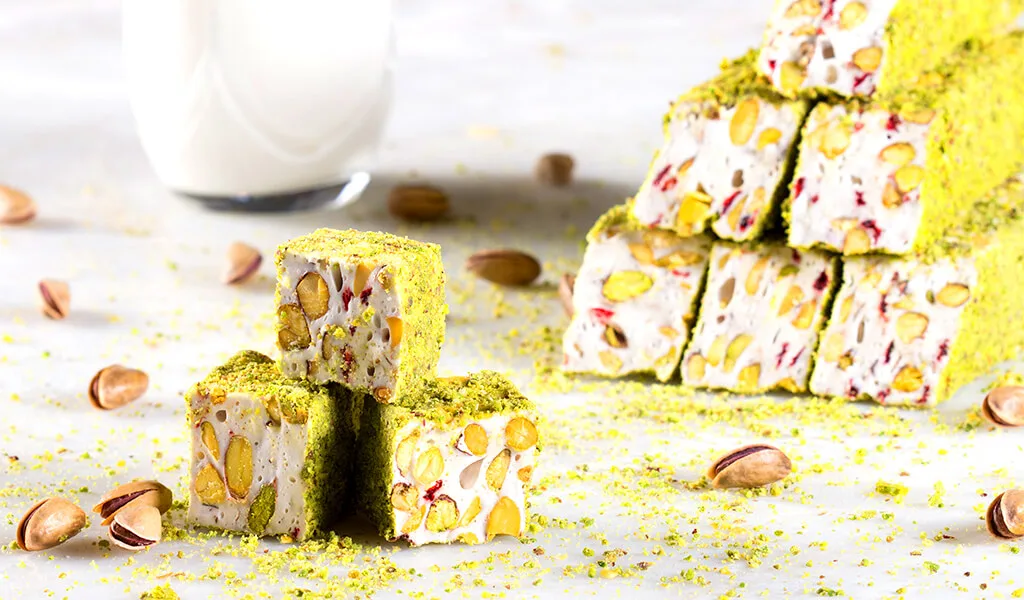
Some of the most beloved varieties include:
- Rose, lemon, mint, pomegranate, and coconut-flavored lokum
- Clotted cream (kaymaklı) lokum
- Double-roasted varieties
- Lokum filled with pistachios, hazelnuts, or walnuts
A Ritual of Sweetness
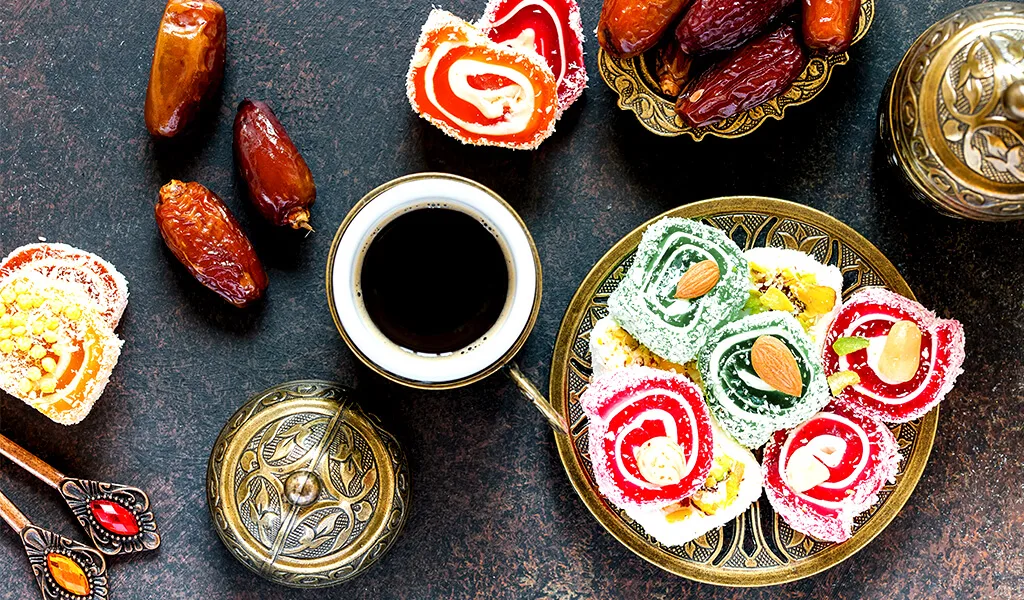
During festive occasions like Eid (Bayram), lokum is ceremoniously offered to guests in elegant crystal bowls or Çeşm-i Bülbül glassware; ornamental, swirled designs that are an art form in themselves.
And of course, no cup of Turkish coffee is complete without a cube of lokum on the side. It sweetens the palate and enhances the joy of conversation.
Whether gifted to loved ones while traveling abroad, or served to visiting tourists as a taste of Turkish hospitality, lokum remains a proud and delicious ambassador of Turkish culture.