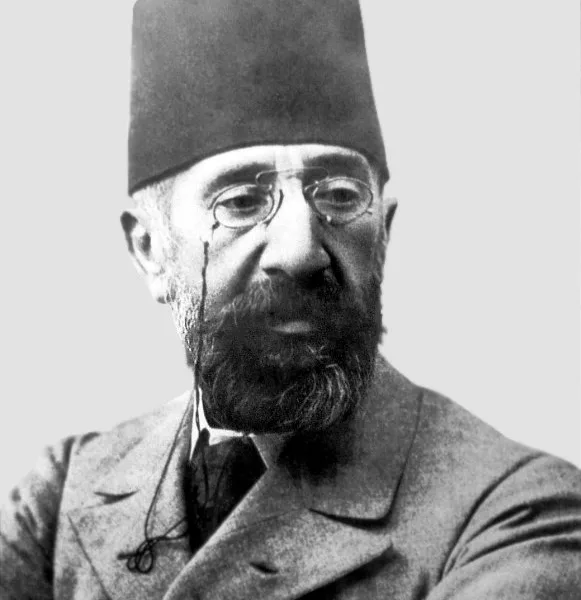
Osman Hamdi Bey, an archaeologist, museum curator, painter, and the first mayor (Şehremini) of Kadıköy, was the first person to take official steps to protect Turkey’s cultural heritage. Born on December 30, 1842, in Istanbul, he holds a distinguished place in Ottoman history for his contributions to culture, art, and science.
He was the son of Ibrahim Edhem Pasha; one of four students the Ottoman Empire sent abroad for education, and was born in a “yalı” (waterside mansion) in Beykoz, which later came to be known by his brother’s name, Halil Ethem. His brothers included Halil Ethem Bey, a museum director, and Ismail Galip Bey, a numismatist.
Osman Hamdi Bey founded the Sanayi-i Nefise Mektebi (today’s Mimar Sinan Fine Arts University) and the Istanbul Archaeology Museum. He was also an accomplished archaeologist and artist.
From Law to Fine Arts in Paris
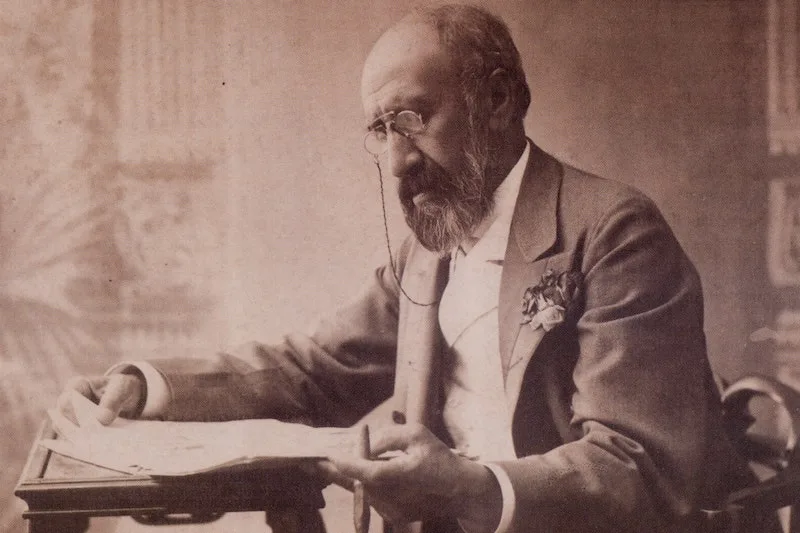
While studying law in Paris, Osman Hamdi Bey pursued his passion for painting by enrolling at the École des Beaux-Arts. He studied under renowned painters Jean-Léon Gérôme (1824–1904) and Gustave Boulanger (1824–1888). Upon returning to Istanbul in 1869, he was appointed Director of Foreign Affairs in Baghdad. In 1871, he returned to Istanbul and served in various state roles, including diplomatic protocol at the palace.
Leading the Imperial Museum and Reshaping Turkish Museology
Following the death of German museum director Dr. Philip Anton Dethier, Osman Hamdi Bey was appointed by Sultan Abdulhamid II as director of the Müze-i Hümayun (Imperial Museum) on September 4, 1881. His appointment marked a turning point in Turkish museology. Under his leadership, which lasted until 1910, the museum became one of the most prestigious in the world and witnessed major archaeological discoveries.
A significant factor behind his appointment was his passionate writing on the importance of preserving cultural artifacts.
The Tortoise Trainer
Groundbreaking Legislation and Cultural Preservation
One of Osman Hamdi Bey’s earliest achievements was updating the 1874 Antiquities Regulation (Asar-ı Atika Nizamnamesi) in 1883. He introduced clauses that banned the export of artifacts, thereby preventing the plundering of Ottoman archaeological treasures by Western nations.
Launching the First Turkish Excavations
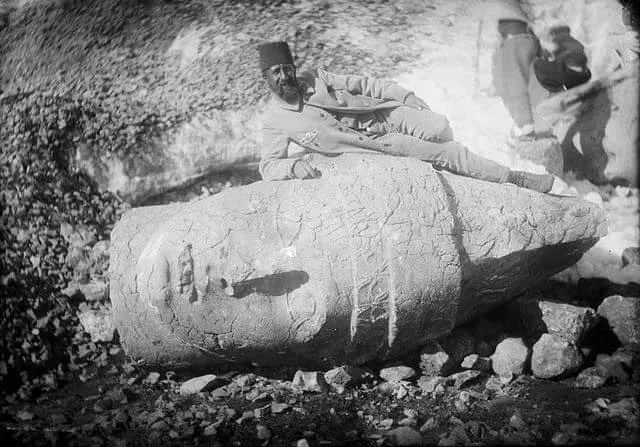
Osman Hamdi Bey initiated the first official archaeological excavations in Ottoman lands. Between 1883 and 1895, he led digs in Bergama, Mount Nemrut, Sidon (Sayda), the Temple of Hekate in Lagina, and the Royal Necropolis in Sidon. These excavations rapidly enriched the museum’s collection. Among the artifacts uncovered in Sidon was the world-famous Alexander Sarcophagus, now displayed in the Istanbul Archaeology Museum; an achievement that brought him international acclaim.
A Painter of Cultural Identity
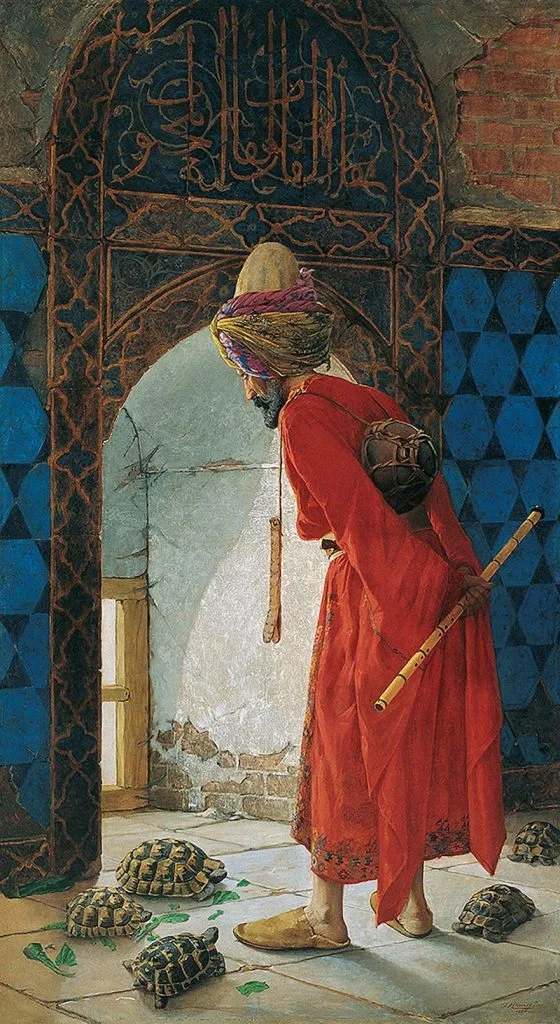
While serving as museum director, Osman Hamdi Bey continued painting and opened Sanayi-i Nefise, the Ottoman Empire’s first fine arts school, where he also served as director. He was the first Turkish painter to use human figures in art and paid great attention to architectural and decorative details. He often included self-portraits in his works.
Some of his most famous paintings include:
- The Tortoise Trainer
- Petition Writer
- The Quran Reciter
- The Arms Dealer
- Girl Picking Lilacs
- Women in the Courtyard of Şehzadebaşı Mosque
- Women in Ferace
- In Front of the Green Mosque
- Woman with Mimosa
- Fountain of the Water of Life
- Mihrab
His works incorporate elements of Turkish art, architecture, tiled panels, walls, carpets, ornamental objects, cloths, lamps, reading desks, tomb interiors, calligraphy panels, family portraits, and human figures. Today, his paintings are exhibited in many countries around the world.
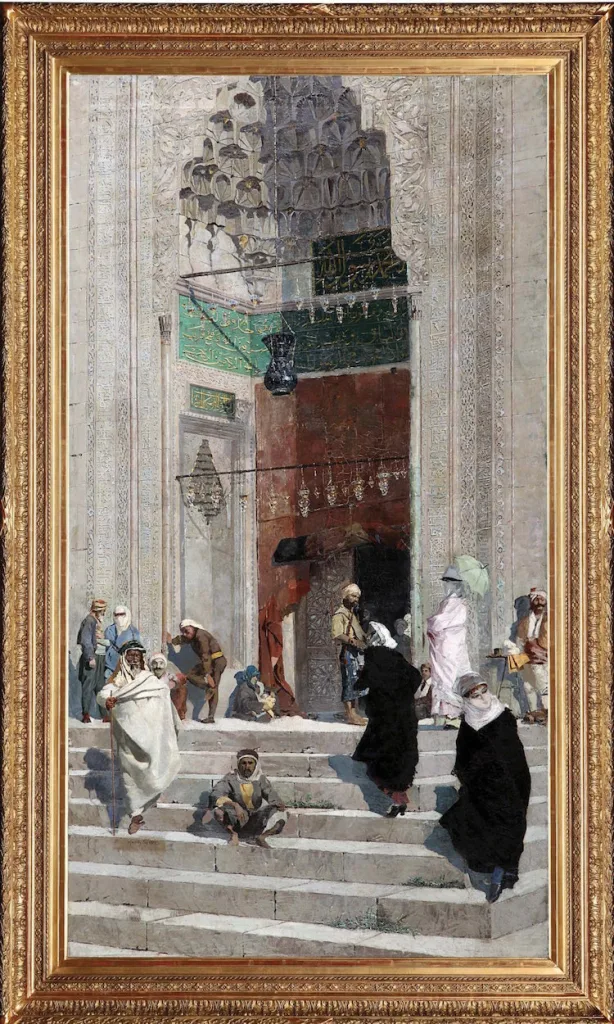
In Front of the Green Mosque
The Alexander Sarcophagus and a Daring Act of Devotion
Osman Hamdi Bey personally oversaw excavations and played a crucial role in transporting the Alexander Sarcophagus to Istanbul. His determination is exemplified in a legendary incident:
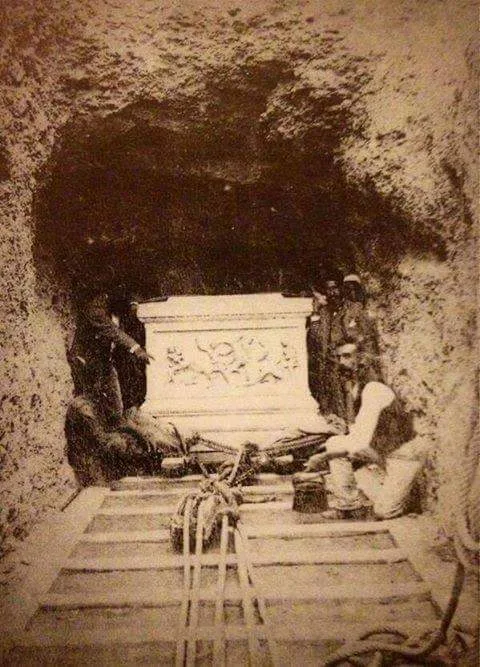
In 1887, Mehmet Şerif Efendi discovered the sarcophagus by chance in a well while plowing his field in the village of Helaliye (now in Lebanon). The discovery was reported through official channels to the Imperial Museum. Osman Hamdi Bey evaluated the report and requested permission and funding from Sultan Abdulhamid II to conduct excavations and transfer the artifacts to Istanbul. The Sultan granted both.
Hamdi Bey set out for Lebanon, and the sarcophagi -some weighing up to 10 tons- were hauled to the surface on wooden sleds through tunnels. They were then taken to the coast and loaded onto rafts for transport to a steamboat.
However, when the Asir ship from Beirut refused to carry the Alexander Sarcophagus due to its size and weight, Osman Hamdi Bey chained himself to it, declaring he would not leave behind such a precious artifact. The captain, realizing he could not dissuade him, was forced to load the sarcophagus onto the vessel.
Other important finds from the excavation included the Sarcophagus of the Weeping Women, the Tabnit Sarcophagus, the Satrap Sarcophagus, and the Lycian Sarcophagus.
Legacy of a Cultural Giant
Osman Hamdi Bey’s legacy extends far beyond his official titles. Through legal reform, institutional foundations, and artistic expression, he redefined Ottoman engagement with antiquity and cultural heritage. He remains one of the most important figures in the history of Turkish art, archaeology, and museology.