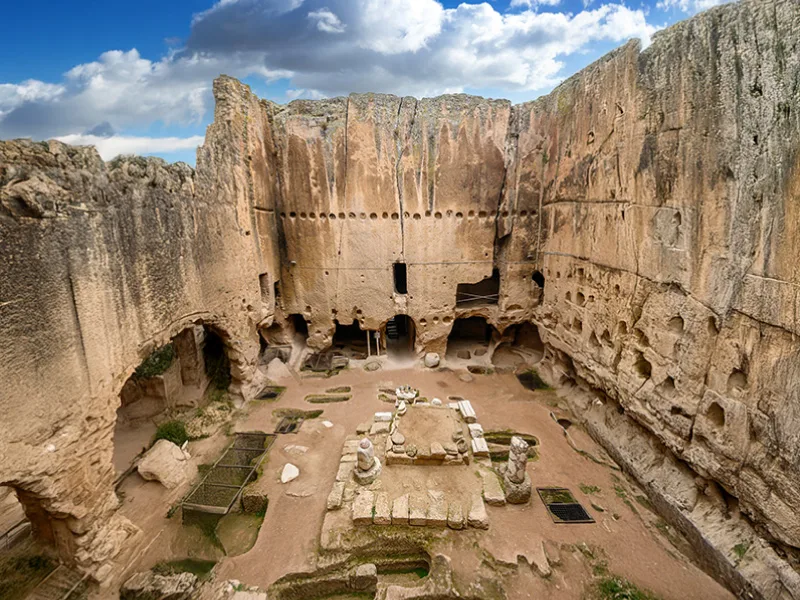
Located in Niğde province, Gümüşler Monastery is one of the most important historical structures in the Cappadocia region. Carved directly into the rock, this monastery dates back to the Byzantine Empire period and is believed to have been built between the 8th and 12th centuries. With its architecture, frescoes, and underground structures, Gümüşler Monastery provides significant insights into the religious and cultural life of its era.
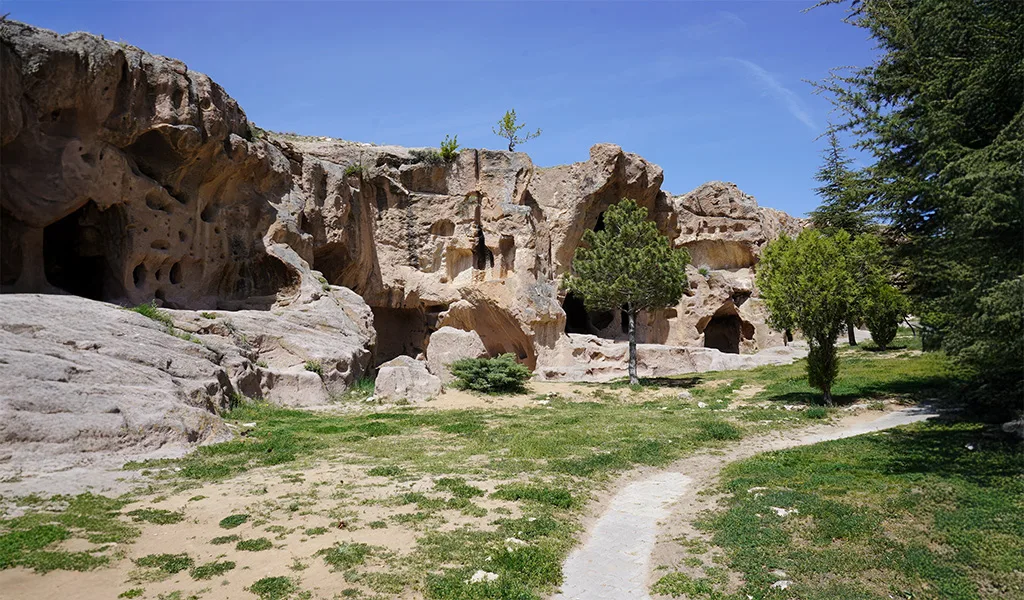
History and Origin of Its Name
Carved into a large tuff rock formation, Gümüşler Monastery was known as “Traicas” (Dragia) during the Byzantine period. Due to the presence of ancient silver mines in its surroundings, it was named “Old Gümüşler” during the Ottoman Empire. After the 1924 population exchange (Lausanne Treaty), the monastery lost its function and was abandoned, remaining hidden for about 40 years.
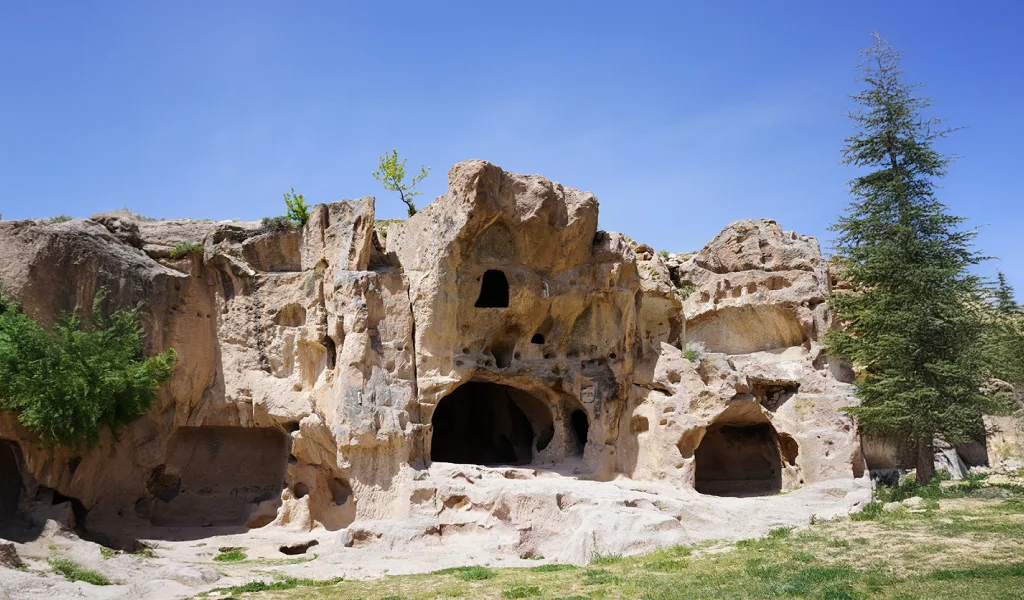
Architectural Structure and Layout
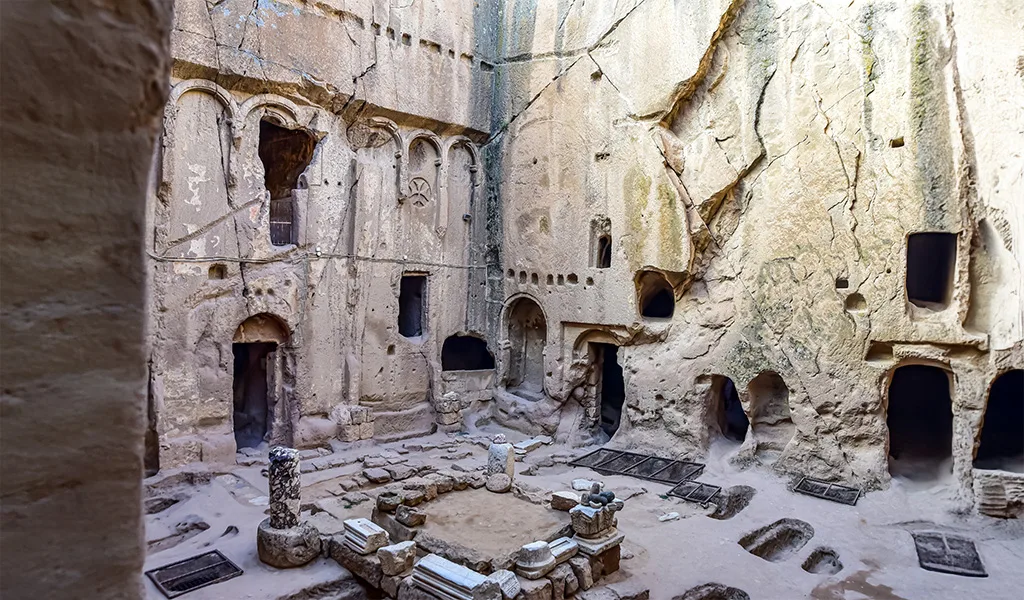
The monastery, built far from settlement centers, features a large courtyard at its center. From this square-shaped courtyard, one can access the monastery’s church and other sections. Burial chambers are located on the northern side of the courtyard, while a multi-level underground city lies to the south. This underground city indicates the monastery’s use for defense and concealment purposes. The church’s interior, which includes a chapel, refectory, and monk cells, is decorated with frescoes considered among the significant examples of Byzantine art.
Frescoes and Artistic Features
The frescoes adorning the church’s four columns feature rosette motifs and religious figures, reflecting the building’s artistic identity. Especially the depictions of the Virgin Mary, Child Jesus, and John the Baptist are regarded as unique examples of Byzantine art in Anatolia. Additionally, there are paintings portraying daily life scenes such as animal figures and hunting scenes.
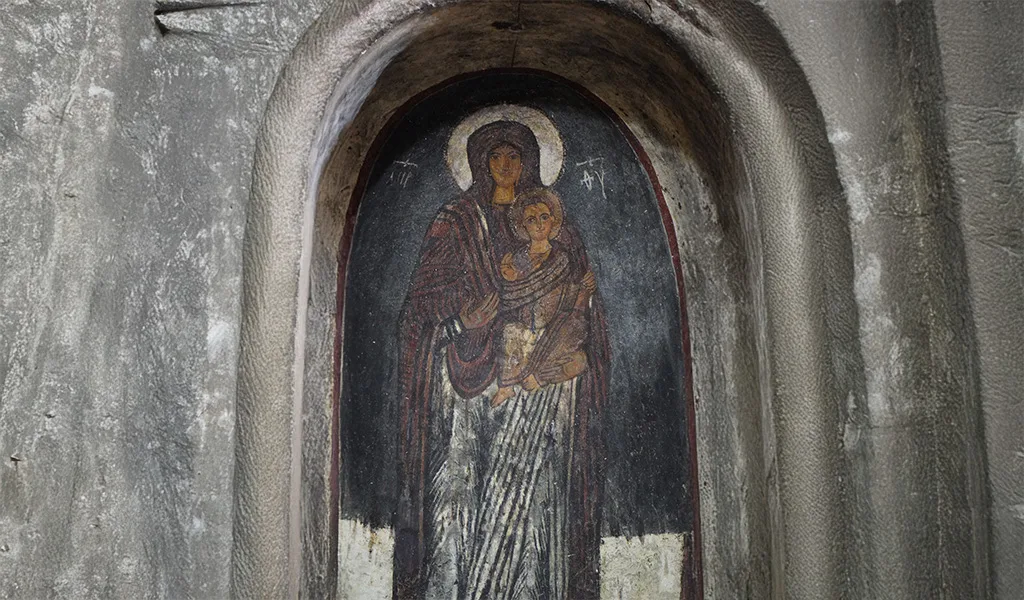
Rock-Carved Architecture and Regional Importance
Gümüşler Monastery is entirely carved into the rock, similar to many other monasteries and churches in Cappadocia formed by carving into natural volcanic rocks. Such structures provided durable and protective environments, making them frequently preferred as religious centers and refuges during the Byzantine period.
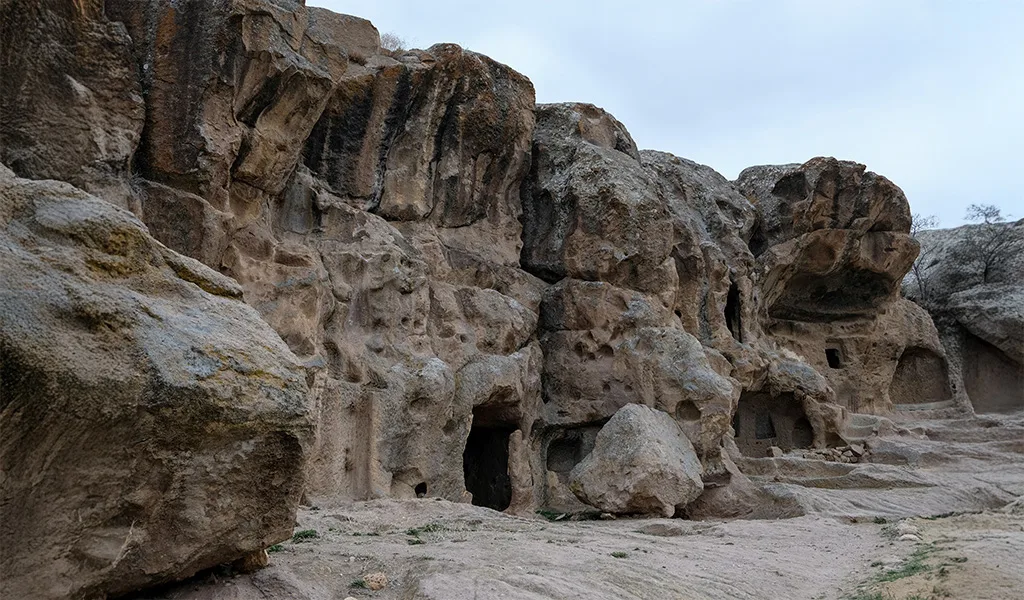
Discovery and Restoration Process
The monastery was accidentally discovered in 1962, and restoration works were initiated in 1963 by British archaeologist Michael Gough. While villagers were extracting stones from the nearby rocks, they reached the monastery’s entrance and realized the interior. This shows that the monastery remained concealed under soil and rocks for a long time. Declared an archaeological site in 1973, the monastery was opened to visitors. Although it has suffered damage over time, most of the frescoes remain well-preserved. However, some parts of the monastery have deteriorated due to natural wear and tear.
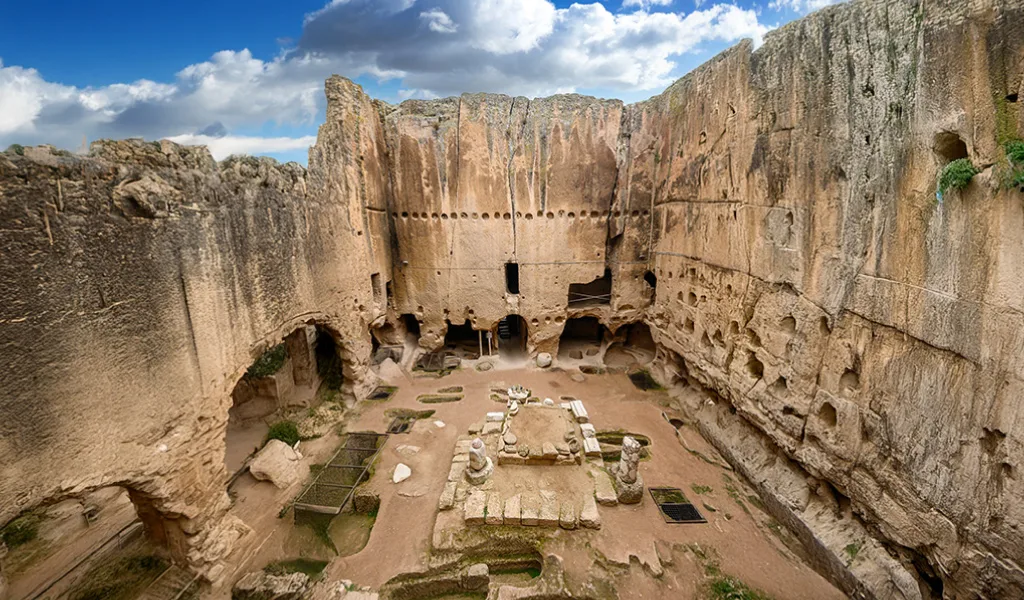
Rock-Carved Structures Worldwide
Structures carved into rocks, like Gümüşler Monastery, exemplify architecture in harmony with nature and appear in various parts of the world. Jordan’s Petra Temple is famous for its rich history and extraordinary construction; India’s Ajanta Caves are a treasure trove of frescoes and sculptures dating back thousands of years; and the 11 rock-hewn churches in Lalibela, Ethiopia, are among the most impressive early Christian structures. These constructions stand out not only for their building techniques but also as historical heritages reflecting local cultures and religious beliefs. Worldwide, these rock-carved structures symbolize great architectural achievements of humanity, both engineering-wise and aesthetically.
Daily Life of Monks and Socio-Cultural Role
Gümüşler Monastery served not only as a place of worship but also as a center where monks lived in seclusion, copied sacred texts, and provided education. Clues about the daily lives of the monks have reached us through spaces like the courtyard and refectory. These social structures offer valuable insights into the lifestyle of religious communities of that era.
Current Conservation and Visitor Information
Modern techniques were used during restoration to preserve the frescoes carefully. Today, Gümüşler Monastery is open to visitors and serves as an important attraction for regional tourism. Guided tours are available that allow visitors to closely examine the structure and frescoes. Regular maintenance and repair work continue to protect the monastery.
Its Place and Uniqueness in Cappadocia
Among the many rock-cut monasteries and churches in the Cappadocia region, Gümüşler Monastery stands out for its uniquely preserved frescoes. It holds an important place in the rich historical and cultural mosaic of the region and is considered one of the rare examples of Byzantine art in Anatolia.
Local Legends and Folk Stories
Various legends and folk stories add depth to the monastery’s history. Among locals, there are tales suggesting that secret tunnels connect the monastery to other parts of the village. Such stories increase the historical and cultural significance of Gümüşler Monastery.