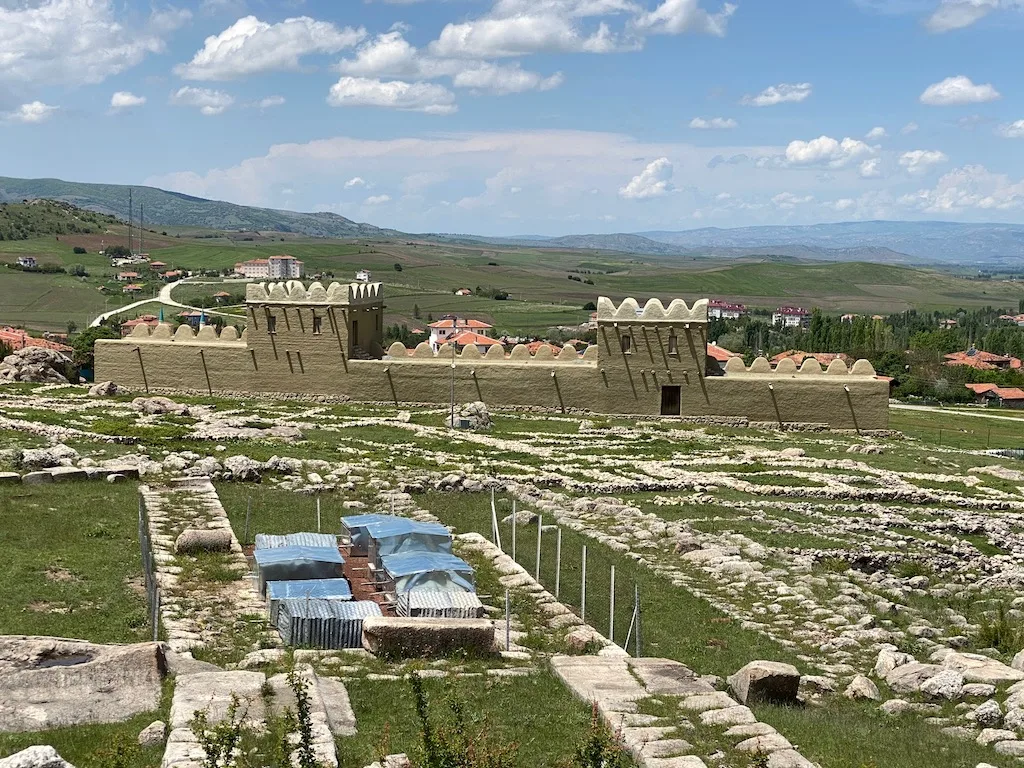
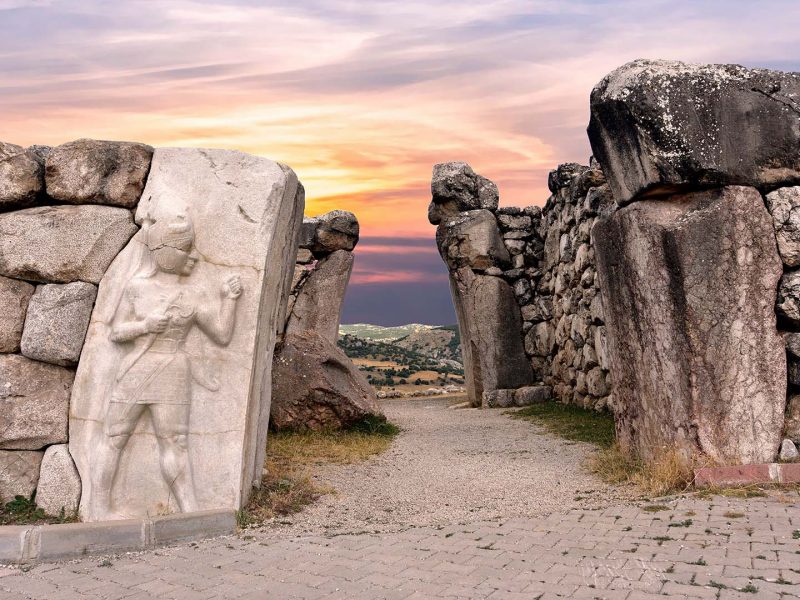
The Hittites -also known as the Etes in ancient sources- were one of the most significant civilizations of Anatolia, ruling from around 1650 BCE to 1200 BCE. They spoke Hittite and Luwian, members of the Anatolian branch of Indo-European languages, and employed both hieroglyphic and cuneiform scripts. Migrating from the Caucasus in small groups toward the end of the 3rd millennium BCE, they gradually merged with the indigenous Hatti population, forming a unique and powerful empire.
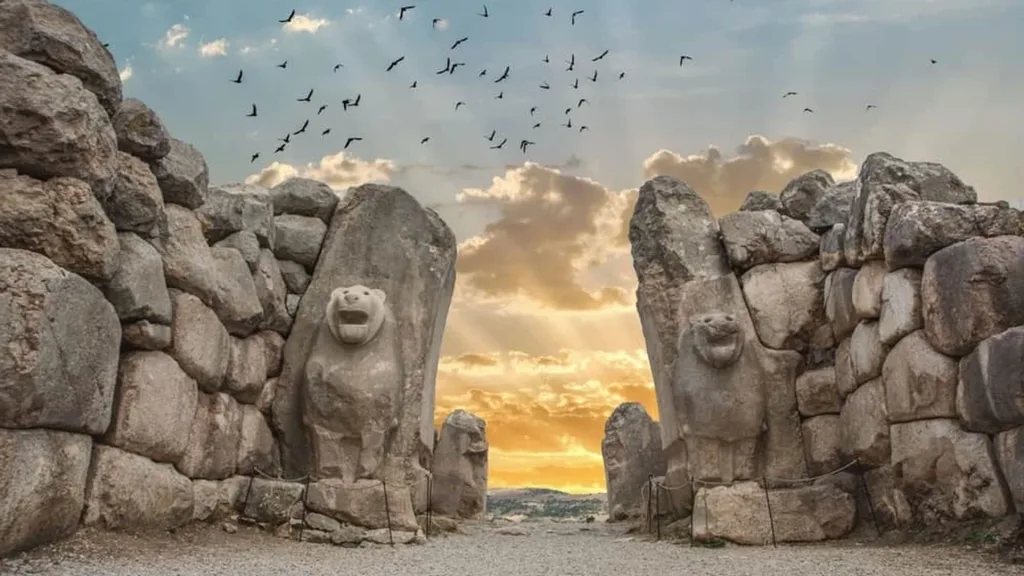
The capital of the Hittite Empire, Hattusa (located in modern-day Boğazkale, Çorum), is often referred to in ancient texts as the City of a Thousand Gods. The city is home to grand temples, palaces, monumental gates, and thousands of clay tablets; many of which have survived the ages in remarkably well-preserved condition. Among these ruins lies one of the most intriguing archaeological enigmas of the region: a mysterious green stone that continues to puzzle historians and archaeologists alike.
A Landmark in Diplomatic History: The Treaty of Kadesh
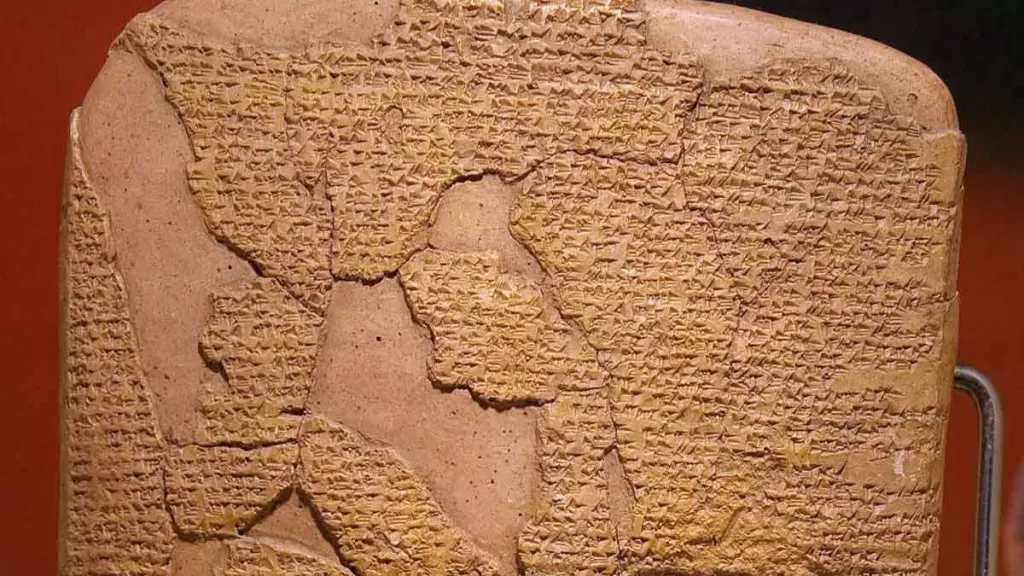
In the aftermath of the legendary Battle of Kadesh around 1200 BCE, fought between the Hittites and the Egyptians, the two great powers signed what is widely considered the first written international peace treaty. The treaty was concluded between Pharaoh Ramesses II of Egypt and Hittite King Hattusili III. A clay tablet version of the treaty, discovered in Hattusa, is now displayed in the Istanbul Archaeology Museums. A larger replica is also housed at the United Nations Headquarters in New York: a testament to the Hittites’ advanced diplomatic prowess.
Rediscovering the Hittites: From Biblical Mentions to Archaeological Proof
For centuries, the Hittites were known solely through scattered references in the Old Testament. It wasn’t until the mid-19th century that archaeological excavations brought their forgotten empire to light. In 1834, French explorer Charles Texier stumbled upon the first Hittite ruins, initially believing them to be remnants of the legendary city of Pteria mentioned by Herodotus. This marked the beginning of a new era in Anatolian archaeology.
The Hittite Legacy: Architecture, Art, and Cultural Influence
The Hittites profoundly shaped the religion, art, and culture of Anatolia. They built massive temples and palaces, carved rock reliefs, and left behind monumental architecture that still dominates the Anatolian landscape. Unlike their predecessors or neighbors, the Hittites developed a distinctive artistic and architectural style, contributing uniquely to the cultural mosaic of the ancient Near East.
The Fall of a Civilization
The sudden collapse of the Hittite Empire around 1200 BCE remains shrouded in mystery. Scholars point to multiple factors:economic distress, famine, external invasions, and internal strife. Records from the empire’s final years mention severe food shortages, with massive grain imports from Egypt and Syria. At the same time, growing unrest within Anatolia and diminishing Hittite control over Syrian territories likely accelerated the empire’s downfall.
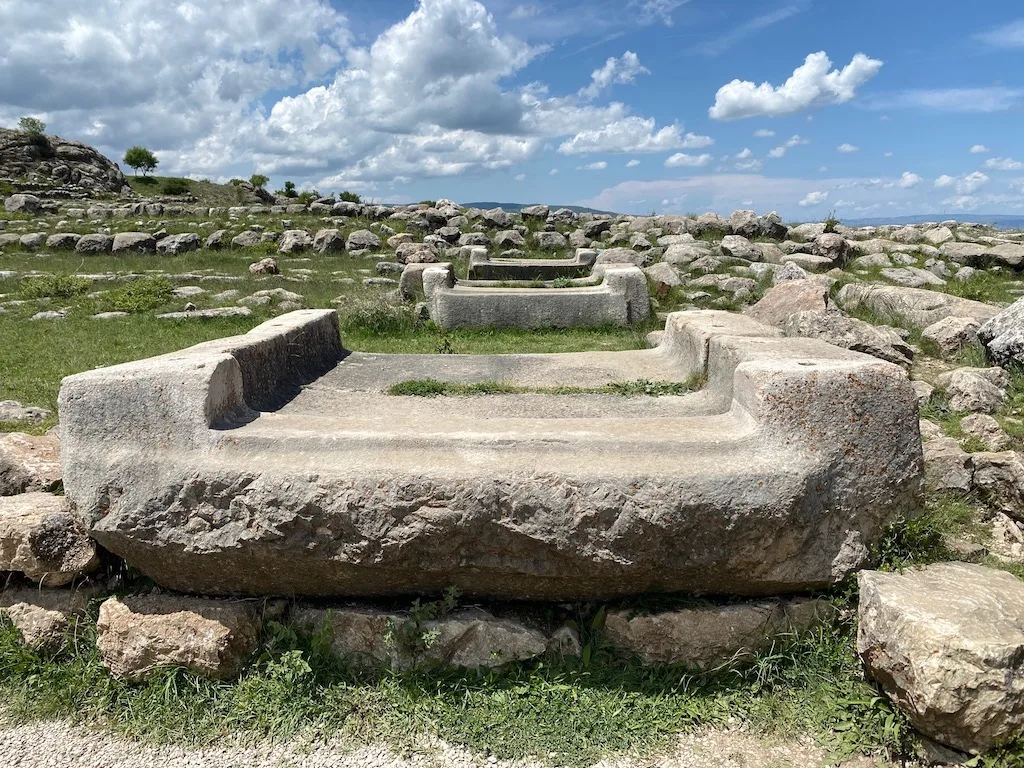
The Enigma of the Green Stone
Now to the most captivating mystery: the Green Stone of Hattusa. This enigmatic monolith is located in the heart of the Great Temple complex, a sacred site that once hosted major religious ceremonies. The stone’s function is still unclear, but its striking appearance has made it a symbol of ancient mystery. Perfectly smooth, dark green, and brilliantly reflective, the stone appears almost polished. Some scholars speculate that it might have been a diplomatic gift from Pharaoh Ramesses II following the Kadesh Treaty, though no direct evidence supports this claim.
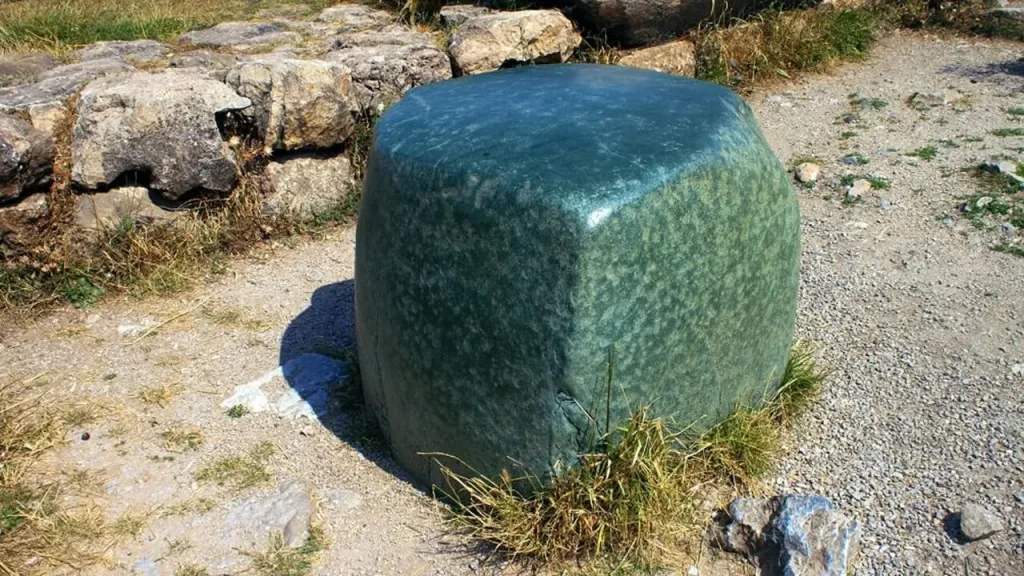
Locals refer to it today as a wishing stone, and many believe it holds spiritual energy. Its exact composition remains uncertain -possibly serpentine or jade- but what truly amazes experts is the stone’s immense size and pristine condition after thousands of years. While such rocks do appear in the region’s geological formations, a monolithic stone of this scale is highly unusual.
Visit the Hittite Heartland
Visitors to Hattusa can explore a 6-kilometer-long archaeological site surrounded by ancient stone walls. Declared a UNESCO World Heritage Site in 1986, Hattusa offers a rare window into a civilization that once ruled vast parts of the ancient world. From colossal city gates and royal archives to sacred stones steeped in mystery, the ruins tell a story of a powerful and sophisticated culture that continues to inspire awe.