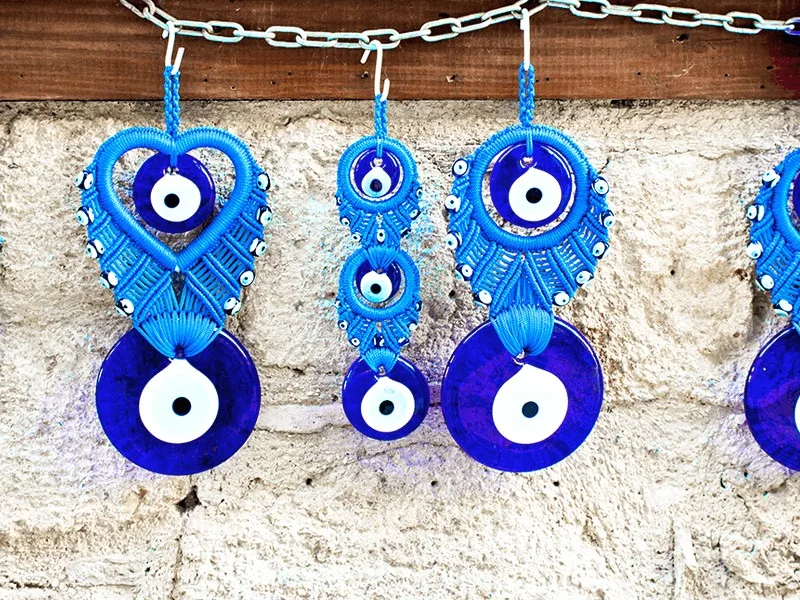
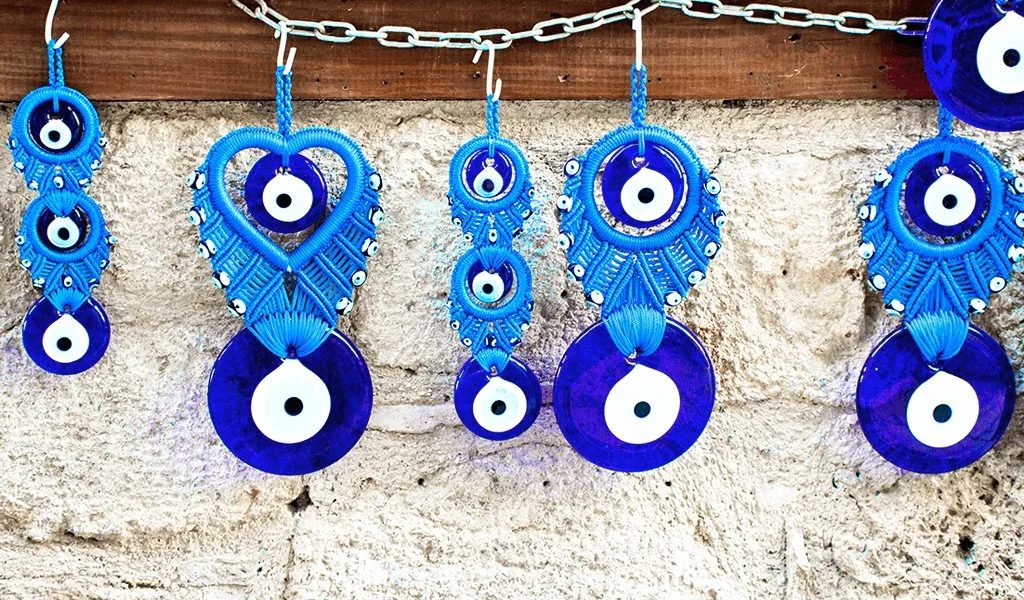
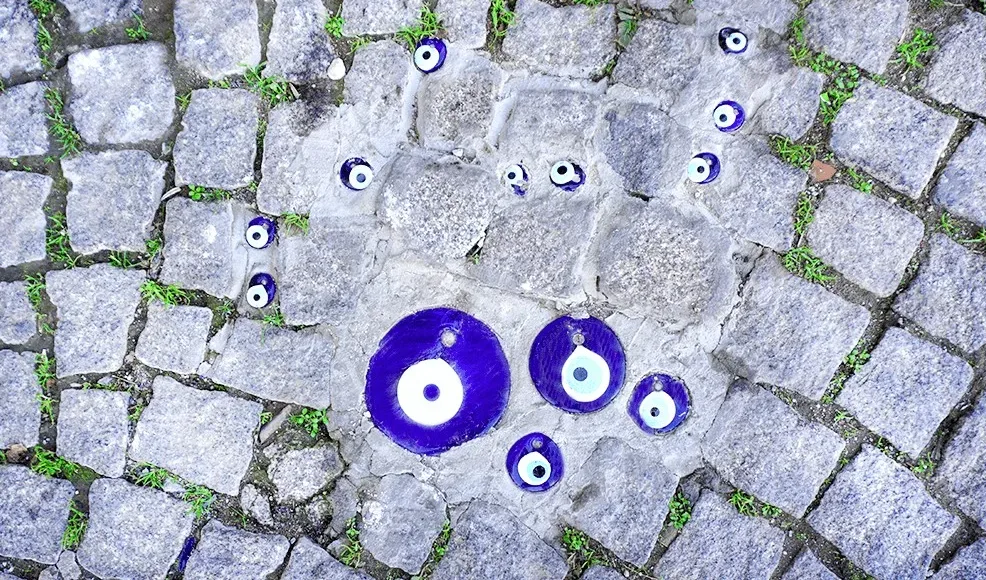
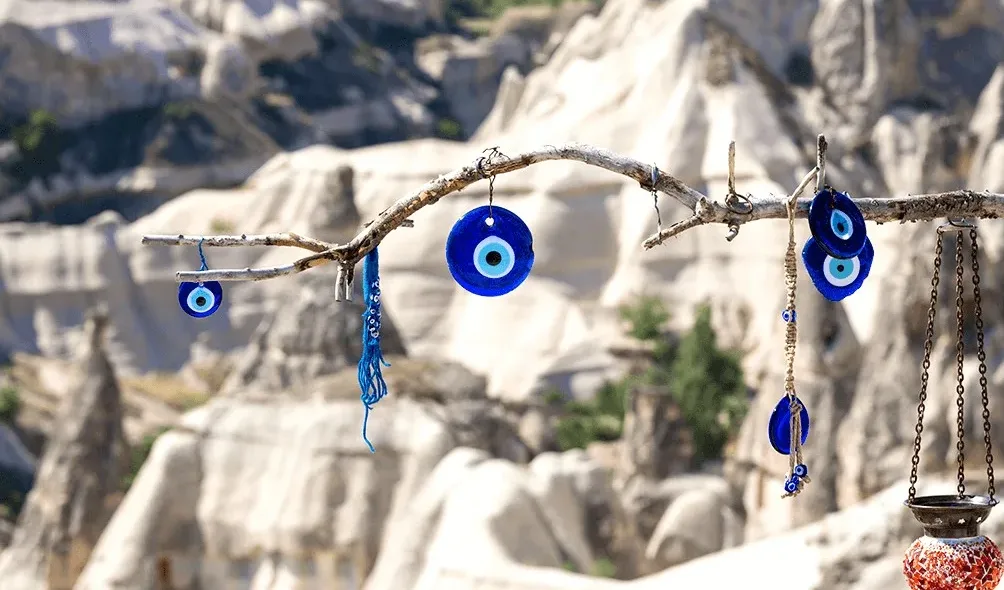
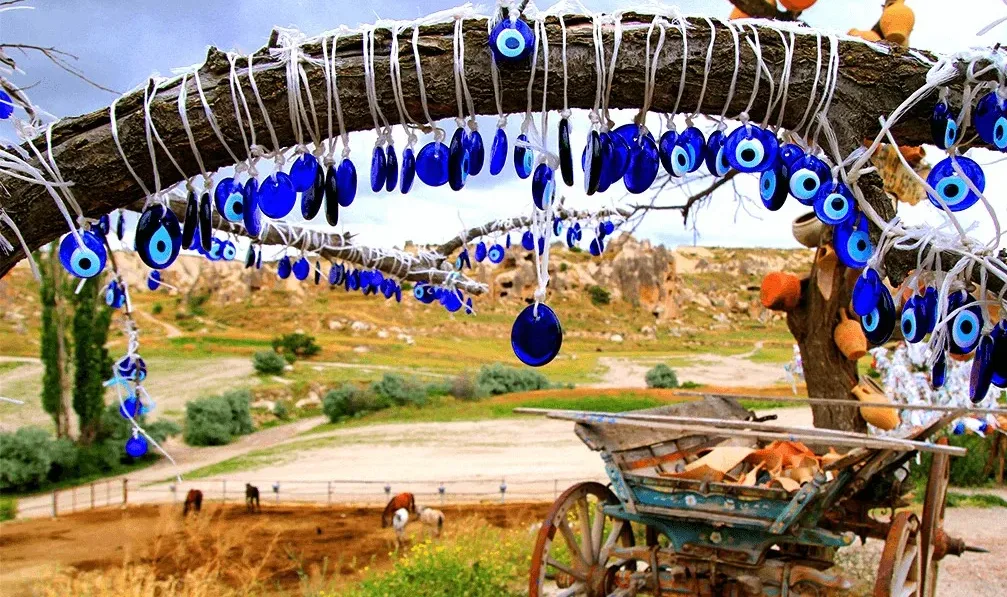
The evil eye bead (“nazar boncuğu” in Turkish), is a deeply rooted symbol in Turkish culture that appears in nearly every aspect of daily life. Hung on both the interior and exterior walls of homes, it is believed to protect the household and its inhabitants from malicious stares. It’s fastened onto babies’ clothes, worn as jewelry, used in accessories, and gifted to friends and family as souvenirs after trips.
But beyond its modern-day popularity lies a fascinating and lesser-known history. Let’s explore the origins and symbolism of the evil eye bead in 9 captivating points.
The Belief in the Evil Eye Is as Old as Civilization
The concept of the evil eye stretches back to ancient civilizations such as Egypt, Babylon, and Sumer. These cultures believed that certain individuals possessed an envious or malevolent gaze capable of projecting harm onto others; especially those who were virtuous or fortunate. Misfortunes were often attributed to such negative stares.

The Evil Eye Targets the Good
It’s often believed that envy affects the successful, the beautiful, and the kind-hearted. To shield such people from jealous looks, the principle of “fighting the eye with an eye” emerged; hence the symbolic design of the evil eye bead. Shaped like an eye itself, the bead is thought to attract and absorb harmful glances, thereby protecting its wearer.
The Eye of Horus
In ancient Egyptian mythology, the eye-shaped bead is linked to the Eye of Horus: one of the most powerful symbols of protection. Horus, a falcon-headed god, had an eye that represented the moon and another that represented the sun. After a victorious battle against his enemy Seth, Horus became a symbol of divine kingship. His eye was believed to ward off evil, making it a precursor to today’s evil eye motif.
Isabet-i Ayn: The Striking Eye
The concept of the evil eye exists across major religions; Judaism, Christianity, Islam, Buddhism, and Hinduism. Among Turks, the belief in the nazar and the use of beads as protection dates back to the Shamanistic era of Central Asia. They referred to this malevolent gaze as Isabet-i Ayn:literally, “the strike of the eye.”

The Name “Muncuk Han”
Ancient Turkic communities used various names for the evil eye bead: munçuk, monçuk, monçak, monçok, muyınçak, and more. Interestingly, even the legendary Hun emperor Attila named his horse Muncuk Han, possibly as a talisman against harm, evidence of the bead’s significance in early Turkic culture.
The Islamic Perspective on the Evil Eye
The Quran acknowledges the evil eye as a real phenomenon arising from envy or intense admiration, without framing it as superstition. At the same time, it firmly directs believers to seek protection through Allah, emphasizing that no harm can occur except by His permission. This approach balances practical precaution with complete reliance on God, as reflected in verses that encourage seeking refuge from envy (Al-Falaq 113:5), allude to harmful looks driven by jealousy (Al-Qalam 68:51), and illustrate prudent preventive measures taken by Prophet Yaqub (AS) for his sons (Yusuf 12:67), advising to enter to Egypt from different gates.
1001 Ways to Ward Off the Evil Eye
Throughout Turkish history, numerous items were believed to offer protection against the evil eye: horseshoes, garlic, eggshells, dried thistles, red coral, black cumin seeds, turtle shells, children’s shoes, agate stones, and even wolf teeth. Nevertheless, the evil eye bead remains the most favored and widely accepted amulet today. In fact, it’s common to see horseshoes adorned with evil eye beads on house walls.
The Craft of Bead-Making Today
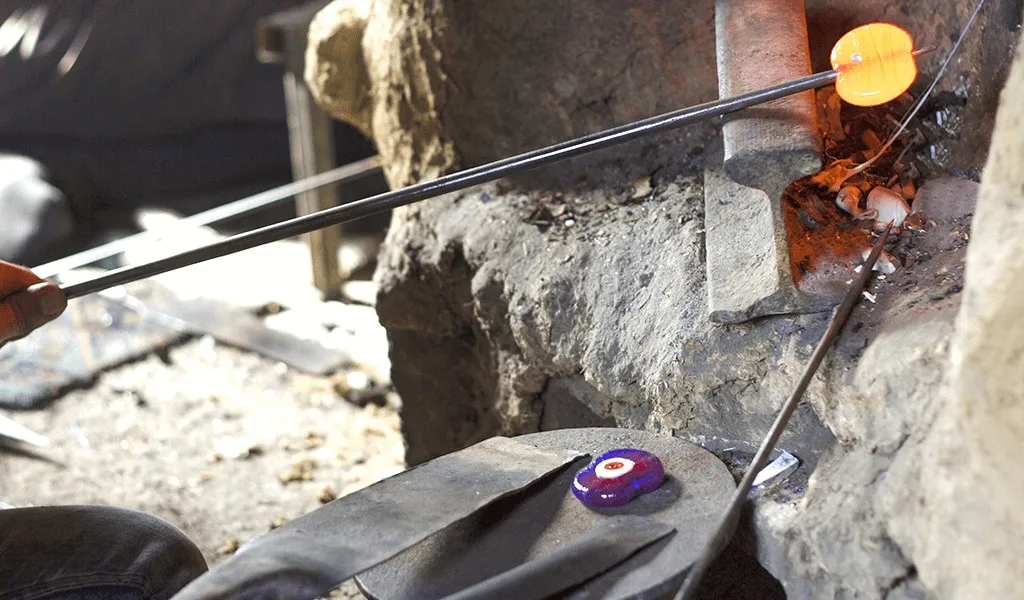
The tradition of evil eye bead-making in Turkey began when Egyptian glass artisans migrated to the region and introduced their skills in İzmir. It’s believed that Egyptian craftsmen taught glasswork techniques across Europe. Turkish artisans later advanced the art, adding the iconic eye motif to colorful glass, creating what we now recognize as the modern evil eye bead.
İzmir: The Heart of the Evil Eye Craft
The villages of Nazar and Görece in İzmir are renowned for their evil eye workshops. One of the most celebrated artisans, Mahmut Sür, has been making beads since the age of 13 and was recognized by UNESCO as a “Living Human Treasure.” Visitors from across the country travel to these villages to witness the intricate, fiery process of bead-making firsthand.
Who Has the Evil Eye?
Folklore often claims that blue-eyed individuals are more likely to cast the evil eye. Some extend this belief to all light-colored eyes. However, it is generally believed that those with malicious intent -jealous, envious, or deceptively kind people- are the true sources of harmful stares.
Editor’s note: Its widely believed in Turkey that the bead with yellow color in its center has the most power against evil!